
A widely repeated theme in crypto is that it lets creators and communities form their own internet-native economies. A central part of these economies is tokens, which earned a poor reputation during the ICO (initial coin offering) frenzy several years ago. Even so, tokens are the basic measure of value in crypto economies. They are, as others have also noted, a major innovation in open network design because they provide a way to motivate open network participants, including users, developers, investors, and service providers.
But what exactly is a token? At the most basic level, tokens are simply code that exists on a global peer-to-peer network known as a blockchain. But unlike other kinds of money, they are digitally native, programmable, and protected by a crypto wallet and private key. Cryptocurrencies are only one kind of token.
Tokens fall into two broad types: fungible (in other words, interchangeable) and non-fungible (in other words, unique). As more creators and communities launch their own crypto economies, fungible tokens will be used to trade goods, hold value, and make collective choices. Non-fungible tokens, meanwhile (such as NFTs), will be used to build new business models focused on collectibles, rewards, achievements, and more — giving people identity, status, and belonging.
The gaming industry understands this clearly. Games such as Fortnite use fungible tokens (VBucks) and non-fungible tokens (skins, cosmetics, emotes, etc.) to build a rich internet-native economy. In 2020 alone, consumers spent about $54B USD on in-game purchases for virtual goods such as livestock in FarmVille, skins in Fortnite, and extra lives in Candy Crush. But this is only the start of what may be possible.
All the strongest crypto protocols, social apps, online communities, and marketplaces will have to understand the interaction between fungible and non-fungible tokens in depth to build their own internet economies. But why do we need internet-native economies at all?
The limits of traditional economies
Most traditional economies were not built with the internet in mind. Because of that, modern economies face several problems:
- Lack of access. Worldwide, roughly 1.7 billion adults are unbanked. This restricts people’s ability to start businesses, finance projects, and take entrepreneurial risks. Inefficiency. High fees on credit card payments and remittances, along with high-interest loans, make it hard for low-income communities to take part in the economy. Opacity. Banks operate through complicated structures that make it hard to assess their financial condition and the risks they are taking on. Citizens are left relying on the government to protect economic value through monetary policy, capital controls, and FDIC insurance; we have seen that this has not always worked for us in the past.
These limits slow economic growth and widen inequality. As more economic activity shifts online, we need internet-native tools for creating productive economies. Many people do not have a bank account but do have a mobile phone with internet access.
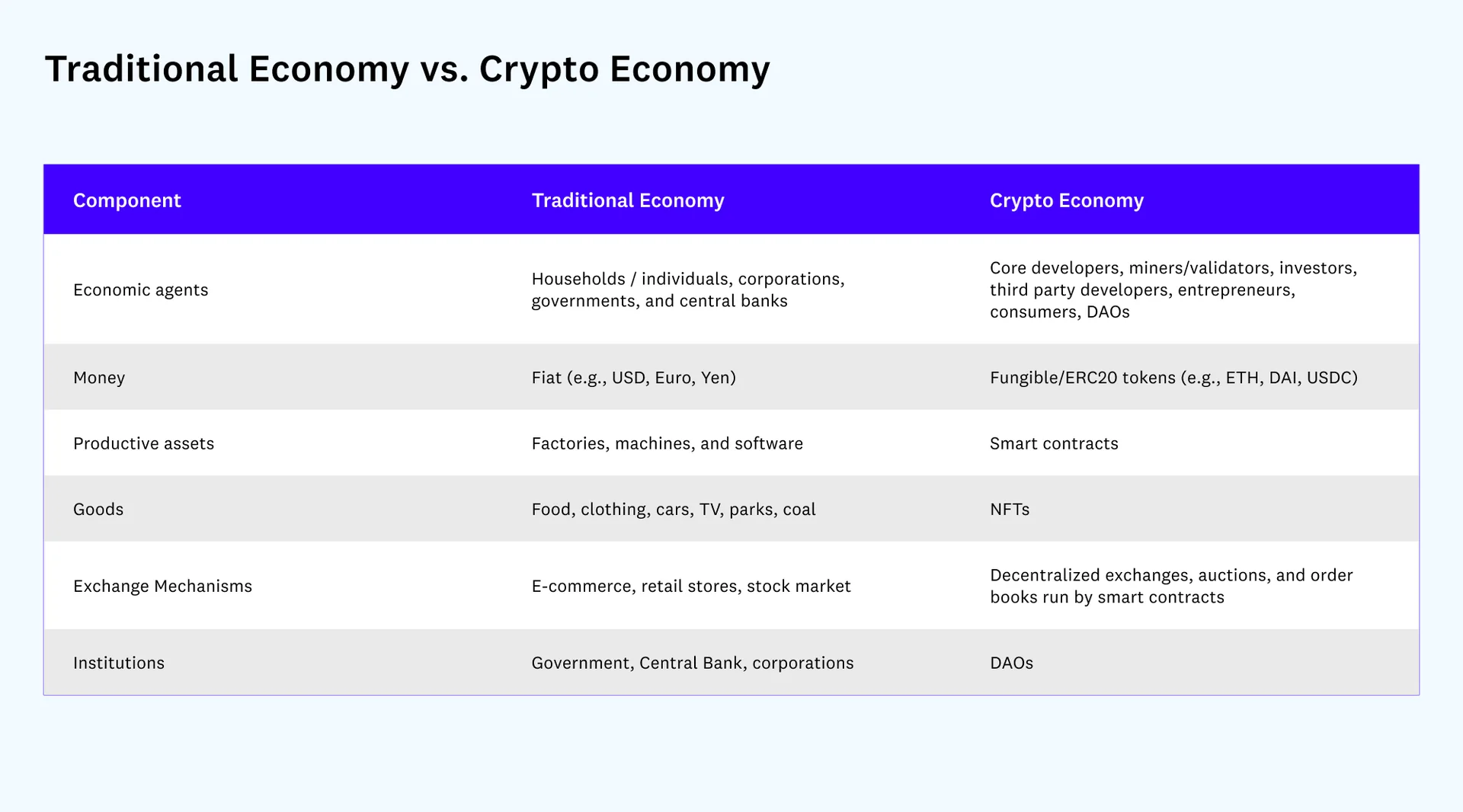
This is where cryptonetworks come in. They supply the cryptographic (for example, security without a third party) and economic building blocks for modern forms of production, distribution, trade, and consumption.
Let’s begin by looking more closely at fungible versus non-fungible tokens.
Fungible tokens
Traditionally, money has had three main purposes:
- A medium of exchange for facilitating trade A store of value for preserving wealth over time A unit of account for giving a standard measure of value
Economies put money into productive assets like factories, scientific research, technology development, public infrastructure, etc. in order to spur economic growth. To make life enjoyable, consumers also buy relatively “unproductive” goods such as flat-screen TVs and expensive purses or sneakers.
Cryptoeconomies work in a similar way. Money moves through an issuance policy and is reinvested across a range of productive and unproductive assets. For instance, the code behind the Bitcoin network is set to issue 21M bitcoins, pays miners for securing the network, and lets bitcoin move directly between parties for a variety of use cases. On the Ethereum network, money is represented by the ERC20 standard for fungible (that is, interchangeable) tokens. Goods, by contrast, are represented by the ERC721 standard for non-fungible (that is, unique) tokens — these are more often called NFTs. (There is also the ERC1155 semi-fungible standard, but for simplicity let’s concentrate on ERC20s and NFTs.)
Beyond functioning as a kind of internet-native money, the programmable design of ERC20 tokens makes three other use cases possible: equity, utility, and governance. Many tokens combine more than one of these. Let’s take a closer look at these use cases as we move deeper into the token taxonomy.
Equity tokens
Equity tokens are fungible tokens that signify ownership in an asset or a group of assets. These tokens are used to encourage participants to contribute a scarce resource to a network. In cryptonetworks, scarce resources include capital, developers, customers, creators, and computing power.
When designing an equity token system, it helps to consider the following questions:
- What scarce resource does our protocol need? Who has that scarce resource? How do we motivate them in a positive-sum way?
An example of a protocol using equity tokens to motivate stakeholders to supply a scarce resource is Uniswap, a decentralized exchange for swapping tokens on the Ethereum network. Traditionally, centralized exchanges rely on a matching algorithm to decide which orders are executed; it is a black box, with no transparency, auditability or community ownership. But with Uniswap, which runs on open-source smart contracts, anyone can independently confirm how their order will be executed. Because Uniswap’s aim is to provide the best execution price for token pairs on the Ethereum network, it must encourage liquidity providers (LPs) to deposit these tokens into pools that people can trade against.
The protocol encourages LPs by granting them a proportional share of trading fees for any pool where they are an LP. When an LP deposits a token pair into a pool, the protocol gives the LP “pool tokens,” which provide a pro-rata share of trading fees.
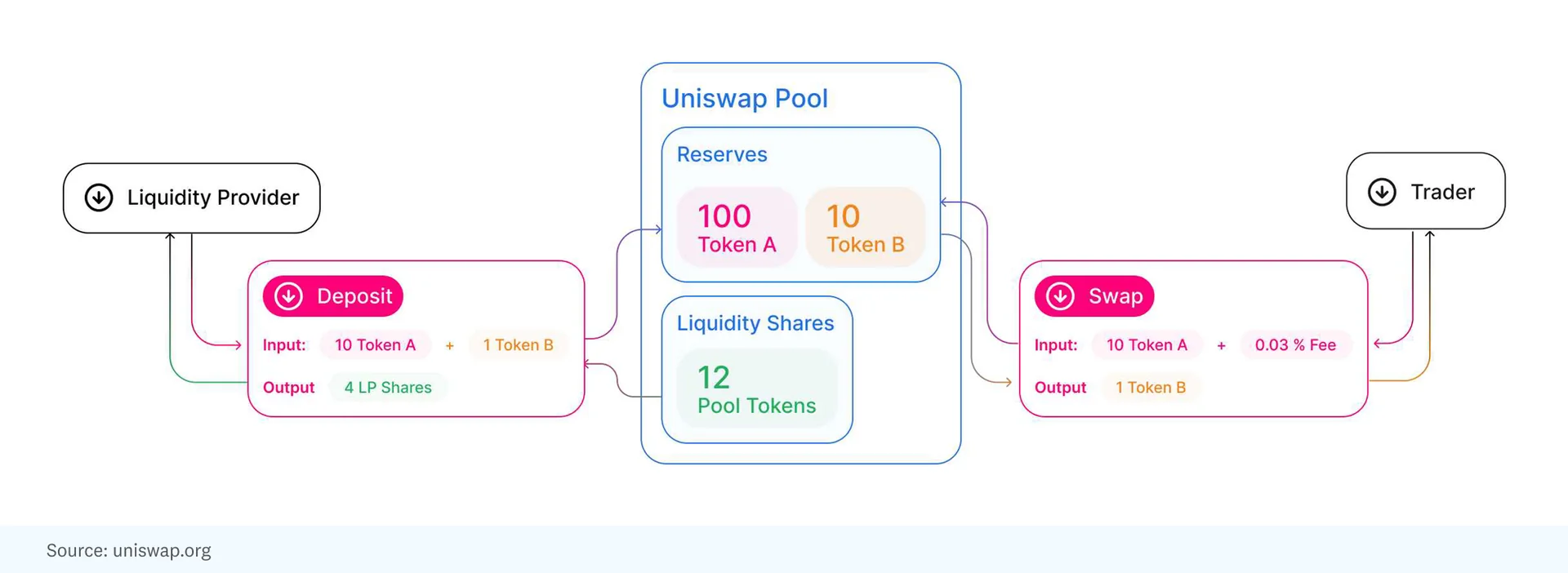
In this situation, LPs are encouraged through equity tokens (for example, pool tokens) to supply their scarce resource (for example, capital) in order to strengthen the network.
Utility tokens
Utility tokens are fungible tokens that grant access to functionality in a smart contract or an off-chain system, such as a Discord community. Off-chain utility tokens are hard to enforce, so they are usually most valuable when their utility is enforced entirely on-chain through smart contracts.
When putting together a utility token system, it helps to consider the following questions:
- What is the central problem we want to address? Who are we addressing it for? How do we help them solve it in a positive-sum way?
A few example use cases for utility tokens — and the cryptoeconomies they create — include:
Automated and trust-minimized loans
Until recently, it wasn’t possible to carry out trading strategies like shorting and leverage in a decentralized, trust-minimized manner, because traditional exchanges need a centralized counterparty to absorb credit risk and offer services such as clearing and settlement. To make decentralized lending possible on blockchains like Ethereum, protocols ask traders to lock tokens in a smart contract as collateral in order to gain the ability to borrow. Tokens posted as collateral for decentralized loans are an example of a utility token because they unlock automated functionality in a smart contract.
Compound is one example of a lending protocol that is building this on Ethereum. To borrow, you must deposit one of the approved collateral tokens that governance has voted in. Today, this includes tokens such as ETH, DAI, USDC, BAT, and UNI, among others. Once you deposit collateral, you gain the ability to borrow. Traders use Compound to open leveraged long positions on ETH. For instance, they may deposit ETH as collateral, borrow a stablecoin such as USDC or DAI, and purchase additional ETH. A similar approach could be used for a short position. If the loan interest is not paid on time, or the value of the underlying collateral falls by a certain amount, automated bots called Keepers are encouraged to liquidate positions by earning a share of the transaction fee.
Access to a community
A frequent challenge in building online communities is creating a durable community: one that reduces spam, makes sure members have skin in the game rather than being drive-by commenters, and gives members an incentive to make the broader community attractive to join over the long term.
Friends With Benefits is an example of a tokenized Discord server for people interested in where art and crypto overlap. To enter the Discord server, you must hold 60 $FWB, their token, in your crypto wallet. Today, that is about $500. The fairly high barrier to entry acts as a proof of work that helps reduce the spam that often comes with public Discord servers. At the same time, the token also functions as a coordination tool. If $FWB builds a lively community, it will raise demand for access to the community, which could push up the price of $FWB and make the current community members’ holdings more valuable.
As more communities are tokenized, I think we’ll see best practices such as vesting schedules and lockup periods put in place to preserve long-term incentive alignment.
Equity tokens encourage participation in a protocol, and utility tokens unlock functionality in a protocol while also helping participants coordinate. But how do protocols actually govern themselves so these activities can happen smoothly and transparently? For that, we turn to governance tokens.
Governance tokens
Governance tokens stand for proportional ownership of voting rights. It’s hard for most community members to stay current on the latest changes for particular protocols, so most protocols let token holders delegate their votes to trusted representatives.
When designing a governance token system, it’s helpful to think through the following questions:
- What public goods should our community govern? How should governance tokens be distributed? How do we design the governance system to be fair, adaptable, and transparent?
Let’s review some example use cases for governance tokens.
Parameter settings and upgrades
Cryptonetworks run on smart contracts. These smart contracts execute logic that handles things like setting interest rates in a lending protocol, enforcing an automated issuance policy for a stablecoin, or deciding the exchange rate for token swaps.
When a smart contract is first deployed on the Ethereum network, it may include admin privileges for certain parties to reduce the risk of vulnerabilities. After the smart contract has been tested enough in prod, admin privileges are typically removed so the core team can’t change the protocol whenever it wants.
Still, the protocol often needs upgrades and improvements. In Uniswap, $UNI holders can vote to activate a protocol fee switch that redirects 0.05% of trading fees to $UNI holders instead of LPs. In Compound, $COMP token holders can vote on the collateral ratio for new tokens.
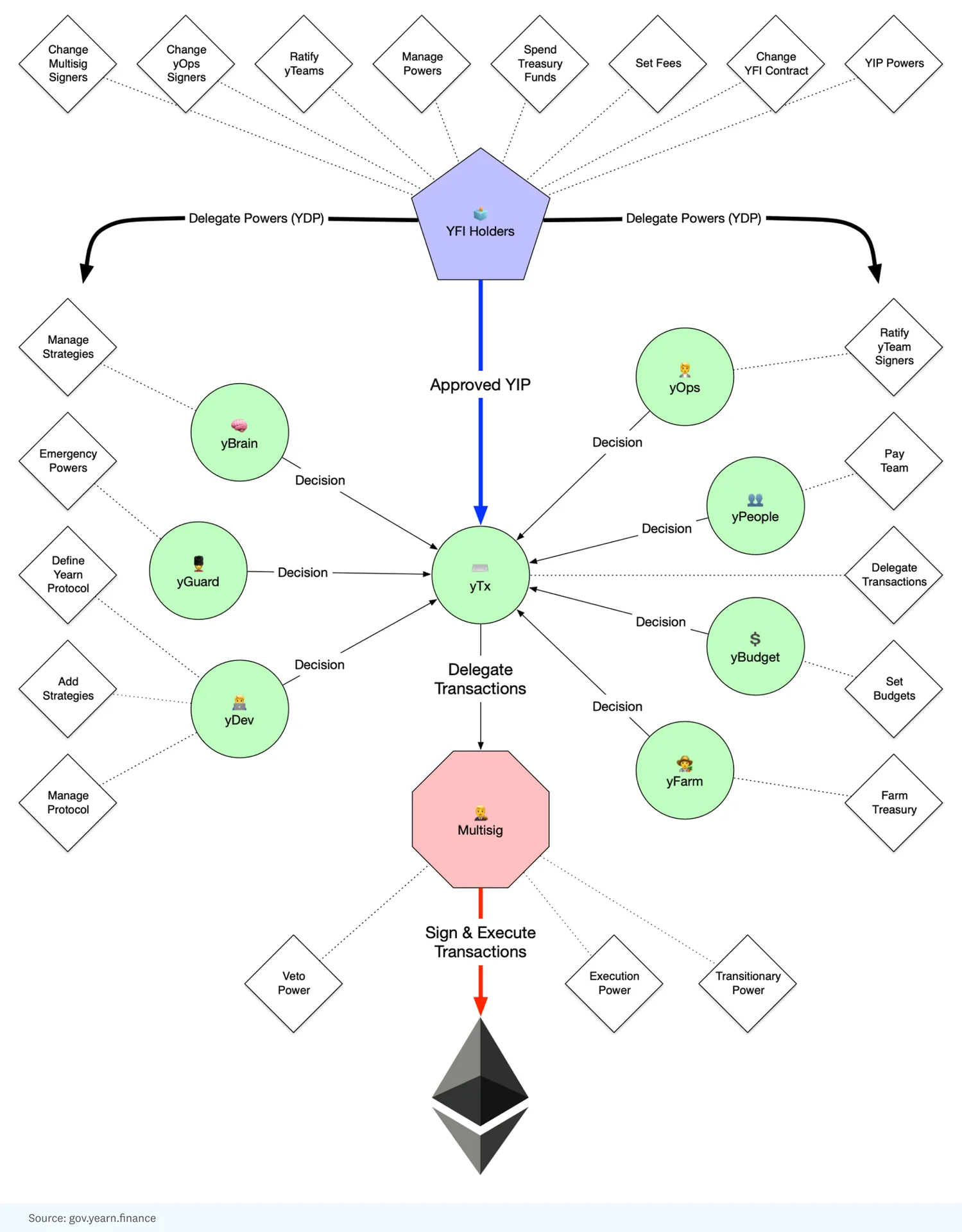
Recently, the community around a DeFi protocol called Yearn proposed one of the most advanced decentralized governance systems yet. The proposal recommends allowing $YFI holders to elect committees for specific areas like budget control, the development roadmap, and investment strategies.
As all of the examples above show, fungible tokens are a strong tool for exchanging goods, storing value, and coordinating online communities.
Yet economies, companies, and protocols all require business models to pay for expansion. People also need instruments to form connections and experience purpose. NFTs are where that starts.
Non-fungible tokens (NFTs)
At a broad level, NFTs are distinct digital tokens kept on a blockchain. There has been a great deal of activity and enthusiasm in this area, but to stay on the larger point, people appreciate virtual goods for six primary reasons:
- Identity and belonging Status Personal meaning Relationships Collecting Superpowers
Let’s look more closely at how each one shows up in NFTs within crypto economies.
Identity and belonging
Identity and belonging grow out of a shared past and shared stories. Religious communities are experts at building identity and belonging.
CryptoPunks function like a kind of quasi-religion inside the crypto world. Owning a CryptoPunk signals that you see it as a historic object. It signals that you would rather keep this object and join the CryptoPunk community than trade it away for a huge pile of money. HODLers display their identity by switching their profile picture to their CryptoPunk. Some even take down their CryptoPunk profile picture after selling it to show that identity is gone.
Status
Status comes from price and scarcity. Whether it is a Louis Vuitton bag or a Lambo, signaling status is central to human behavior. On social media, status usually comes from follower totals and engagement numbers such as likes, shares, retweets, etc. Those numbers are really just virtual money sitting inside a company’s database. But they are clumsy because likes and followers are hard to turn into cash. So practical creators use social media as lead generation for their real businesses, like a branded e-commerce shop, merch launches, courses, etc.
But what if likes could be exchanged directly for money?
I think crypto-native social apps will introduce a new kind of “non-fungible likes” that resemble badges and in-game items in video games. For instance, Snap’s Spotlight program pays creators for content that performs well. But the method is not transparent.
Instead, crypto-native social apps can let users vote for the content they like most, give NFTs to the top-voted creators, and let those NFTs be redeemed for a share of a prize pool. The whole process would be community-led and independently verifiable because it happens on-chain with crypto tokens and smart contracts.
Right now, leading creators get rewarded with inefficient virtual currencies (e.g., likes/follows) and cash from a centralized platform. In the future, creators will create a fresh kind of status through these community-led NFTs, which they own with their private key and can redeem directly for money.
Personal meaning
Personal meaning is shaped by sentimental worth and personalization. Many people have a baby toy, trophy, or ring that carries special meaning because of the story attached to it. The fasting app Zero gives users badges to mark certain milestones like 24-hour fasts or 5 consecutive days of intermittent fasting.
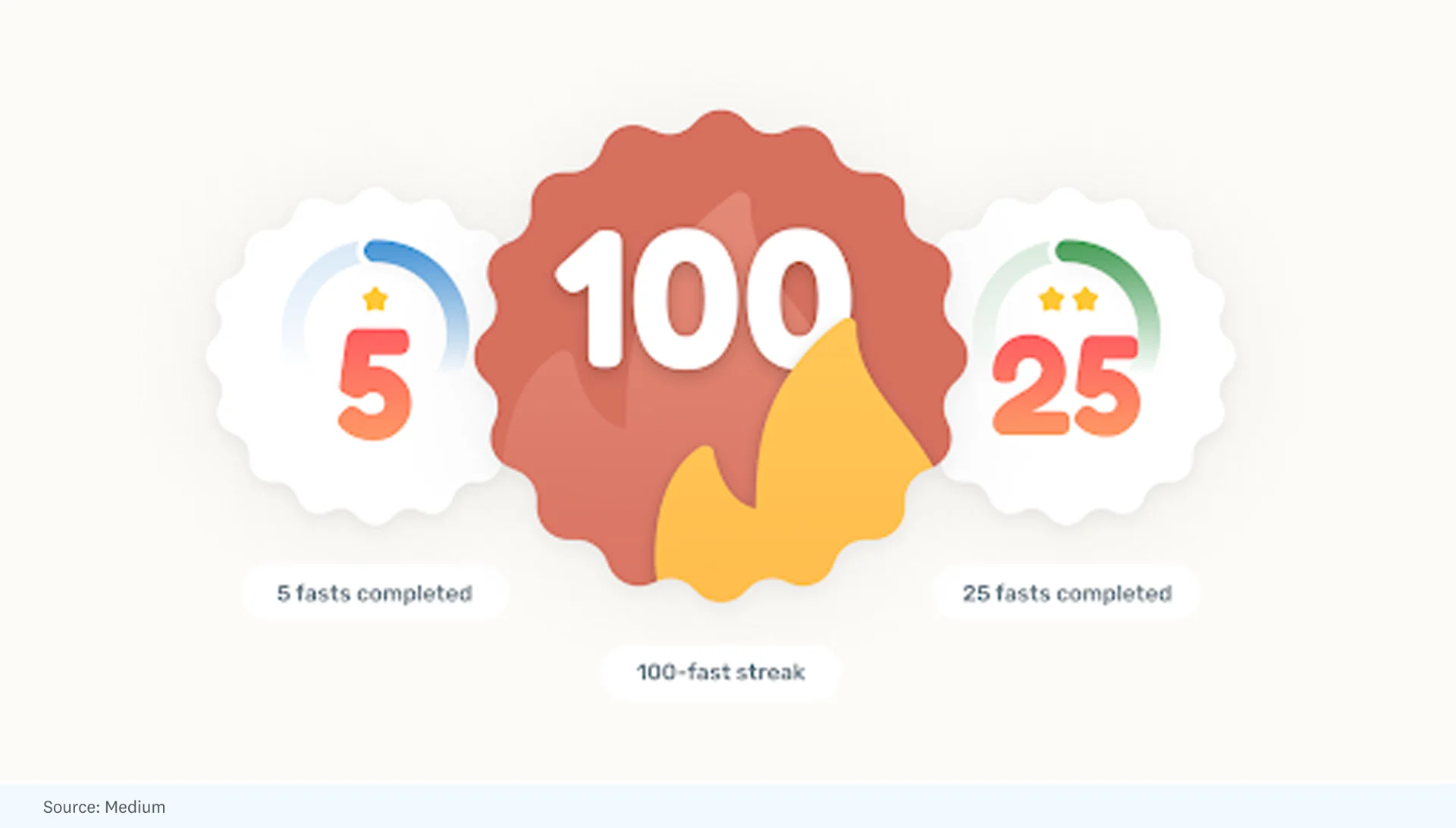
Likewise, crypto protocols can issue NFTs to mark milestones and achievements tied to on-chain activity. For instance, Rabbithole works with leading DeFi protocols to design quests that people can complete to earn a special NFT and/or protocol tokens. This helps protocols acquire customers while giving people a fun route into crypto by completing on-chain quests for special NFTs.
Another example is Uniswap’s v3 protocol. Each time a liquidity provider (LP) adds funds to a pool, the protocol gives the LP an automatically generated NFT based on several factors, such as which pool they entered and where they sit in the liquidity curve.
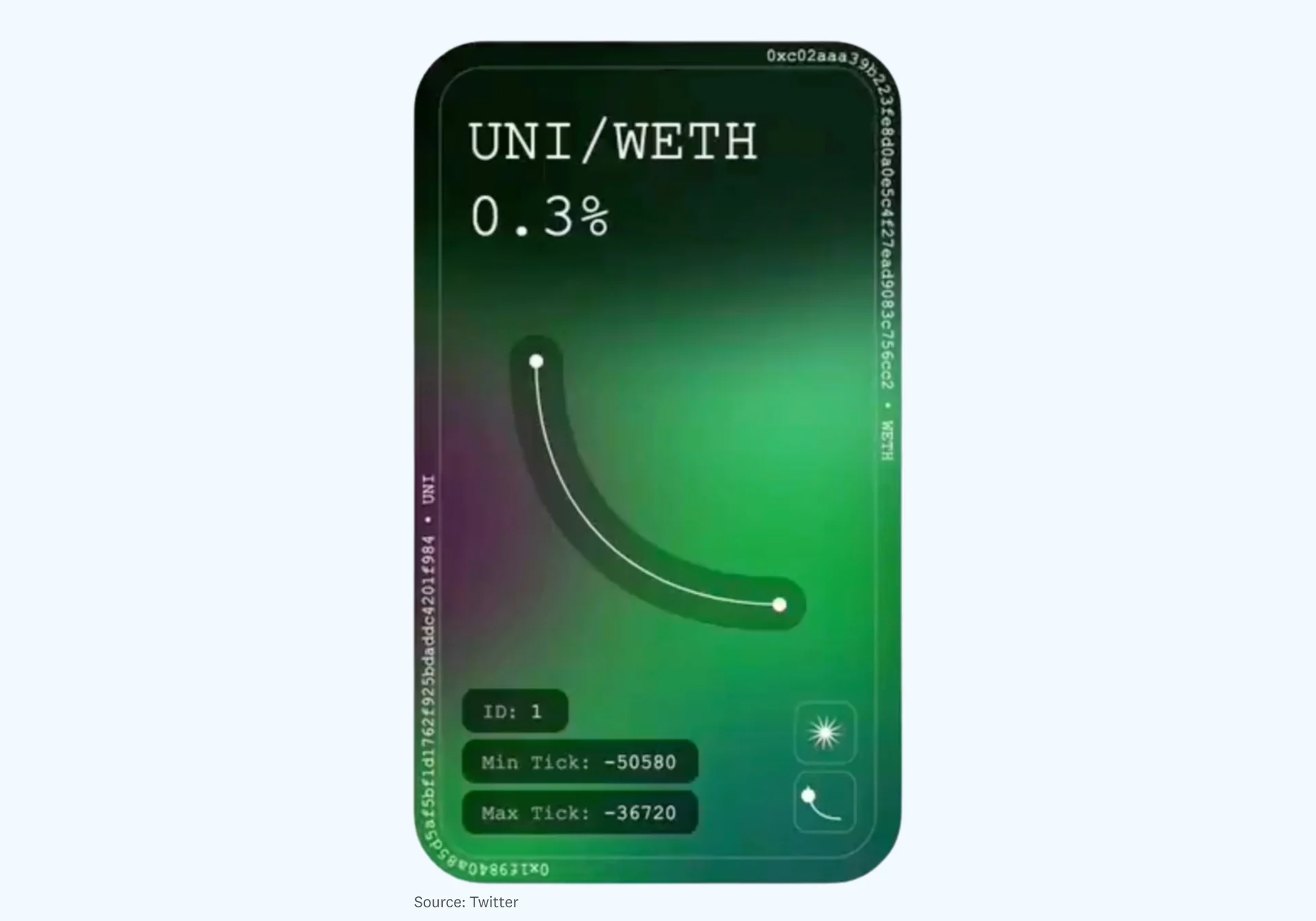
In time, I think the internet-native version of a trophy cabinet and a walk-in closet will be NFT collections that mark important on-chain activity.
Relationships
In Japan, business people trade gifts to build trust and show respect. On Twitch, viewers send tips and buy gifts to express affinity in hopes of getting a shoutout. In cryptoeconomies, tips and gifting could become a core primitive for building relationships online.
Web 2.0 was about social graphs — follows, likes, comments. Web 3.0 is about social + economic graphs — NFTs you buy, projects you invest in, social tokens you earn. Crunchbase company profiles are an early example of economic graphs. For most startups, you can see who financed them, how much they got, and when the funding round happened.
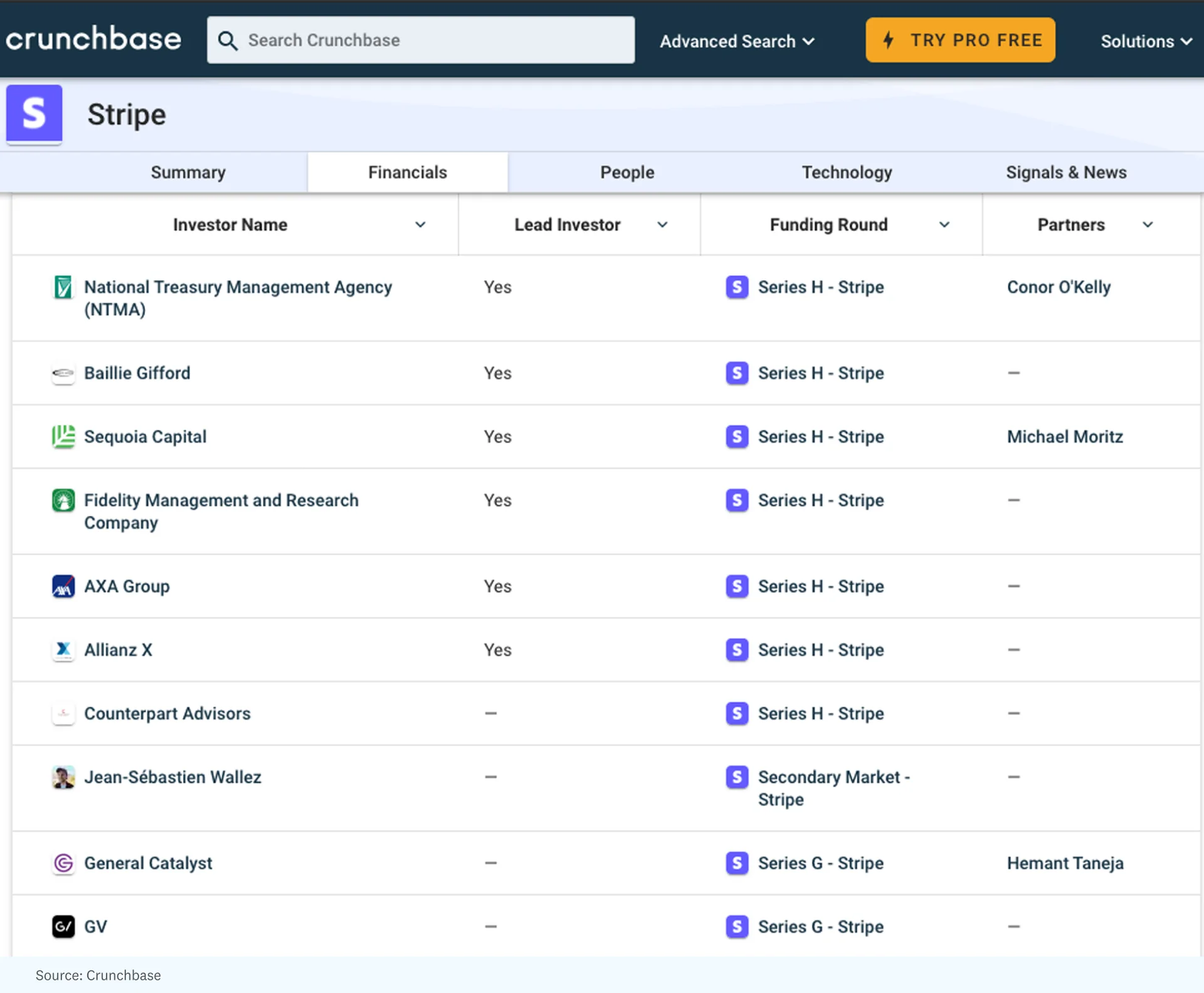
Because all transactions on cryptonetworks are finalized on-chain, we will be able to create rich economic graphs inside social apps, online communities, and marketplaces. We will have a crypto-native version of Crunchbase for creators, communities, and all kinds of creative projects. At Mirror, we show these economic relationships for tokenized crowdfunds that have backed creative projects like novels, newsletters and creator residencies.
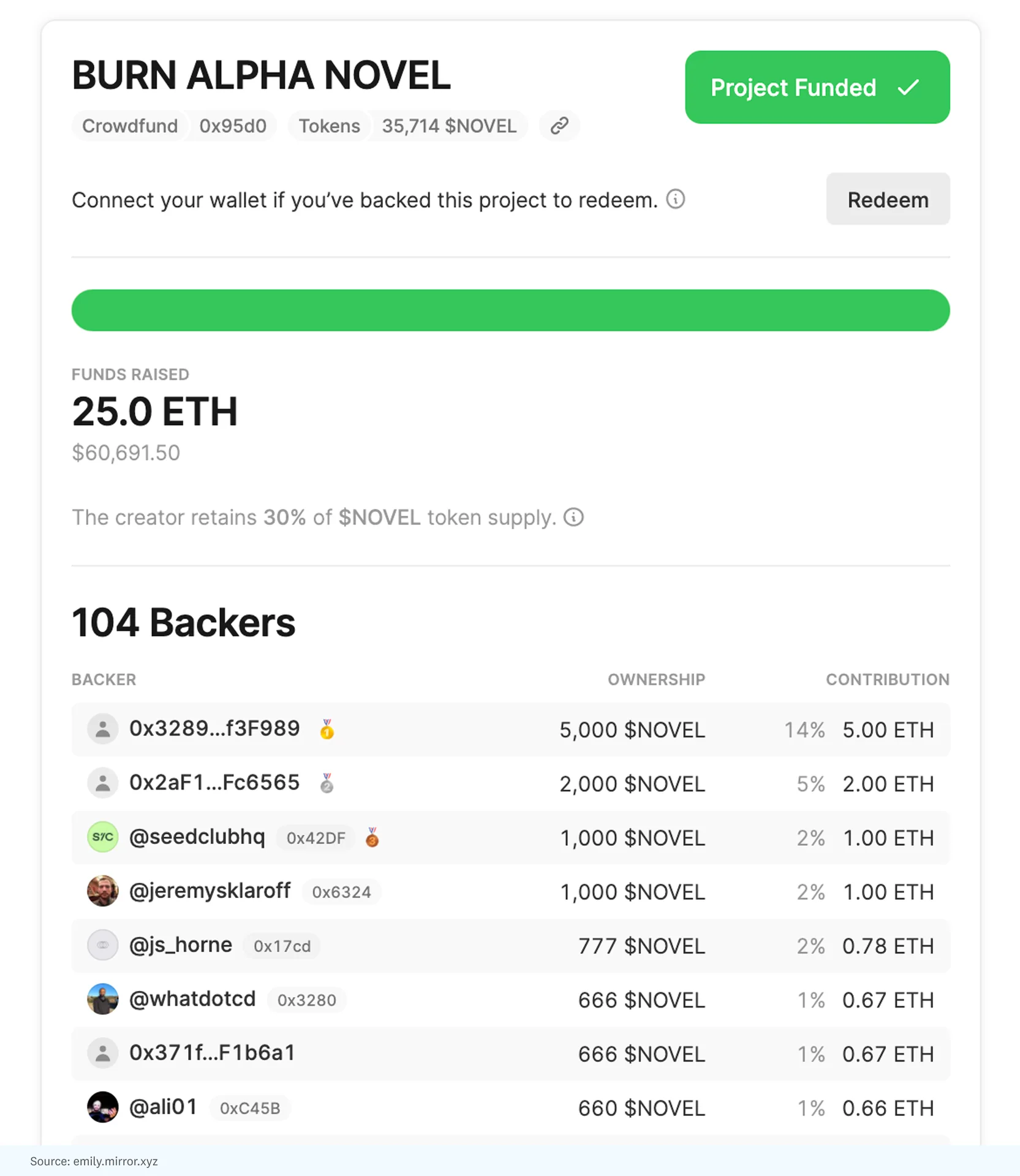
Although there is certainly a risk of over-financializing relationships, many people have discussed the strong bonds formed through these economic graphs.
Another way NFTs can foster new kinds of relationships is through peer-to-peer credentialing. Right now, the primary sources of credentialing are a college degree, the companies you worked for, social media clout, and references. These are clumsy forms of credentialing: they are either not very precise, or they take a lot of time and effort to become legible (in the case of references).
But what if you could send a “Top Backend Engineer” NFT to the strongest backend engineers you’ve ever worked with? Or a “Very Helpful VC” NFT to a board member? The advantage of these badges being NFTs is that you can show they came from a particular person and that they are scarce (e.g. you’ve only ever handed out three of these). I’d far rather hire someone from referrals by people I trust than from an impressive degree.
I think NFTs like these will make possible new kinds of relationship graphs that we can use to create better recommendation systems for job listings, content, dating apps, and much more.
Collecting
Whether it’s Beanie Babies or Pokemon cards, collecting activates our natural urge for status and competition. For crypto projects, the important thing is to make collections easy to read. NBA Top Shot does this with its Showcase feature. It gives simple tools for building collections and presenting them on your profile page:
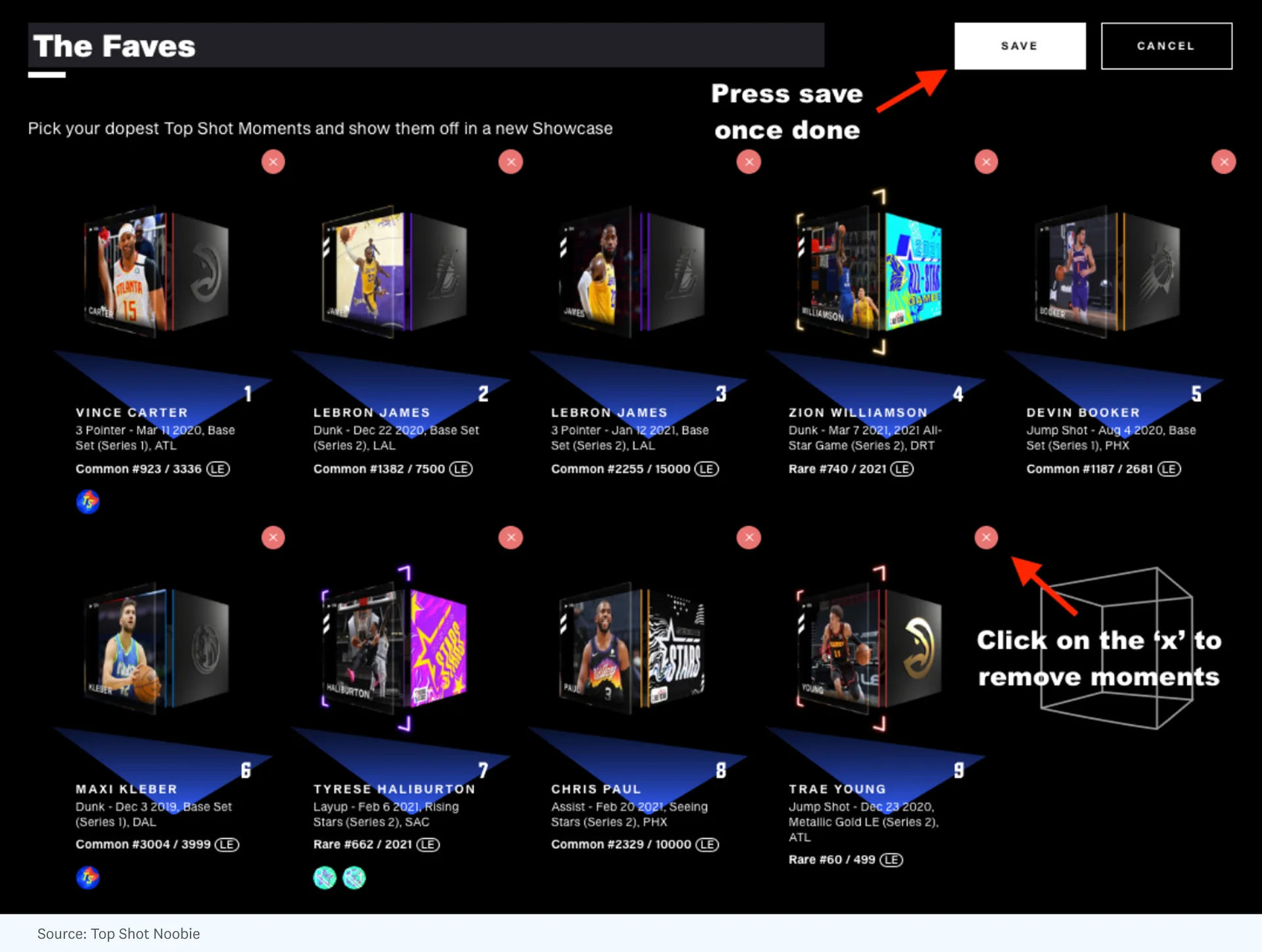
One idea we’re excited about at Mirror is a “digital bookshelf.” What if, instead of liking content, you could collect it by purchasing it at different price and rarity tiers (e.g., gold, silver, bronze) — and then show your collection on your public profile? NFTs let creators sell digital goods at different price points, as Chris Dixon noted in his post “NFTs and a Thousand True Fans,” which can result in better monetization over time.
Beyond helping creators improve the way they monetize, which many people have already discussed, I believe NFT collections will also bring about a curator economy.
What if Spotify listeners voted on playlists and the top curators were paid a blend of cash and Spotify stock? What if Pinterest paid top pinners the same way they pay top engineers?
As more digital media becomes an NFT by default, I believe curators of top songs, videos, newsletters, podcasts, and more will be able to package their NFT collections and earn royalties tied to licensing and engagement. A completely new curator economy will be created.
Superpowers
A long time ago in a metaverse far away, the gaming industry figured out that one of the most effective ways to monetize is by handing users “superpowers.” These include things like skipping levels and upgrading abilities to win the game more quickly.
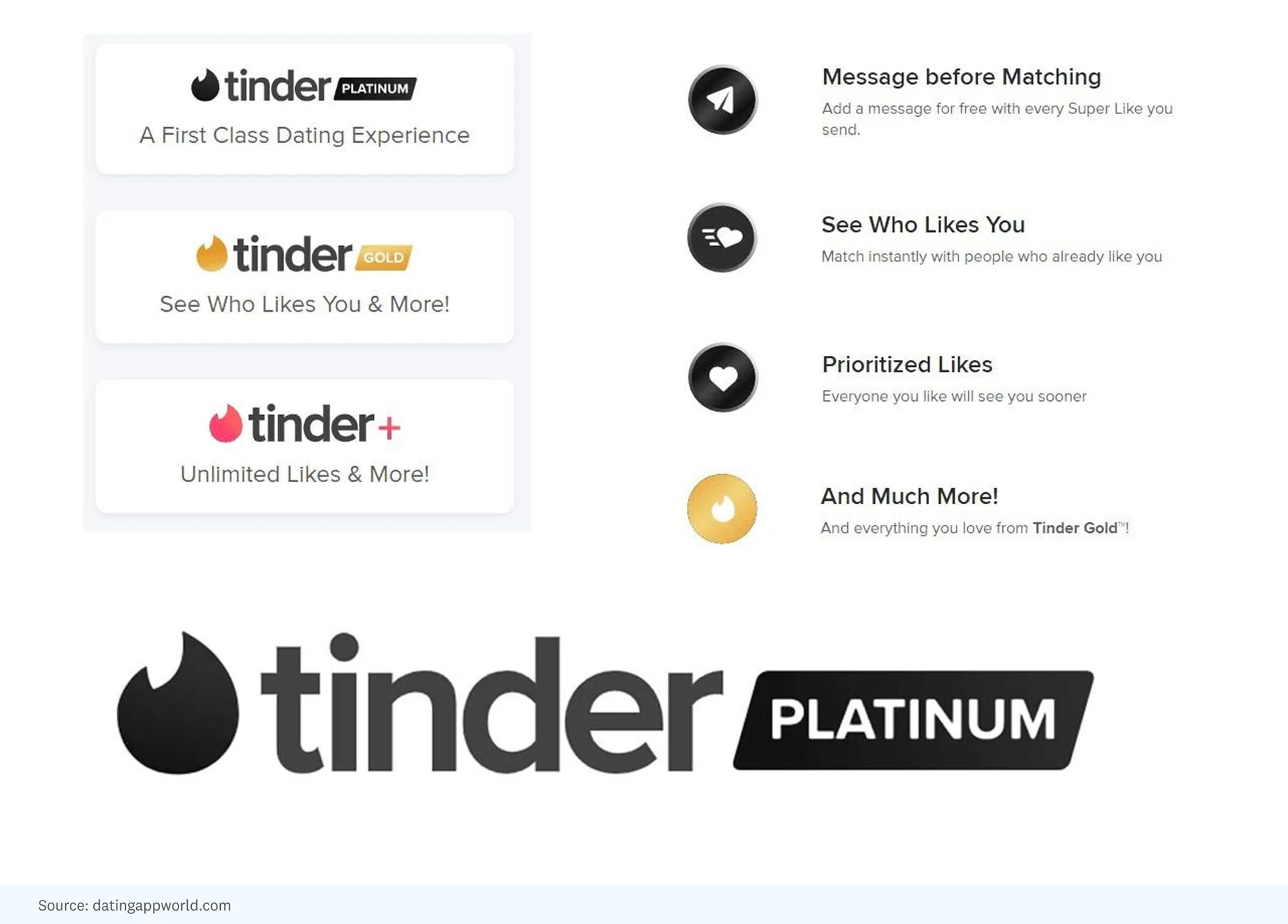
Dating apps, which are consistently among the highest-grossing apps in the world, use a similar strategy. Superpowers in dating apps include extra swipes and greater visibility, which result in more matches.
LinkedIn also uses this approach by giving premium subscribers more searches and advanced analytics, which can help them find a job faster or hire the right candidate.
In crypto, NFTs can be granted to power users to give them special capabilities like serving as a moderator in a popular community. So why do it as an NFT? The benefit is that the NFT owner can’t be rug pulled by a centralized entity. Instead, a smart contract will carry out the terms based on independently verifiable logic.
Depending on the governance mechanism, the community could decide who gets to be a moderator, what privileges they have, and what counts as grounds for removal. Rather than a centralized entity deciding who gets “superpowers” and who doesn’t, the community decides.
***
In summary, cryptonetworks make possible secure, transparent, internet-native economies. The basic unit of value in these economies is tokens. Fungible tokens can be used for money, equity, utility, and governance. Meanwhile, non-fungible tokens are digital assets that open up new business models and can give people a sense of identity, status, and belonging.
There are still obstacles to making cryptoeconomies work everywhere, such as high transaction fees and clunky onboarding, but over the last decade crypto has moved from a fringe activity to something that more institutions, technologists, and entrepreneurs have begun to take more seriously.
In the last decade, we’ve seen cryptocurrency, cryptofinance (DeFi), and cryptoart. Soon, we could see cryptosocial networks, cryptocommerce, cryptofirms, and more.
When I think about how to design cryptoeconomies, I often think of this quote by Vitalik Buterin, cofounder of Ethereum: “To me, the goal of crypto was never to remove the need for all trust. Rather, the goal of crypto is to give people access to cryptographic and economic building blocks that give people more choice in whom to trust.”
The next decade will be about using these economic and cryptographic building blocks to design a new generation of transparent and equitable internet-native economies.