
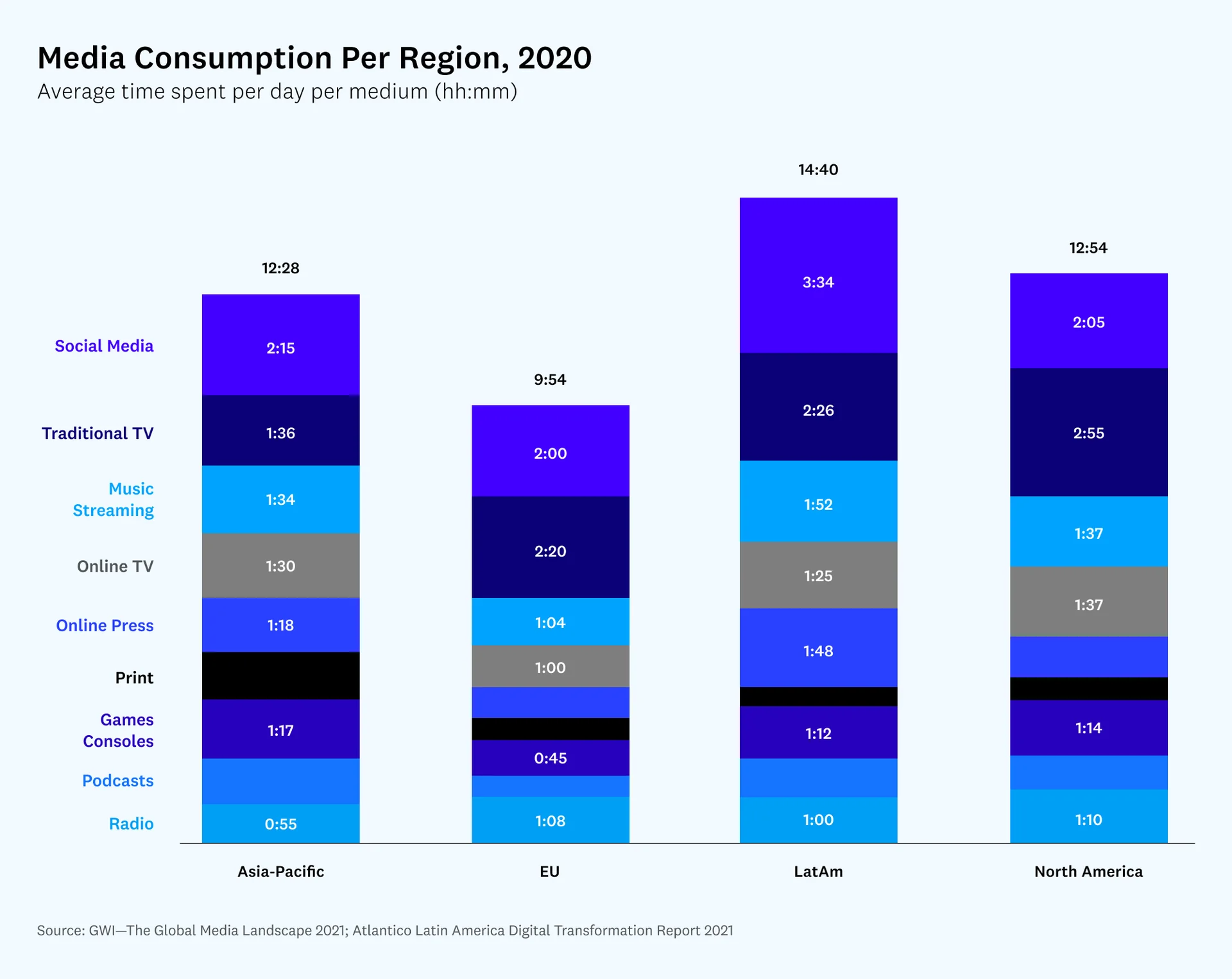
14 hours and 40 minutes.
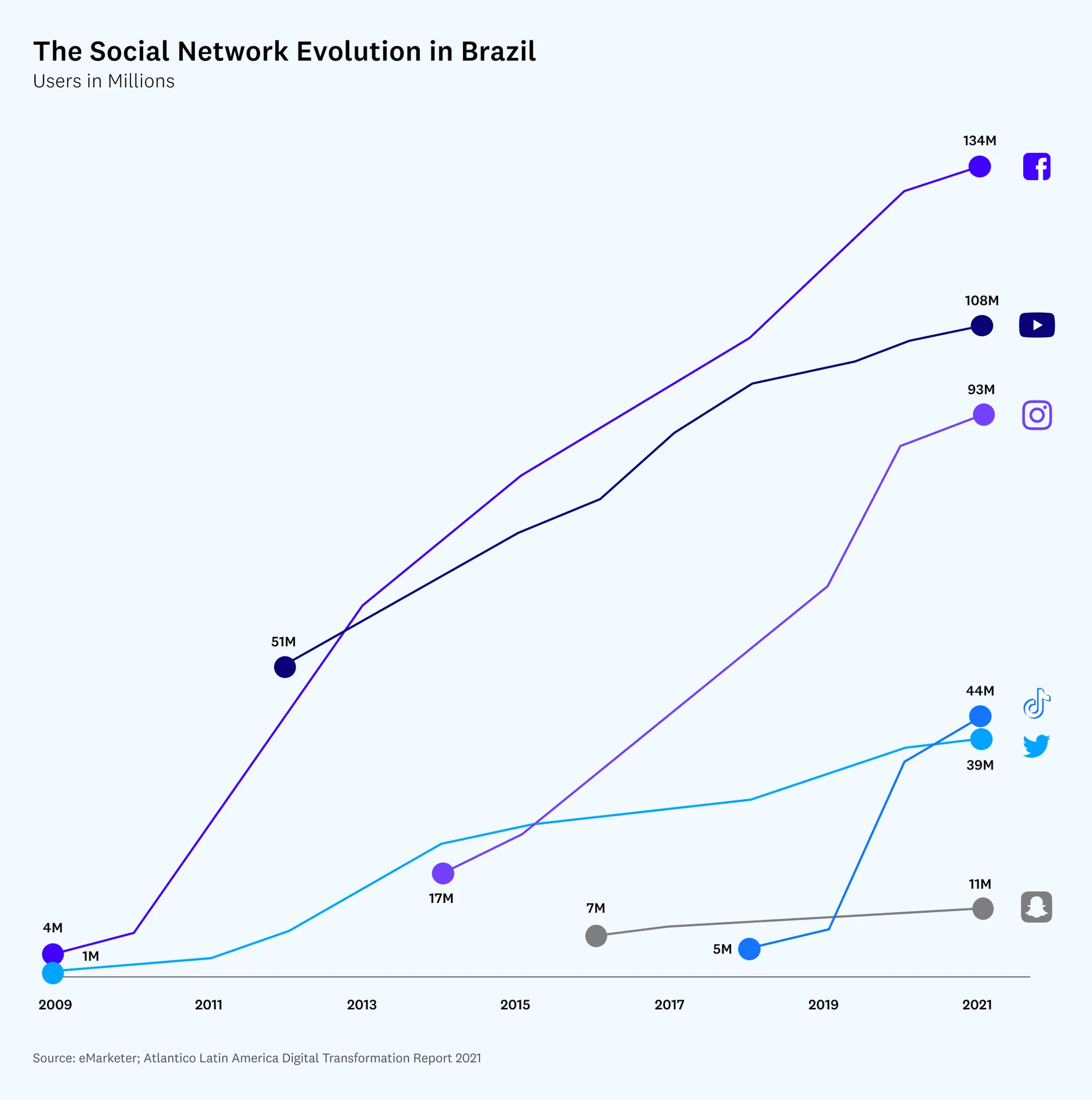
That is the average amount of media Latin Americans consume each day—the highest anywhere, according to a recent GWI survey. Latin America also leads in internet use: the average Brazilian spends over 10 hours a day online, three hours above the global average. And 88 percent of Latin American internet users are on social media, versus 73 percent in North America.
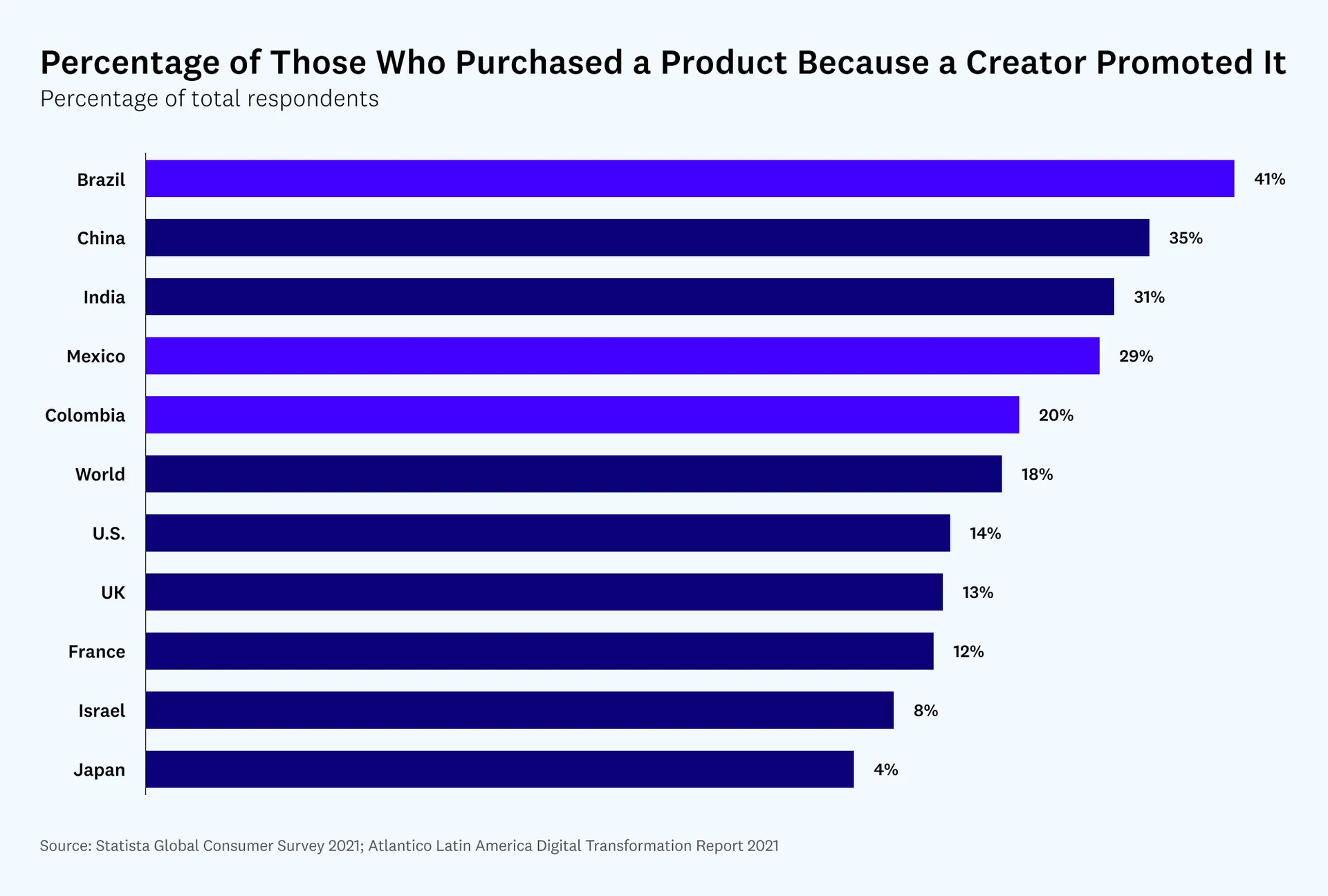
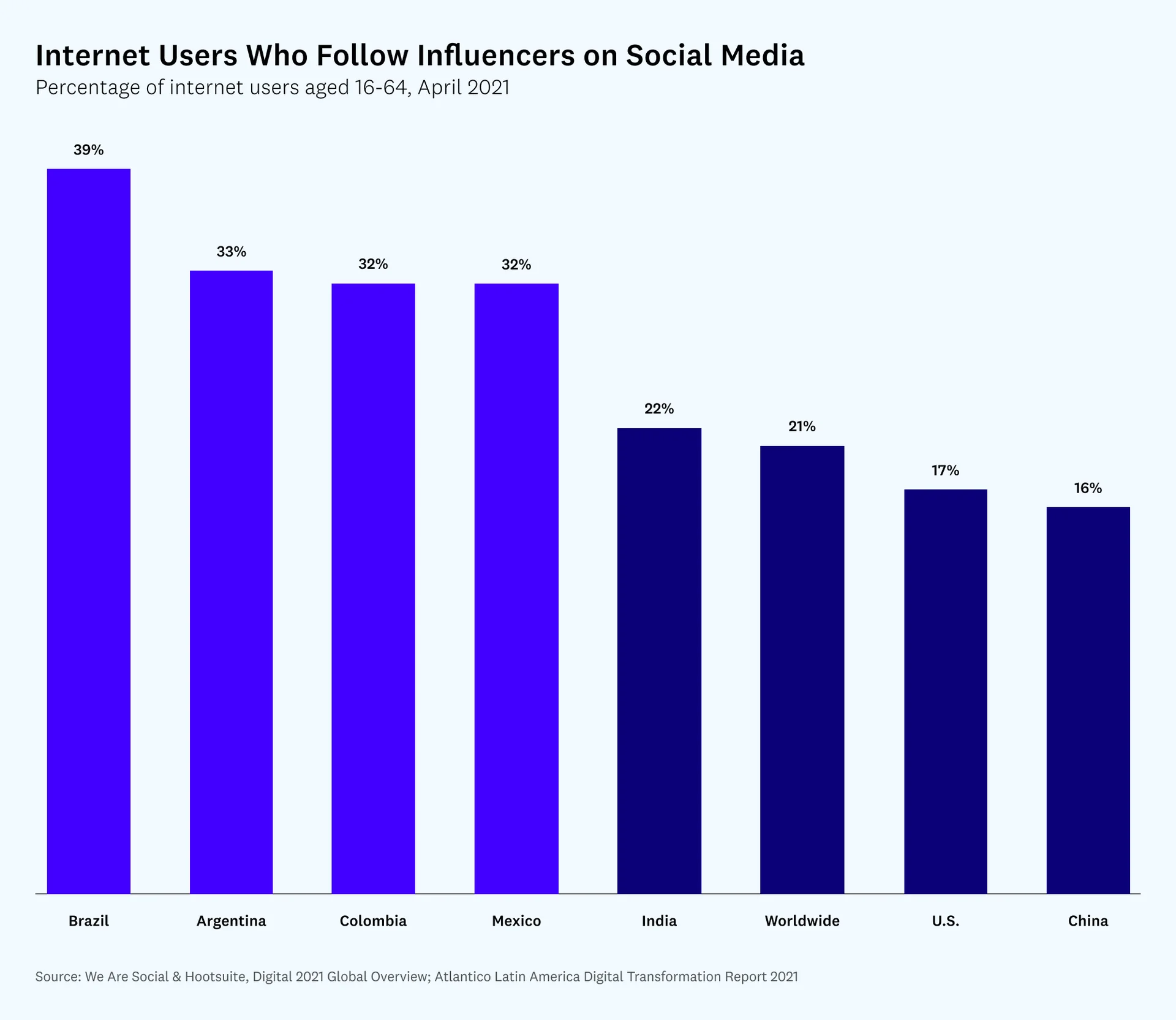
So it is no wonder that independent creators and influencers have become a major force in Latin America. One in three internet users in the region follows an influencer, and more than 40 percent of Brazilians say they have bought a product after a creator recommended it.
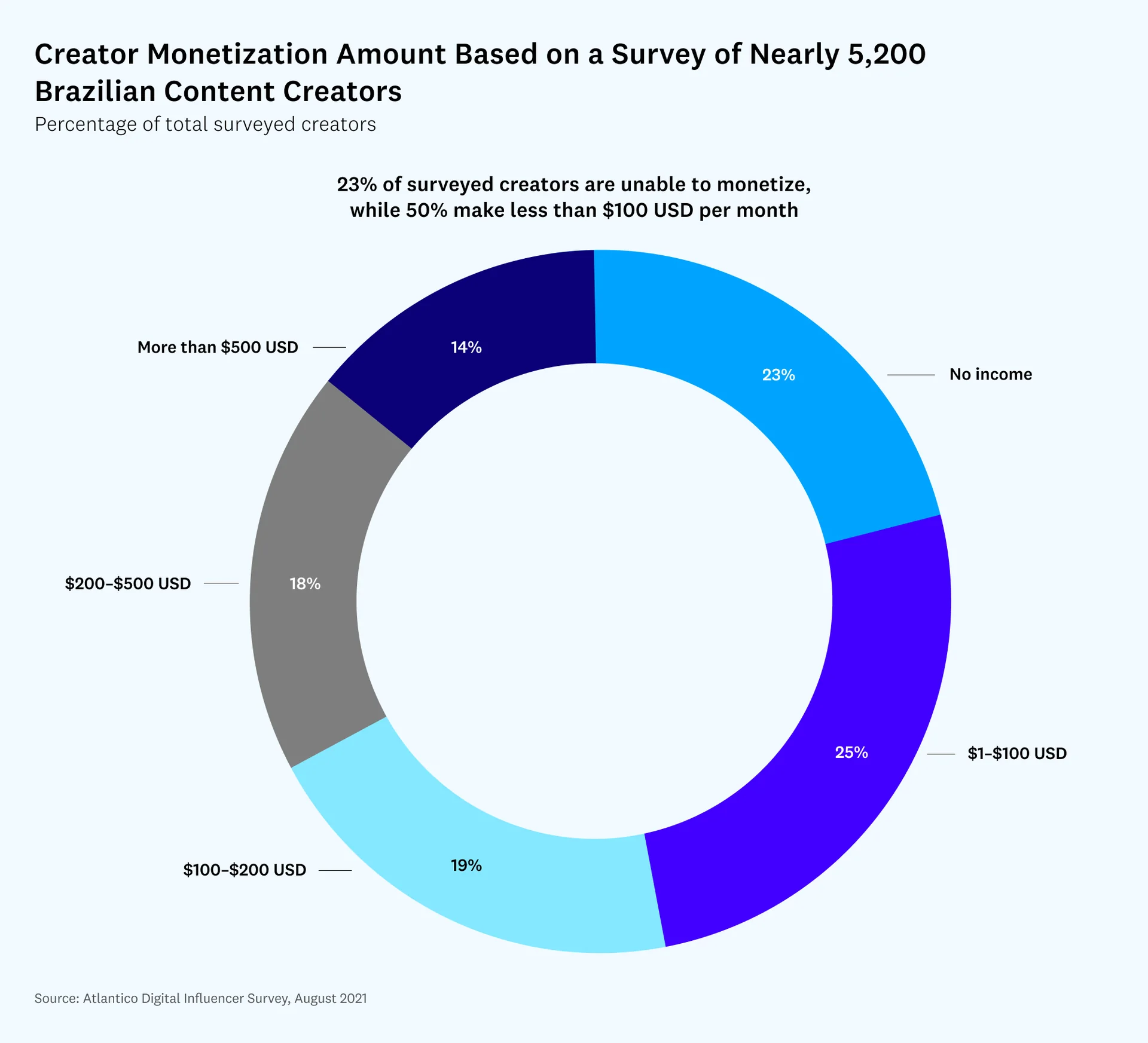
Yet even though it leads the world in internet and digital media consumption, the creator economy—the capacity for independent creators to earn money online from their skills or audiences—is still undeveloped in Latin America. Put simply, it remains surprisingly hard for creators in the region to turn influence into income. In a recent survey of more than 5,000 creators in Brazil, half earned under $100 a month, and almost a quarter monetized nothing at all.
This odd split—massive media use, weak creator economy—has many causes, some historical and economic. But a look at Latin America’s current media and influencer scene shows fresh chances for creators in the region to move closer to their global peers. New approaches such as creating digitally native brands and blending content with business can push the Latin American creator economy forward.
Historical and market barriers to creator monetization
Latin America has the world’s lowest digital ad spend right now, according to eMarketer. Even after drawing more attention for years, digital ad spending in Brazil only edged past traditional television last year.
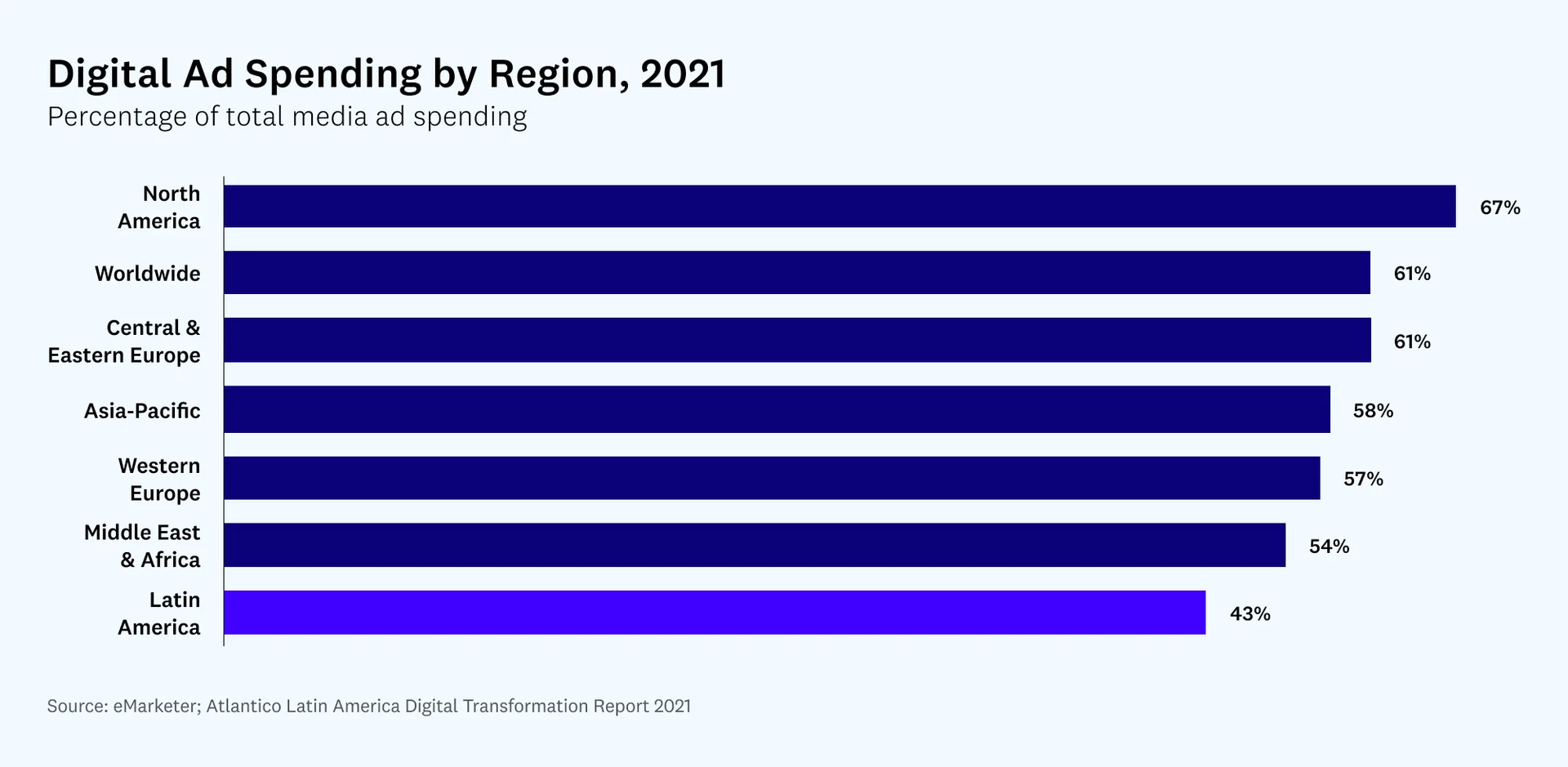
Several factors help explain this delay:
Smaller markets, smaller budgets
Total media ad spend in Latin America is significantly lower than elsewhere in the world—just $21 billion in 2020 (one-tenth that of North America). Given the comparatively smaller local economy, there are simply fewer ad buyers in Latin America than in the U.S., meaning there is less total demand for advertising, according to Sergio Marques, former CFO of Latin America’s largest mass media company, Globo Group. In fact, when considering total media ad spend as a percentage of GDP, Latin America is only slightly ahead of the Middle East and Africa, and still about one-third the levels of North America and Asia.
Also, a country like Brazil has a much more concentrated television audience—there, the audience for the daily soap opera matches the Super Bowl. So when one ad purchase can reach an advertiser’s entire target demographic, television can be relatively efficient.
Agency dependence on media and production incentives
Structural patterns in how advertising agencies work with media companies and get paid by them are another major obstacle to shifting ad budgets from offline to online. Many large media companies in Latin America provide a “bonus for volume” (BV), a financial incentive paid to agencies buying media space. Since many ad agencies depend on BV funding, it has a major impact on the sector’s development. (More recently, this practice, which some tech companies have also adopted, has become the target of legal injunctions from Brazil’s national competition and antitrust regulator.)
This old model not only creates a mismatch in agency incentives around digital advertising, it also slows creator monetization. Agencies often ask for large retainers to keep ad production teams on standby. But when they work with independent digital creators, production needs drop sharply, which puts that traditional model in doubt.
Once advertisers realize that creators can direct their ad-production spending entirely toward content distribution, ad budgets should start moving into the creator economy. Companies like Squid and BR Media Group in Brazil, for instance, have made major gains in this area. Squid has become a leading influencer and online community marketing company in Brazil by linking creators to paid brand campaigns, while BR Media Group helps brands run influencer campaigns.
The nascent and amateur creator market
The last thing keeping creators from monetizing their influence is that, structurally, the market is still in its early stages, with no standardization in product, pricing, or terms. For Latin American creators, the most common way to monetize is still sponsored content, a homemade version of the traditional product placement agreement.
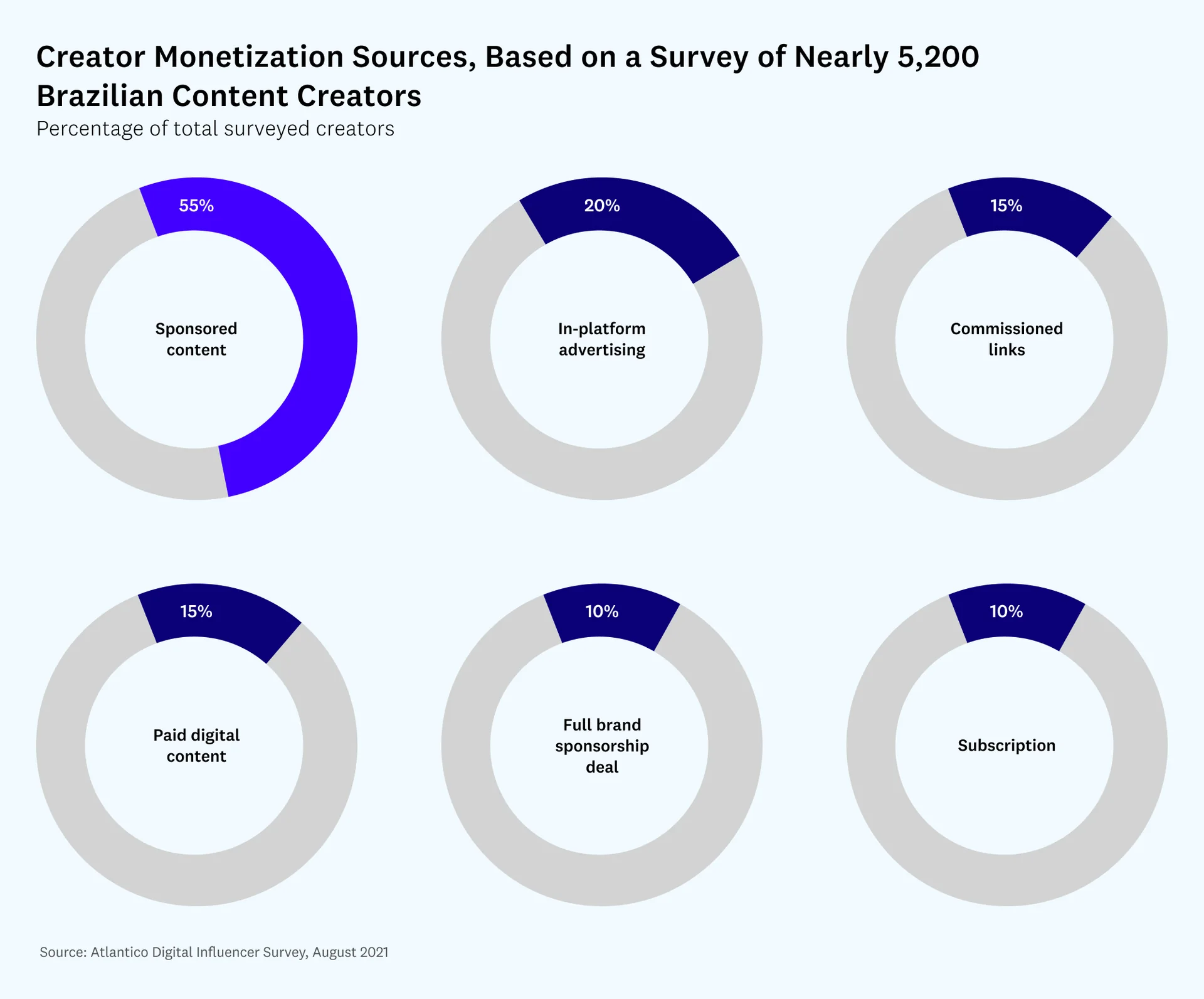
There is also a clear opening to create dedicated creator tools. Hundreds of creators we surveyed last year pointed to the difficulty of the production and administrative work involved in making content. Pricing and contracting are also major pain points, along with shifting rules and algorithms from tech platforms.
In some ways, the fast expansion of Latin America’s large creator base is also its problem: everyone wants to be an influencer. In part, this gold-rush dynamic has fragmented revenue, reducing earnings for any single creator.
The tipping point for Latin America’s creator economy
As attention and influence quickly move from traditional media to independent creators, advertising budgets are bound to follow. And as tech platforms help creators standardize and professionalize their relationships with fans, followers, and patrons, pesos and reais will begin flowing into this new economy. The question is not if, but when.
But changing ad budgets is only the beginning. New, integrated business models will create a fresh wave of companies that combine media with product and monetization.
Digitally native brands in emerging markets
In Latin America, ecommerce sales increased by 63 percent in 2020. Ecommerce is projected to make up nearly 11 percent of the region’s total retail sales this year.
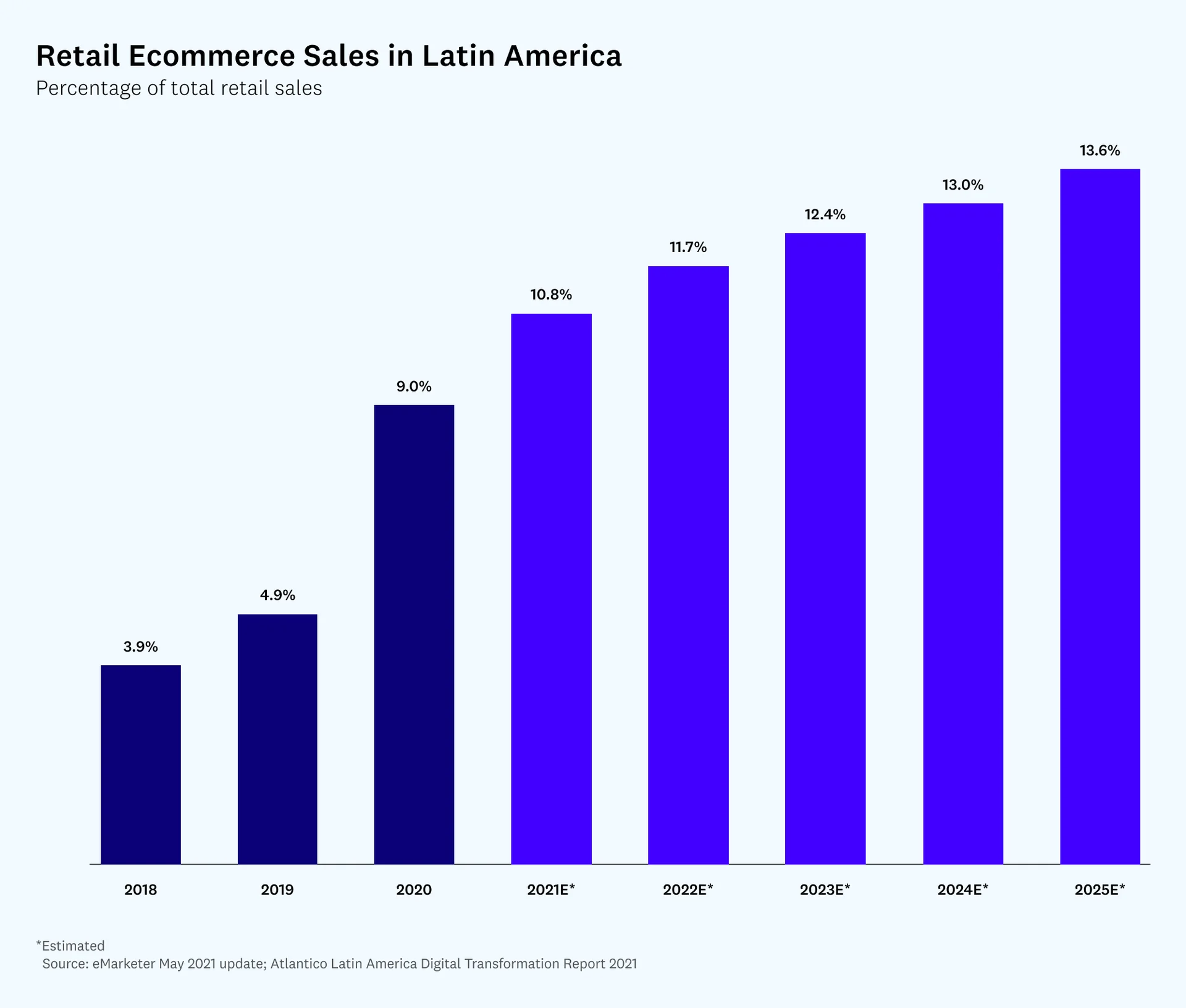
Local digitally native brands are combining ecommerce’s strength with the reach of a growing creator economy—a trend heavily shaped by Chinese firms. TikTok already reaches one in every three Brazilians each month, and Shopee, the Singaporean ecommerce giant, competes with local players like B2W and Magalu in app downloads.
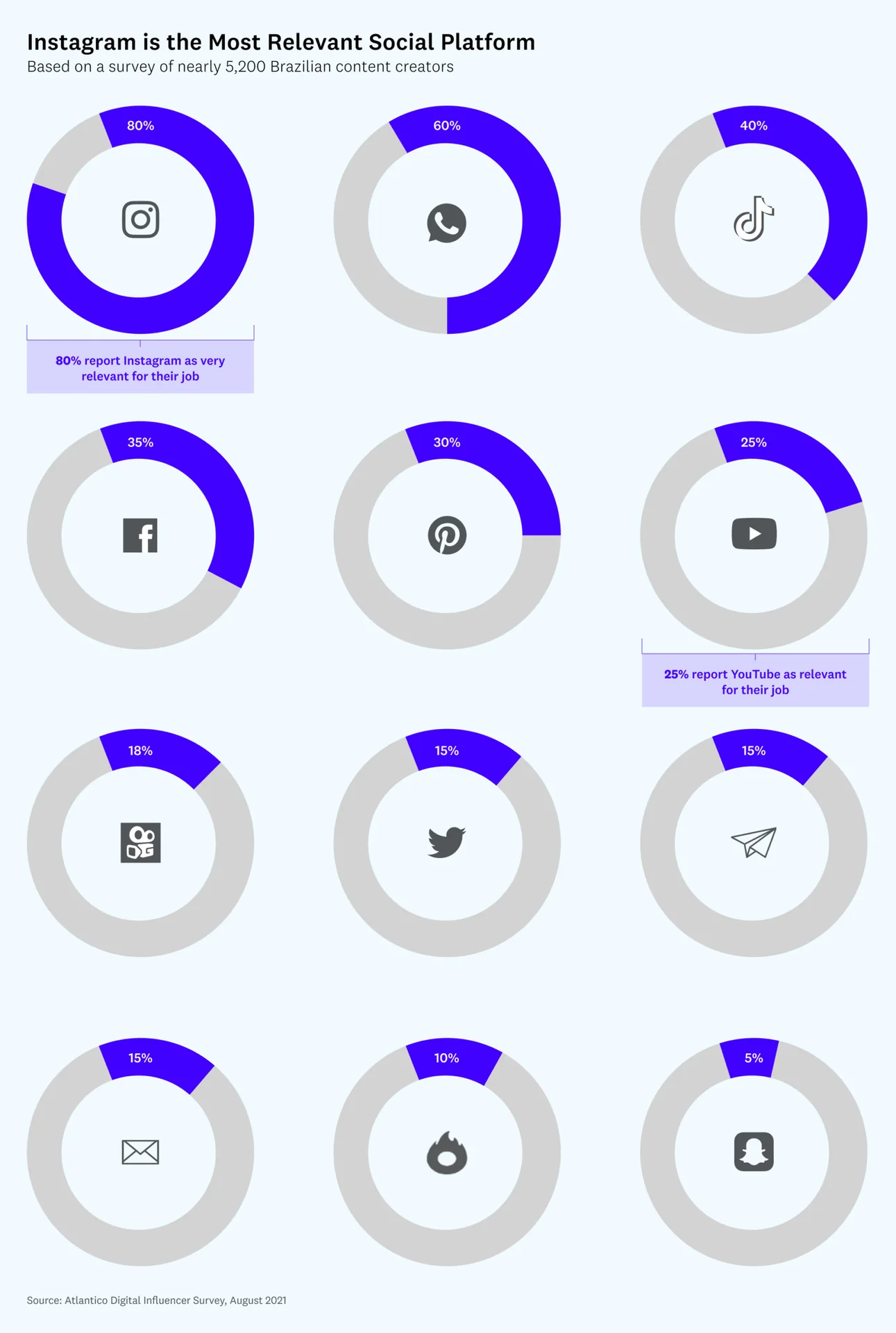
One way to build a brand has been to tap an online community to jointly create products and brands, then gather suggestions and reactions from followers to shape product features. For example, Sallve, a Brazilian beauty label aimed at millennials and Gen Z, relied on this approach to assemble a product lineup that fits its community’s needs. The company, often portrayed as a mix between China’s Yatsen and the U.S.-based Glossier, has the well-known beauty influencer Julia Petit on its founding team. By using Petit’s Instagram and YouTube channels, Sallve draws a deeply engaged base of fans and customers that takes an active part in co-creating its products.
Likewise, linking a brand to a specific influencer is another route to success for digital brands. This model is now clear in the U.S., from Kylie Cosmetics and Rihanna’s Fenty in beauty to Jessica Alba’s Honest Company and Gwyneth Paltrow’s Goop. In Brazil, one prominent case is ByNV, a fashion brand launched by influencer Nati Vozza, which was bought last year by Grupo SOMA (one of Brazil’s biggest fashion conglomerates). According to data from Grupo SOMA’s public filings, the creator brand already represents 10 percent of the company’s revenues, even though only two percent of Grupo SOMA’s physical stores are ByNV stores.
Fusing content and business
New digital brands place content at the forefront, narrowing the distinction between a media asset and a transactional website. These companies often use distinctive content, whether produced by their community or by an in-house editorial team, to organically draw in and keep audiences and smoothly move them through a transactional funnel to do everything from buy a gift to trade stock.
In Brazil, one such company, Festalab, combined a content creation and communication platform for social events (think Paperless Post and WeddingWire) with an ecommerce offering focused on wedding registries (like Zola). The company has 10,000 weddings registered on its platform every month with no spending on paid acquisition, generating organic growth entirely through user-created content.
Independent creators have also made finance a popular (and profitable) category, posting daily stock tips and market views through newsletters and videos on social media. On Instagram, for instance, one-third of Brazilians follow finance influencers. Grupo Universa built a two-part monetization engine in the sector, and was acquired by BTG Pactual, Latin America’s largest investment bank. Universa came from the merger of independent investment content company Empiricus, which had accumulated over 400,000 paying subscribers, and Vitreo, one of the largest independent online investment platforms. While rivals have fought a fierce battle for paid customer acquisition, Vitreo held its leading position with very little marketing spend, growing almost entirely through integrated cross-promotion via Empiricus’ newsletter and content.
As digital creator content becomes a pillar of Latin American media consumption, drawing more and more attention and influence, the region is nearing an inflection point. Enormous value is set to be generated in the creator economy, not only through an influx of ad dollars, but also through the emergence of innovative new companies that smoothly combine media and monetization.
This article is adapted from research in Atlantico’s Latin America Digital Transformation Report.
Thanks to Sergio Marques, founder of Crivo Ventures and the former CFO of Globo Group; Ricardo Dias, founder of Adventures and former VP of Marketing of Ambev; Felipe Oliva, founder of Squid; and Pedro Tourinho, founder of MAP and Soko, for their input. Disclosures: Atlantico is an investor in Sallve and Festalab.