
If there’s one central notion fueling enthusiasm around the “creator economy,” it is this: creators with huge followings on platforms such as Instagram, TikTok, Twitter, and YouTube could see revenue rise by orders of magnitude if they had better ways to charge fans directly for content, instead of depending on ads or merch sales.
A new wave of startups has appeared to make that vision real, helping creators sell content across every format and genre. In some instances, this model works exceptionally well: OnlyFans, Patreon, Substack, Teachable, Twitch, and many others are helping hundreds of thousands of creators make a living. And because of that success, established networks like Facebook, Twitter, and YouTube have answered with their own user-pay features.
But one essential step keeps going missing again and again, from small startups to the biggest incumbents in the world: failing to sell. In the rush to create seamless payment tools, the actual pitch — the “here’s why you should subscribe/pay/join, and here’s what you’re paying for” — gets pushed aside, and that burden is often handed off to the creator.
A widespread misunderstanding among creators and creator platforms is that getting a fan to pay for content is basically just an intensified version of pressing the “follow” button. But following someone on Twitter or YouTube and paying for that access are very different actions that call for very different marketing and acquisition systems. More focus has to go to the sales funnel — and platforms need to develop the features creators need to make the sell effectively.
A pattern of under-selling
In earlier years, “paid content” business models were mostly tried by startups that did not already have a built-in network of engaged users. At that point, it was easy to pin weak conversion rates on the mental friction needed to move fans onto a new and unfamiliar platform.
But successful platforms such as Facebook, Twitter, and YouTube do not have an engagement problem. I think the real problem in these cases is the basic blocking and tackling that good marketing requires. It’s easy to overlook, but even the biggest creators still have to sell if they want fans to buy.
People often say creators today have to be CEOs — the chief executives of their own businesses — even if they rely on outside resources or tools for support. Still, knowing one’s business and steering that strategy should not mean creators must handle all business development on their own. Just as technical startup CEOs will always need to sell, creators do too. And platforms need to support them.
Creating compelling free content is one thing, but it is an entirely different matter to define a value proposition, craft effective marketing messages that express that value proposition, and place those messages in front of fans at the right moment, again and again. In my experience, this is the main place creator platforms are most likely to miss. During my work building products for Gimlet, Substack, and Every — studying creator tools and subscriber flow — I collected common mistakes, along with overlooked sales tactics. Below, I present some case studies of what I call the under-sell, plus observations on how platforms can better assist creators.
Sales funnel case study: Twitter Super Follows
Twitter is among the most powerful free networks, yet it has only recently started offering payment functionality. This gives one clear example of a creator platform that undersells the pitch. The company recently rolled out the “Super Follows” feature, where users can pay to get bonus content from accounts they like. The service debuted in early September, beginning with dozens of creators who together have millions of followers. But during its first two weeks, those creators produced only $6,000 in combined revenue, according to SensorTower.
I describe the subscriber flow for Super Follows here, based on the funnel of Michaela Okland, a podcaster and prolific tweeter. As one of the original creators Twitter partnered with to test the feature, she made strong use of her Super Follows potential. In fact, she brought in more revenue from super followers than any other creator, according to that same SensorTower data snapshot two weeks after launch.
This is what Michaela’s profile looks like:
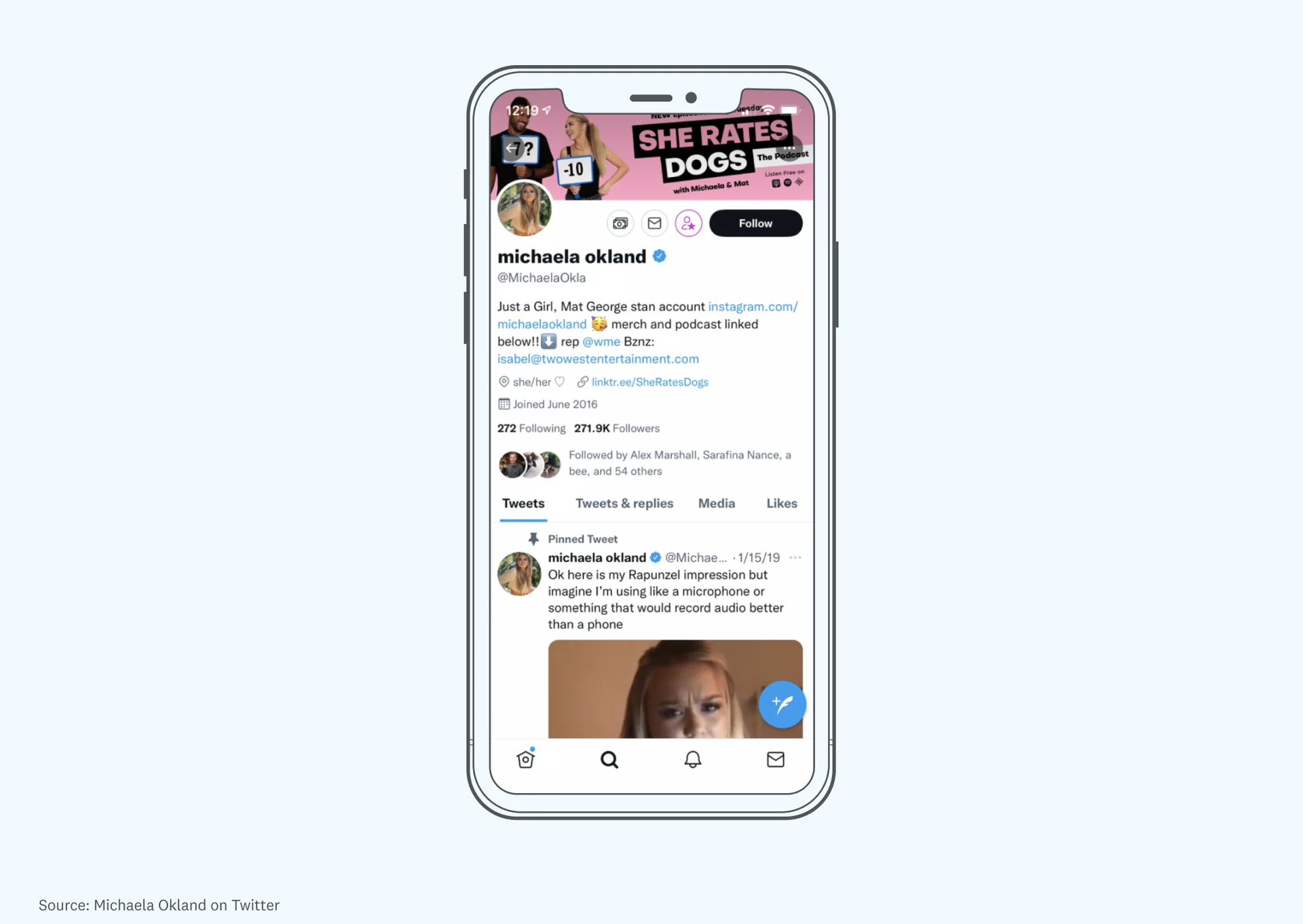
At this point everything looks normal, aside from the purple button to the left of the “Follow” button. Nowhere does it say that this account has exclusive content for paid super followers, or present a paid-value proposition.
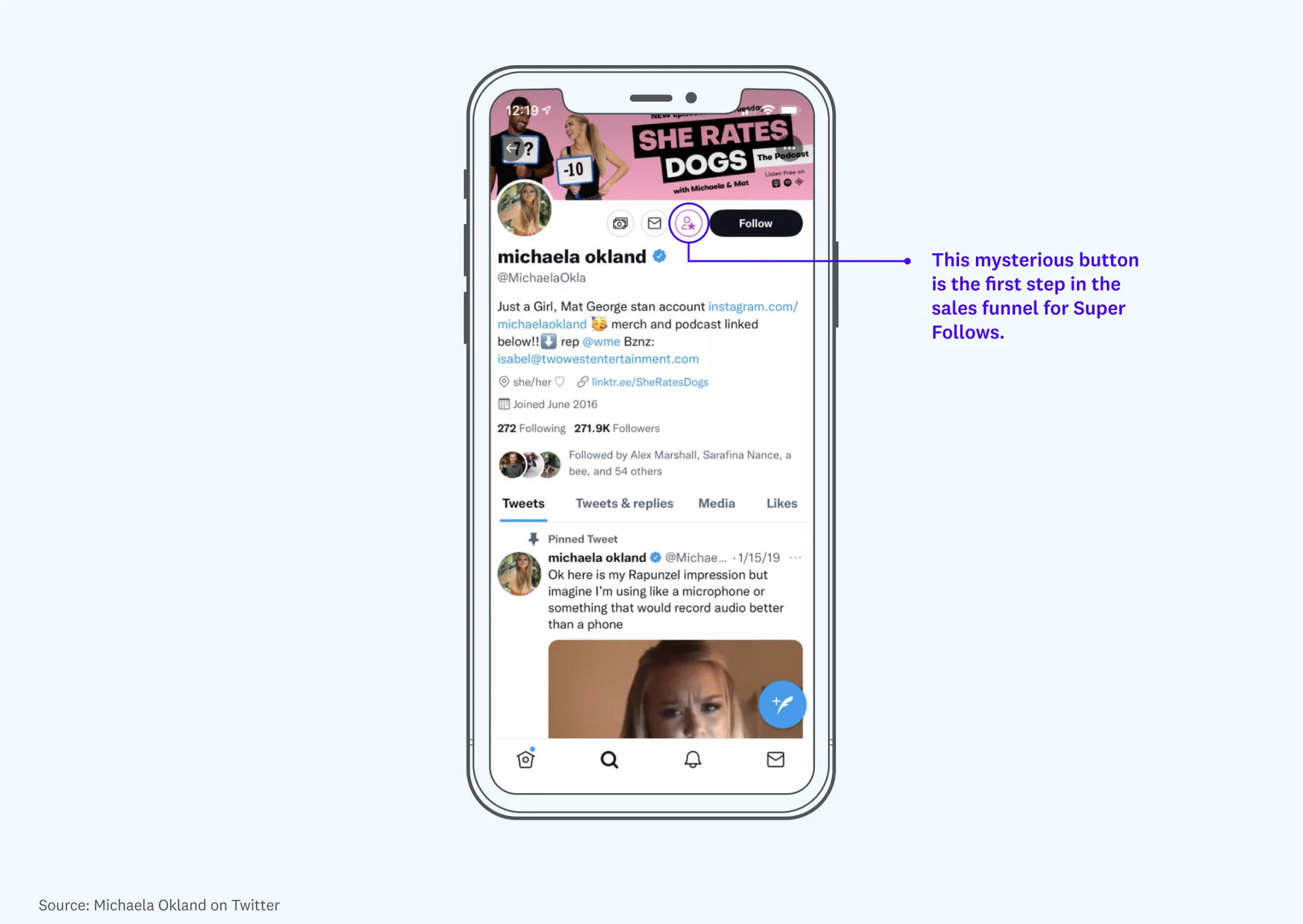
Maybe that is okay, since we are not even following this account yet; the audience for becoming a Super Follower is probably restricted to people who already follow an account, so that seems reasonable.
But let’s see what happens when we click the “Follow” button:
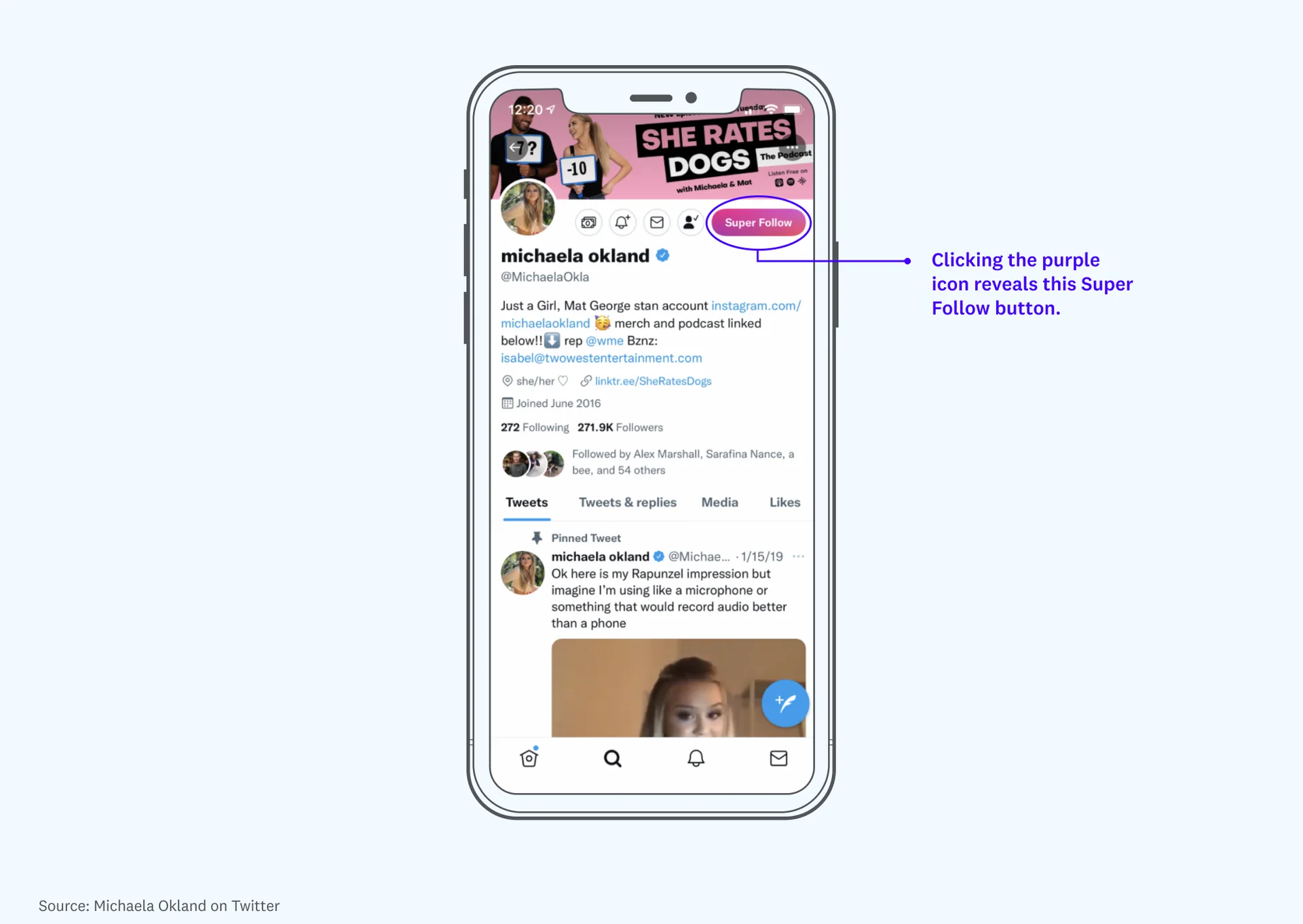
Now we get a bright pink “Super Follow” button. It stands out, but the “pitch” is clearly missing. I just pressed follow! This is the exact point when Twitter knows for certain I’m interested in this creator’s content. Why not show me what I’ll miss if I don’t pay? Why not sell me?
To see the pitch, I have to tap the “Super Follow” button. Here’s what appears when I do:
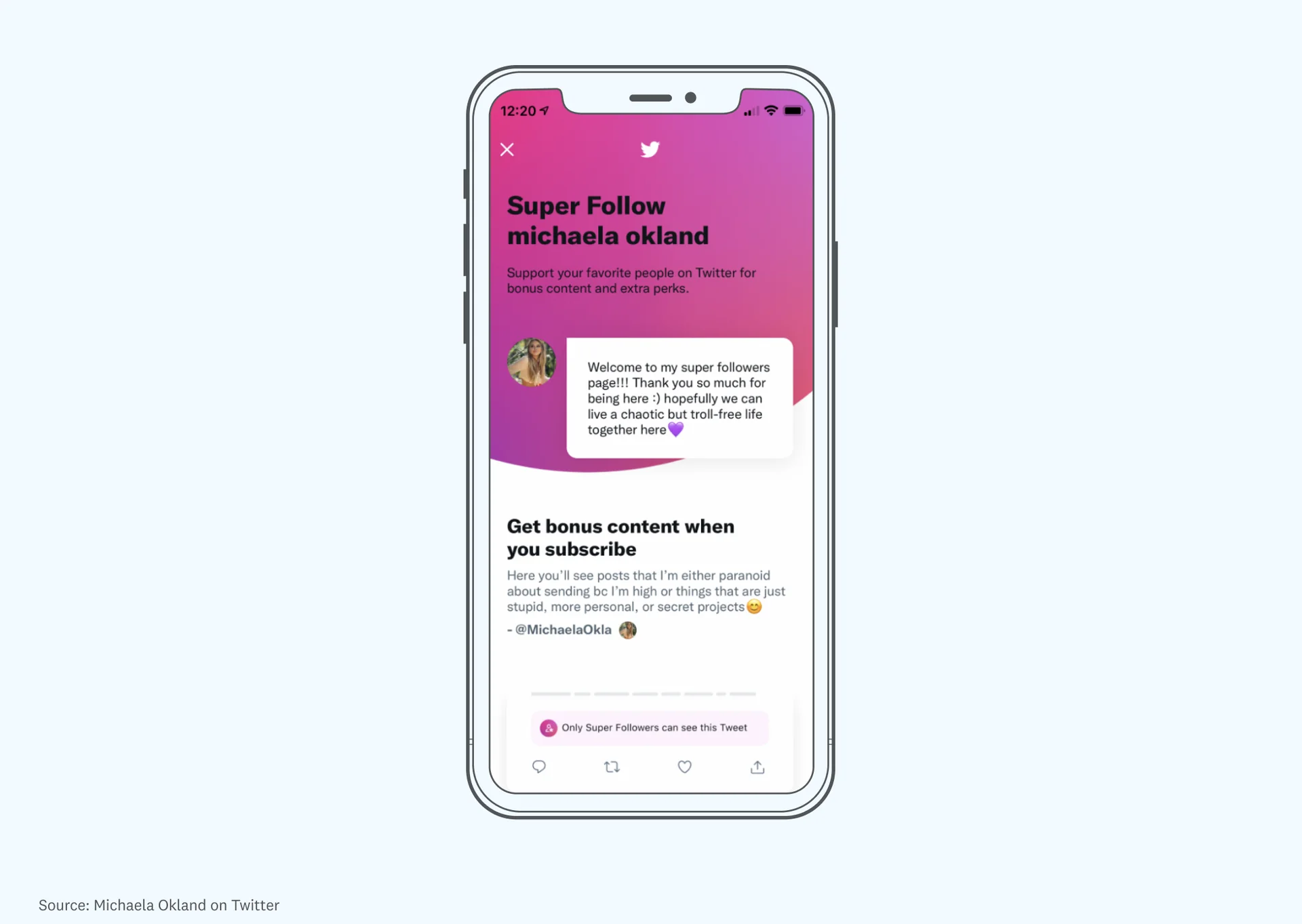
The most basic trade-off every creator platform confronts when building these pages is convincing users to convert without making creators do too much work. Twitter seems to have favored the “make it easy for creators” side of that trade-off here: there appear to be only two brief text fields creators must complete. One is a broad welcome message at the top, and the second is a description of the kind of “bonus content” followers can expect.
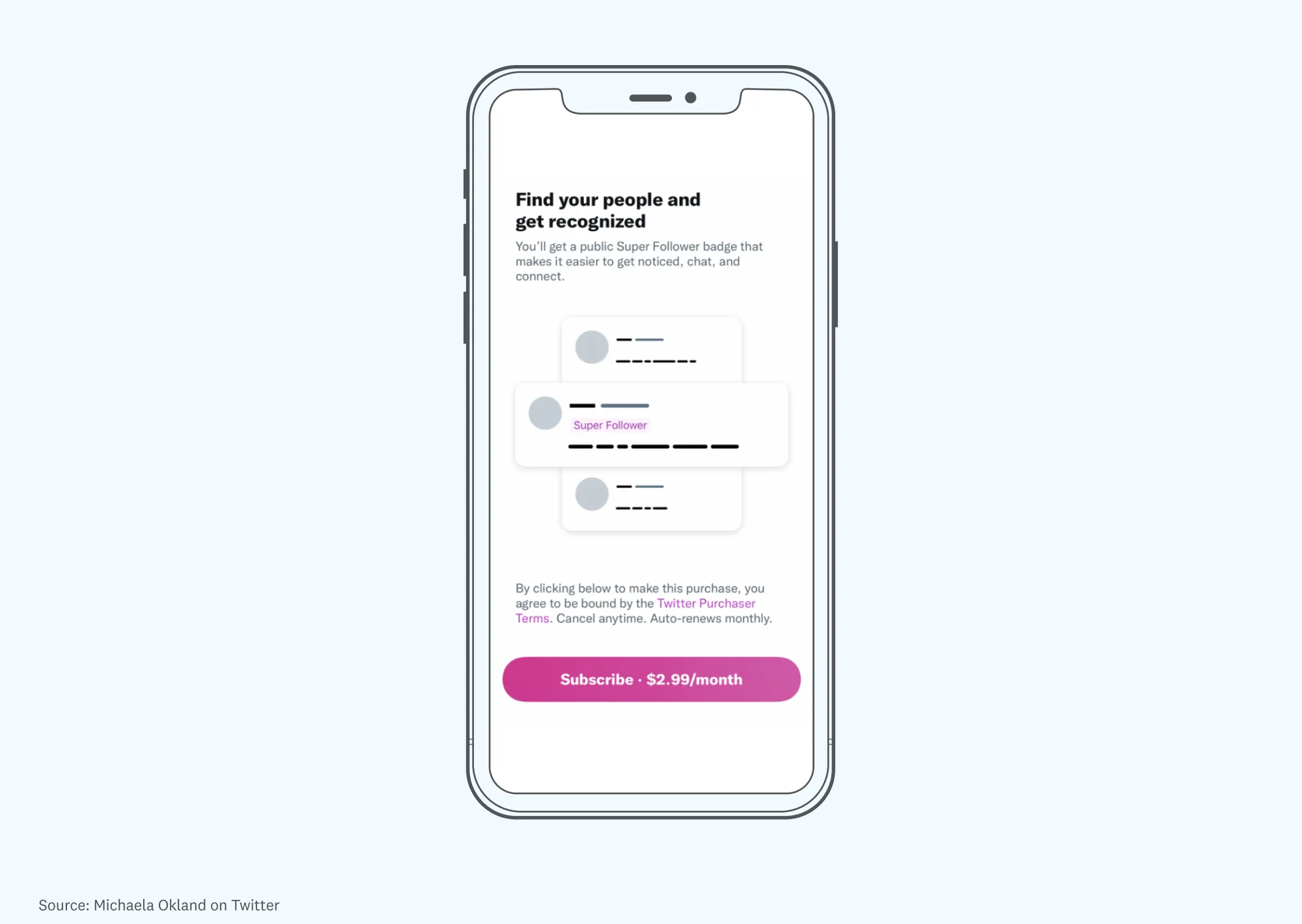
If the early results mean anything, that may not be enough! But Twitter is far from the only creator platform dealing with this problem.
Sales funnel case study: YouTube payments
YouTube, which Google acquired in 2006 for $1.65 billion, has grown into a major platform for video content, introducing various features over the years to support video-native creators. Compared with Twitter, this is a more mature platform in the creator economy. But when it comes to payments, YouTube makes subscribing to creators more difficult than spotting Waldo. Can you find the button users need to click to pay creators?
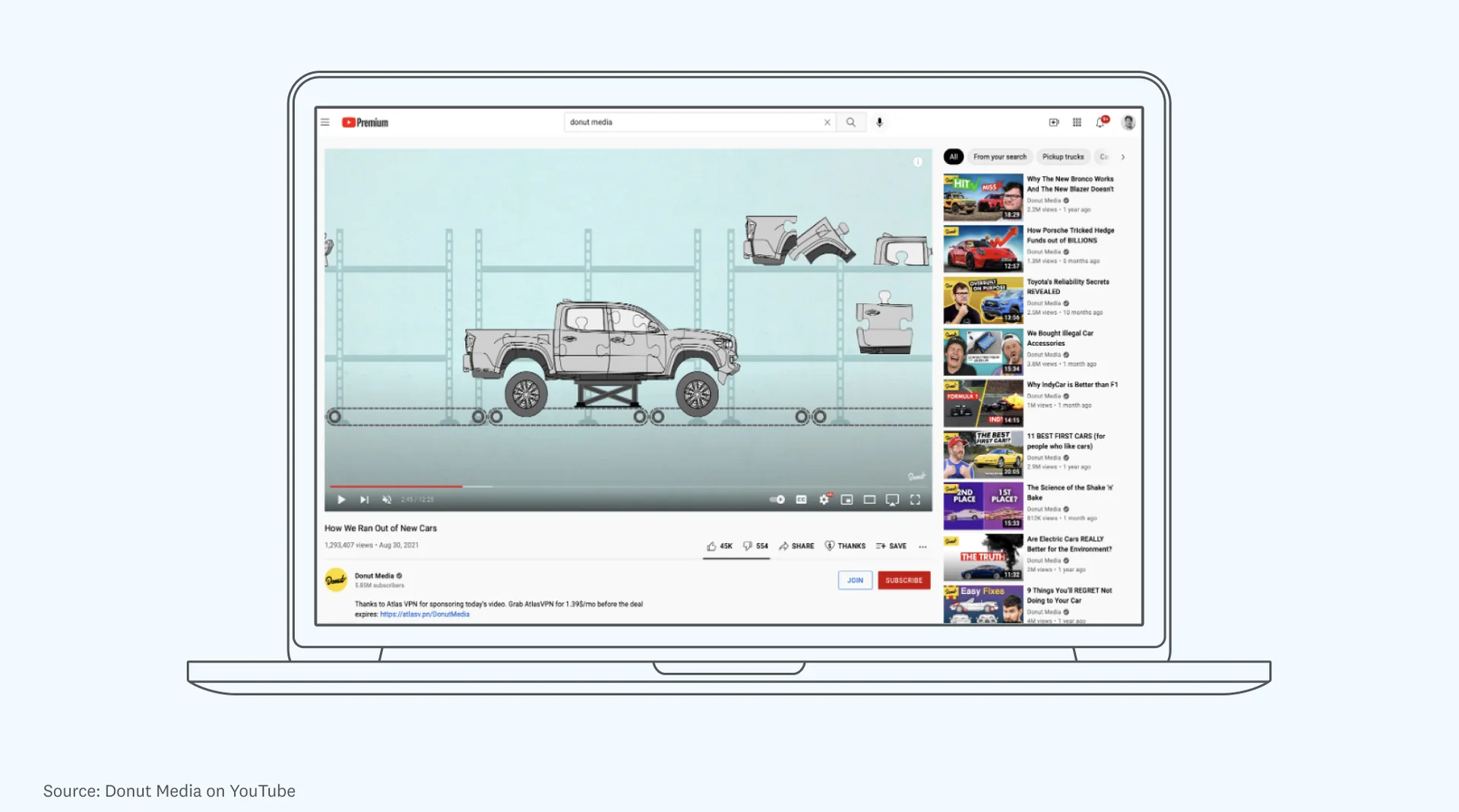
If you were able to locate the “join” button, here’s what you’ll see:
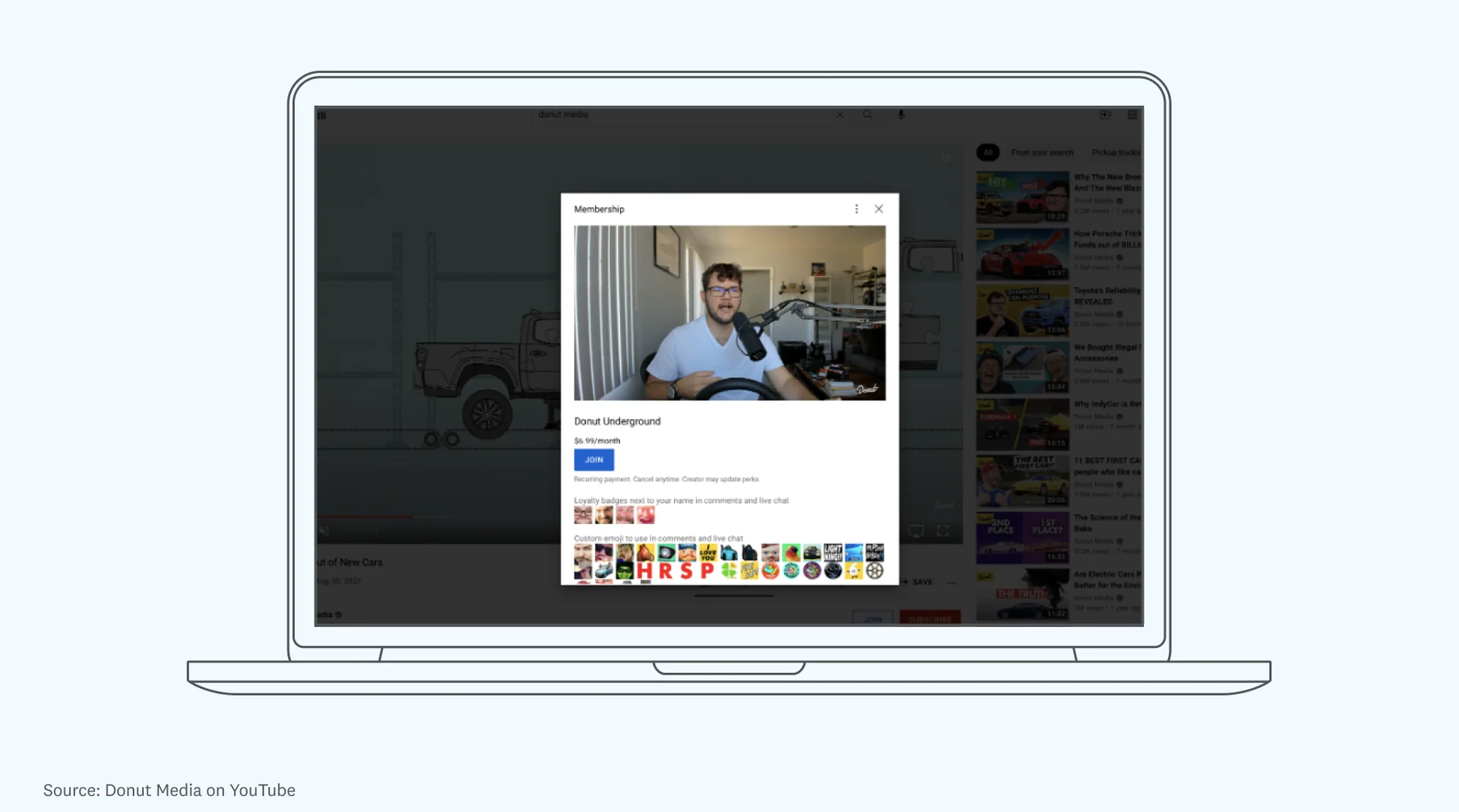
Once you’ve joined, this is a really strong interface! Video is the ideal format for YouTubers to make a convincing pitch. It is certainly more labor-intensive than a platform like Twitter, but that is the correct side of the trade-off for creator platforms to choose: You would rather lift the ceiling for the most committed creators than lift the floor for creators who will come and go without much effort.
Yet although YouTube’s interface is visually strong, in situations like these it helps to spell out the advantages of joining, especially when users are hovering over the “Join” button. More generally, this offers a useful guideline for any audio/video platform that wants users to take action: the pitch (and the “call to action” link) must be reinforced in text. Video and audio are both fleeting, and it’s easy for the most important parts of your message to disappear before people act or have a chance to respond to them.
When I served as Head of Product at Gimlet (the podcast network Spotify acquired in 2018), we achieved a much higher membership conversion rate when we matched the audio pitch with links and reinforced the messaging in the show notes for listeners there.
So then if Super Follows and YouTube Payments are cases of under-selling, how can platforms get it right?
The deceptively simple, unexpectedly intricate craft of selling well
In my years helping creators sell subscriptions at Gimlet, Substack, and Every, I’ve learned that three things have to happen to win a new customer. They can sound straightforward, but putting them into practice can be hard to get right consistently well:
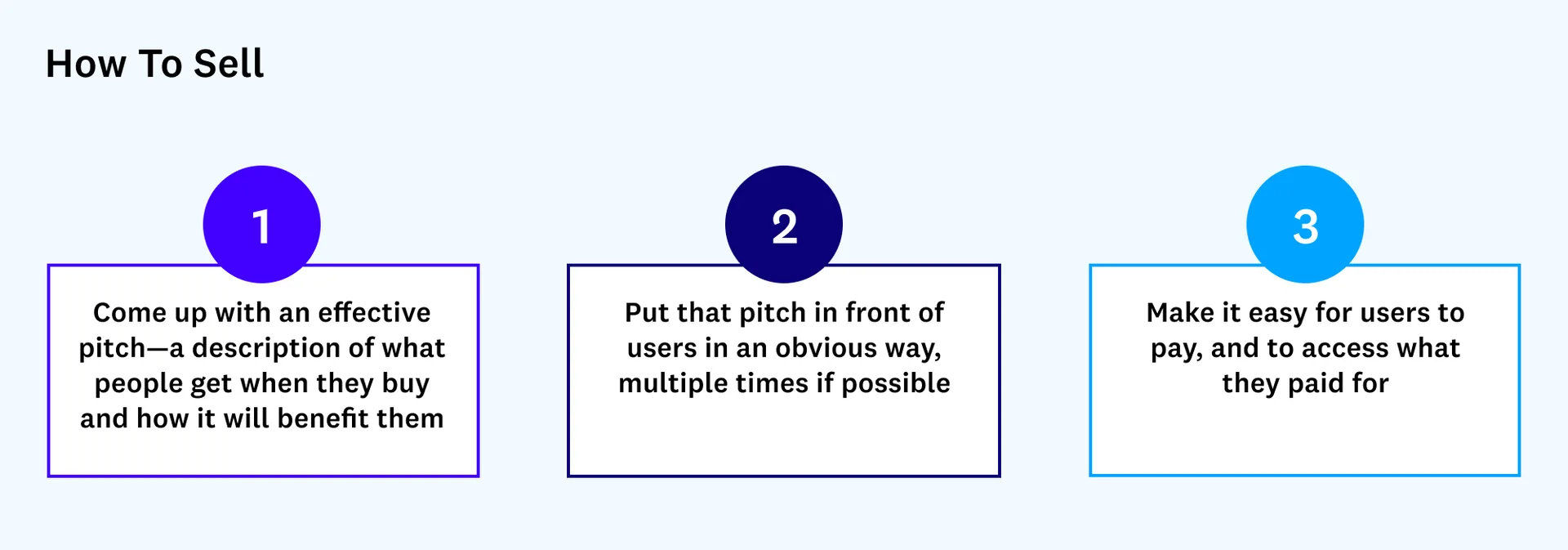
Most platforms emphasize that third step, as the examples above show, but the first two needs are more often overlooked. Here’s what it requires in real-world use today.
1. Know your “genre” to sharpen the pitch
Developing a pitch is surprisingly difficult for creators, especially once they’ve already built a large audience and are used to a free-content platform like Instagram, TikTok, Twitter, or YouTube.
One approach that works well in the Twitter case study, for instance, is to actively steer creators toward value propositions that (in this case) the company thinks will resonate best with most fans on its platform:
- Bonus content: Tweets no one else can see Community: Be noticed by the creator and their fans too
From the way Twitter’s subscribe page is built, it appears these value propositions were chosen centrally by the company for consistency and clarity, rather than leaving all this copy to the user to write. That’s a good thing.
Creator platforms should offer users sensible defaults and direction, not only because it removes some of the work and risk from creators’ shoulders, but also because, over time, it can teach fans what it means to become a Super Follower — or whatever that platform’s equivalent may be. In theory, this lowers future friction because paid followers will know what to expect more reliably.
As more time passes and more creators roll out paid offerings, the kinds of messages most likely to work usually fall into a few buckets, or genres. As creators in book publishing, film, magazines, newspapers, and TV learned what sells, they each developed recognizable genres over time, together with conventions that tell audiences what they can expect. The same thing is happening on creator platforms now. Though it is still early, a few emerging genres are already visible, from goal fulfillment to punditry to arts and entertainment for many new services.
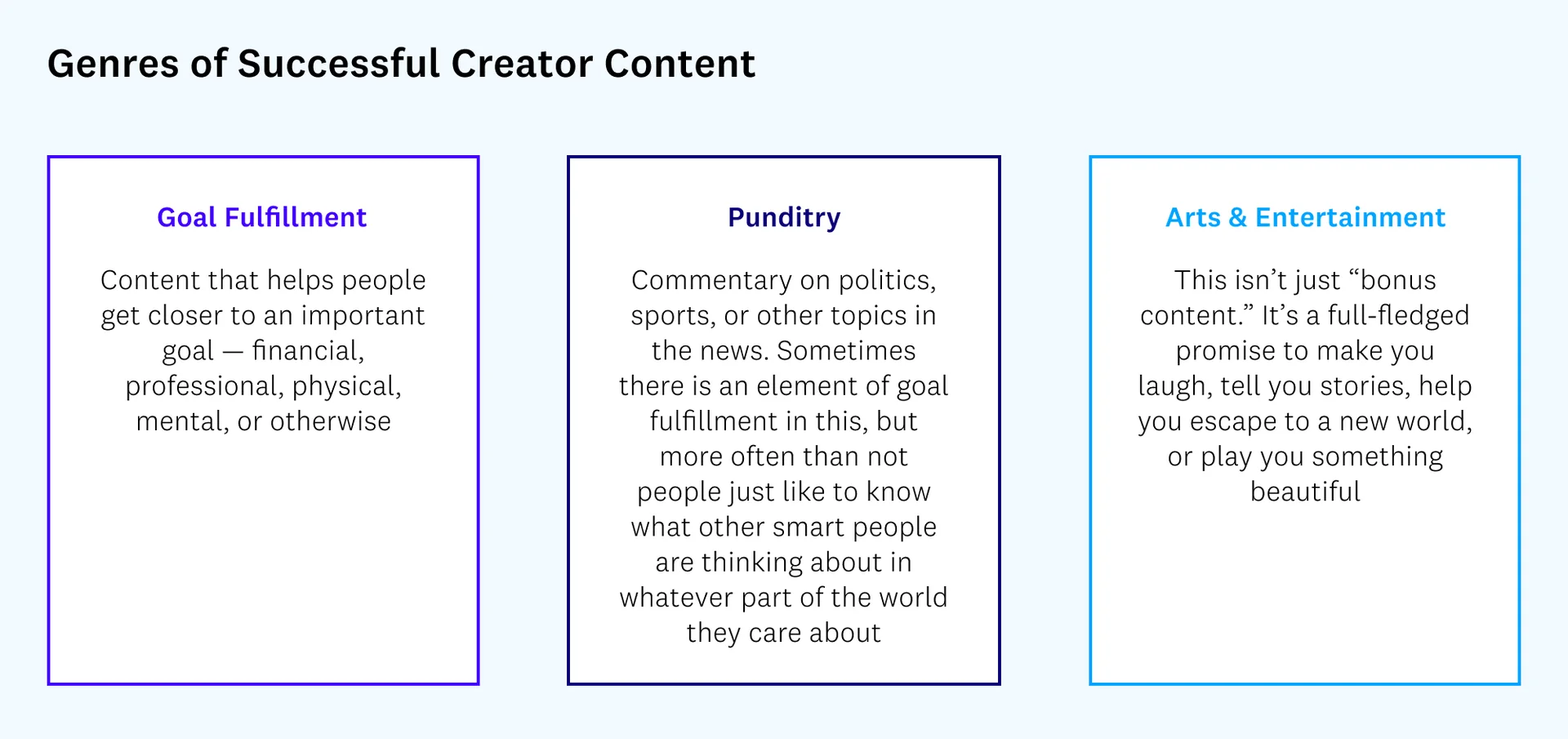
These are among the most common new categories. Some creators straddle the line — this very post, for example, bridges punditry (“what’s next for the creator economy”) and goal fulfillment (“how to generate more sales”). Of course, many other genre types are equally legitimate, and the taxonomies will keep changing as the field matures over time.
What’s often missing in the creator economy is careful attention to genre, and the implied value propositions people take from it. In the traditional media world, you can watch a comedy trailer and immediately know the value proposition is that you’re going to have fun and laugh. You can enter the business section of a bookstore and understand that the covers around you are basically promising different paths to professional success. With creator platforms, by contrast, the pitch too often starts at “support this creator” and ends at “get bonus content”; that does not strengthen the creator’s case or set fan expectations in the ways many platforms seem to hope for fans.
As the friction of offering paid products decreases and more creators enter the market, competition for consumer dollars will keep intensifying. So how do creators build a strong pitch in practice beyond simply understanding their genre?
The short, slightly frustrating answer is that there is no foolproof process; great pitches are stubbornly resistant to any one-size-fits-all formula. In general, though, it helps to communicate the basic pieces of what you are making, what users will get from it, how they can access it, how often it appears, and how much it costs overall in straightforward language.
My best advice, from what I’ve seen working with dozens of creators on several platforms, is simple: always sweat the details, be distinctive, and keep testing at every turn.
2. Put the pitch in front of users
This step is so simple, yet so often missed: fans actually have to encounter the pitch.
In my previous role as VP of Product at Substack, and now as cofounder of Every, I’ve noticed a clear pattern in when paid newsletters bring in the most subscribers: it is when the writer sends an email to free users that is mainly a pitch to become a subscriber. It might be an announcement, a regular reminder, or a specific promotion. It can include a coupon, or announce an upcoming price increase — or not change the price at all! It could be tied to a particular post, or it could be a general invitation. None of that seems to matter as much as the basic fact that you are sending an email with a list of reasons to subscribe, and a “Subscribe” button at the bottom, for free readers there too.
Very few creator platforms seem to have learned this lesson. They are all about a subtle upsell, with a small, tasteful button tucked neatly into some unobtrusive corner of the interface. This is a missed opportunity: platforms need elegant ways to make sure fans actually encounter creator pitches more often directly.
One good example of this, and also a very new one, is Twitter’s integration of Revue into their user profile pages.
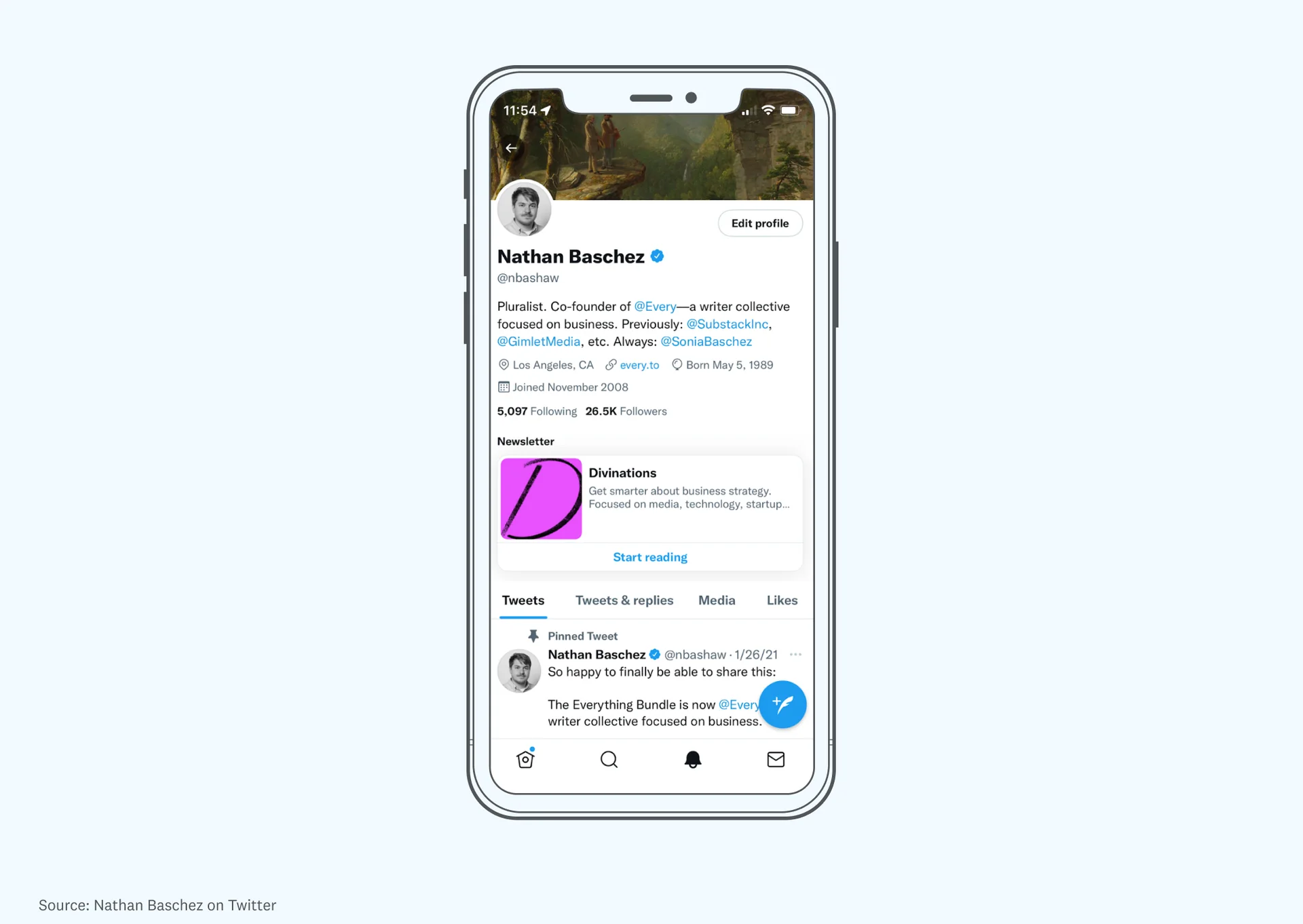
It’s refreshing to see a platform that lets creators use prime real estate for a direct pitch to their followers! As this example shows, the “sell” does not have to be flashy or irritating; it is simply a way to let people know this creator has a newsletter and to remove the friction of signing up altogether easily.
* * *
As platforms and creators grow steadily more adept at shaping and sending pitches over time, the contest for fans’ dollars will grow far fiercer. To endure, creators will have to become even more specialized, and the support-tool ecosystem will keep changing to make that specialization possible throughout the creator economy at large.
I think that as this unfolds, social media will increasingly resemble traditional media: books, TV, film, magazines, games. Production value will rise, established genres will appear, and dollars from fans will start moving more freely over time. It’s truly inevitable — once creators and creator platforms stop ignoring the pitch and lean into the sell.