
In the future, it’s likely that the average person will not work for a company. Instead, people will earn income in non-traditional ways by taking actions such as playing games, learning new skills, creating art, or curating content. This kind of shift in how we work is not unusual or unexpected — the idea that most people would be employed by large corporations would have seemed crazy to someone in the year 1800.
This emerging future of work is made possible by the networks built around crypto protocols, which are taking shape as new systems for coordinating, measuring, and rewarding contributions to complex ecosystems. This change is already starting to create new earning opportunities for individuals, and it is pushing toward a larger shift of value capture from organizations to individuals taking part in crypto networks.
The old model for earning money was “work-to-earn,” but the coming model of income is “x-to-earn” — play to earn, learn to earn, create to learn, and work to earn.
That, however, will not happen on its own — it will call for new decentralized autonomous organizations (DAOs) that can organize all this new activity beyond corporate structures. And the earning paths available in DAOs will depend on the different kinds of contributions DAOs require. This article provides a framework for understanding the choices that will exist in the future of work.
The limits of companies as coordination mechanisms
First, we need to spell out the weaknesses of existing earning models. Traditional corporate employment is quickly becoming obsolete as a way to coordinate activity in the Information Age — we can already see this in the rise of alternative forms of earning such as influencers, contractors, creators, gig economy participants, and more. These forms of earning do not always feel like “work,” but they are all examples of people acting as individual value providers in complex networks and receiving income for what they contribute.
Yet these nontraditional opportunities are few in number, and when they do exist, they often fail to compensate a contributor’s value fairly. That is because these jobs still sit inside a web2 paradigm in which corporations remain in control of the business model.
Why decentralization matters: misaligned incentives
More and more, traditional corporations have “orbital stakeholders,” or participants who blur the distinction between internal and external members of the organization. Think of Apple and the developers who build App Store Apps, YouTube and creators, or Uber and their drivers — participants are adding to companies’ bottom lines from the outside, but companies are struggling to align incentives with these stakeholders.
As companies expand, they are no longer able to keep a sustainable relationship with these orbital network participants. The relationship between the company and the participants becomes zero-sum, and to maximize profits, the company starts extracting value from these participants. This, according to Chris Dixon, is “Why Decentralization Matters”:
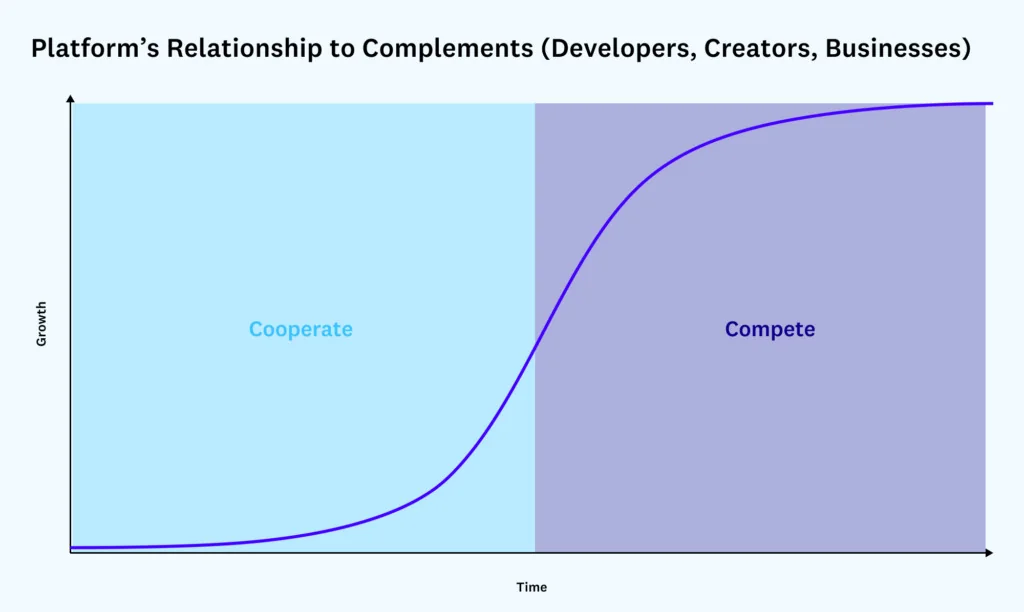
The idea of a company drawing a hard line between inside and outside may have made sense in the Industrial Age, but in the Information Age, that model creates misaligned incentives and unsustainable extraction. In our world of complex information and orbital stakeholders, companies are no longer fit to help us coordinate our activity.
Crypto networks create stronger alignment among participants, and DAOs will be the coordination layer for this new world.
DAOs as a new coordination layer
DAOs will ultimately supplant the traditional model. A DAO is an internet-native organization whose core functions are automated by smart contracts, with people handling the tasks that automation cannot (e.g., marketing, software development). In practice, not every DAO is decentralized or autonomous, so it is best to view DAOs as internet-based organizations that are collectively owned and controlled by their members.
Although the evolution of DAOs is still early, they are no longer merely an aspirational idea. They are real organizations overseeing billions of dollars of capital, delivering real products and services to millions of people, and opening up new ways for people to earn an income.
Here is a nice overview of the current DAO landscape by Cooper Turley:
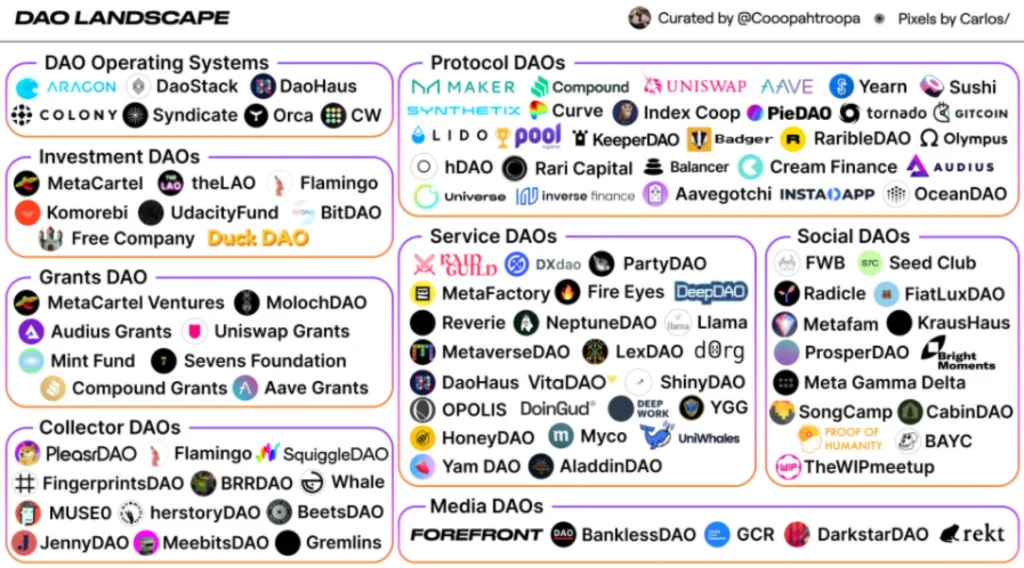
DAOs come in many different shapes and sizes: there are DAOs that govern crypto protocols (Protocol DAOs), DAOs that make venture investments (Investment DAOs), DAOs that provide services to other DAOs (Service DAOs), DAOs that purchase NFTs (Collector DAOs), and many more.
But across all DAOs, there are a few common threads that set them apart from traditional organizations (these are generalizations, so please note they vary based on specific instances):
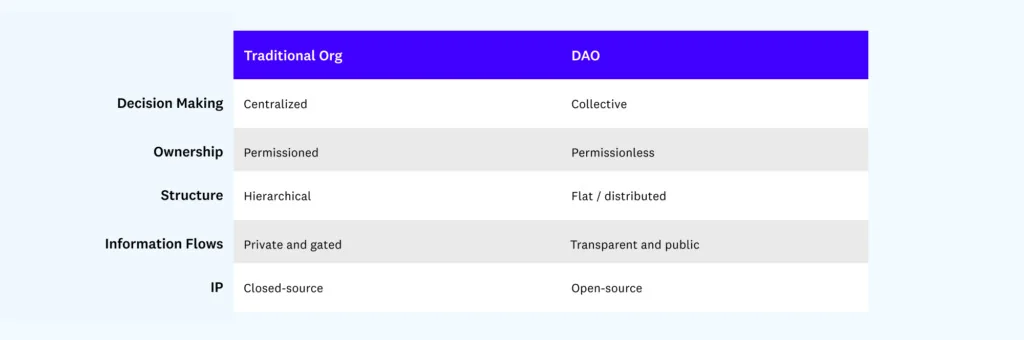
These features that separate DAOs from traditional organizations are in fact what allow DAOs to maintain a more symbiotic relationship with their stakeholders and participants. DAOs operate as open economies, allowing value to accumulate wherever it is created, rather than according to an arbitrary legal border. From Chris Dixon’s article mentioned earlier:
Cryptonetworks rely on multiple mechanisms to make sure they remain neutral as they scale, avoiding the bait-and-switch of centralized platforms. First, the contract between cryptonetworks and their participants is enforced in open source code. Second, they are held in check through mechanisms for “voice” and “exit.” Participants are given voice through community governance, both “on chain” (via the protocol) and “off chain” (via the social structures around the protocol). Participants can exit either by leaving the network and selling their coins, or in the extreme case by forking the protocol.
The structure of a DAO is inherently open and accountable, a forcing function to share value with the participants who create it. Otherwise, other DAOs will out-compete them or their participants will leave for other opportunities.
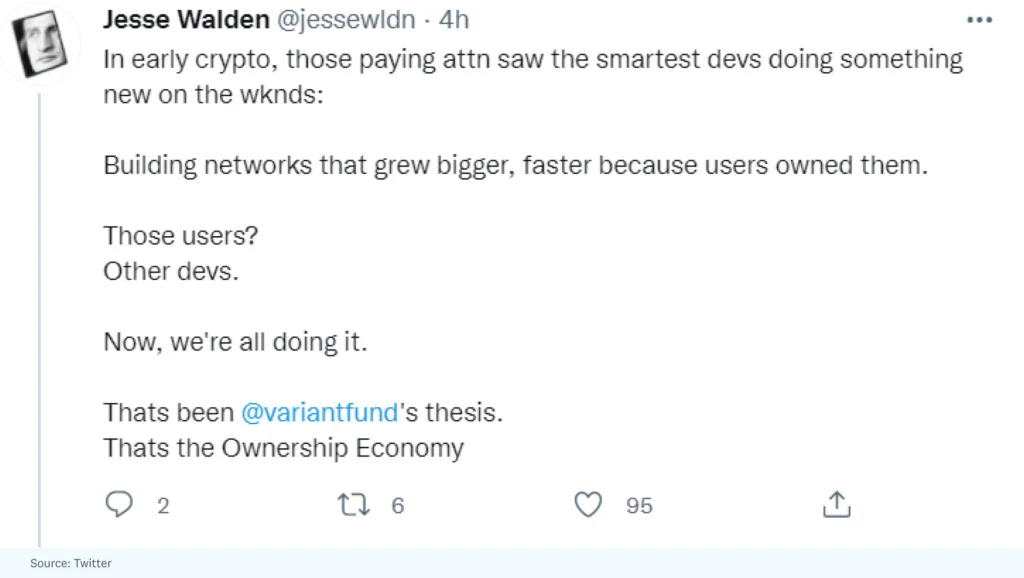
In fact, the best DAOs have been the ones that have rewarded their participants, serving as the basis of the Ownership Economy. This emerging positive-sum dynamic is the foundation of the x-to-earn trend that will shape the future of work.
The future of work in a DAO
To better understand the options that will be available to people, we must explore the anatomy of a DAO:
Graphic ideas from Brian Flynn, Zakku, and the Orbit team
DAOs, as open economies, will drive the X-to-earn trend, making work more flexible, fluid, and playful than the 9-5s we know today.
The openness of these crypto economies will let people take part in multiple DAOs and crypto-networks, blending different income streams and ownership returns (remember, the best DAOs distribute ownership to their participants through their own native token).
People’s income will combine things we already do in our lives (e.g., play games), things we think of as traditional work (e.g., bounties / contracts), and things that are currently available to only a small percentage of the population (e.g., investing, passive income). Put another way, DAOs will widen the kind and amount of opportunities open to several types of participants, including token holders, bounty hunters, and core contributors.
For instance, a tokenholder may make part of their income from grants to major DeFi protocols (e.g., Compound), from passive yield income on their various tokens, and some through returns as their ownership stakes rise over time; a bounty hunter will earn by finishing incentivized on-chain actions; a network participant may earn from playing Axie Infinity or other “play-to-earn” games that will appear.
In this new future of work, jobs will be more temporary and adaptive — switching costs between jobs will be lower, opportunities will be easier to see, work will be broken into smaller atomic units, and the whole world will be brought together under one workforce with access to all opportunities. We will find new opportunities from our on-chain history, ownership, and reputation, and we will be matched to contribute where we have the strongest comparative advantage.
Here is a closer look at the ways participants will see earning opportunities through DAOs.
Core contributors: work-to-earn
Core contributors are how we usually think of employees today — people working full-time on one (maybe 2-3 in some circumstances) project or organization. That singular focus lets the individual become embedded in the project and build contextual and strategic knowledge. Think of teams of wage-earners working together with the single goal of driving the economic growth of a corporation that provides most if not all of their income and includes hundreds or thousands of workers.
The need for focused and embedded workers will never disappear, but this group of people will be far smaller in web3 than ever before. Software, and smart contracts even more so, let small groups of people create outsized impacts. Instagram was famously acquired by Facebook for $1B with a team of just 13 people. This sort of outcome will become normal in the future as the power of software automation, along with a much larger network of smaller contributors, will keep the number of core contributor team members small.
In the future, working for this group won’t be clearly different from working for a company — DAOs will still have core contributors whose interests are most directly tied to the health of the organization. Because DAOs are more transparent than corporations and can be held accountable by a larger community, however, there is extra pressure (think about the scrutiny public officials are under).
Bounty hunters: contribute-to-earn
“Bounty Hunters” do clearly defined work for an agreed upon price and / or length of time. These people are often functional experts in fields like finance, development, and design, who deliver services to many DAOs at once and complete specific tasks with clear boundaries.
Bounties are often posted openly for anyone to claim, and can sometimes be competitive, rewarding the best submission based on merit and value contributed after the fact, not based on an up-front application process or bidding war. Reward for these bounties is often decided by grants committees or decentralized working groups who have been delegated some authority by the larger DAO (part of a larger trend called Governance 2.0).
Many Bounty Hunters will collectively team up to create their own Services DAOs — think of these as organizations that provide outsourced help to DAOs that don’t have the needed skills on hand. These Services DAOs are emerging to handle tasks that require functional knowledge such as treasury management (e.g., Llama), software development (e.g., RaidGuild), governance (e.g., Fire Eyes), and more.
Though Bounty Hunters and Services DAOs may simply sound like contractors and professional services firms, they will be distinct and more popular within DAOs for a few reasons:
- Smart contracts will automate a large share of a DAO’s core function, leaving more peripheral work that is clearly defined, functionally specialized, and well captured through bounties. DAOs will intentionally try to push work to the edges to preserve decentralization and avoid large hierarchies, and bounties create a sustainable way to do that. The transparency of DAOs will lower the coordination costs on bounties.
Network participants: participate-to-earn
This is the newest and perhaps most exciting part of the future of work. Within any given DAO, this is where most people will fall.
Networks gain strength with more activity and more participants, yet, for years, users, consumers, and participants have been adding value to networks without capturing their share of value (app developers for Apple, creators for YouTube, and drivers for Uber, for example).
Functioning more like open economies than closed organizations, DAOs will reward each individual contribution based on the value it creates, regardless of who it comes from. This means that everyday actions that are valuable to a network will become income-earning opportunities.
Almost every person will earn some income from simply living their lives online, using products, and participating as a user. For people receiving compensation for their own participation in networks, earning an income will feel very much like a game.
A few categories are already beginning to appear in this exciting space (check out Stephen McKeon’s awesome article for a deeper dive):
Play-to-earn: a new modelPlay-to-earn
Play-to-earn is a fresh gaming model that pays players for participating in and succeeding at a game. Under the conventional gaming model, value flows one way to the creators or platforms, while play-to-earn titles also compensate users.
Play-to-earn games operate like an economy: players contribute labor, meaning their time and effort, and capital, often by buying NFTs to join the game, and they receive fungible tokens for what they accomplish and the progress they make inside it. Making money from games is not new, but instead of giving players in-game currency limited to the game, play-to-earn games hand out fungible token rewards that can be exchanged for other crypto tokens or fiat currencies.
That means video game players can quite literally cover their bills with what they achieve in-game, especially in countries where wages and living costs are lower. This phenomenon is already a source of income for millions of people, most notably through Axie Infinity.
Axie is a well-known blockchain game where players purchase pet NFTs (Axies), breed them, battle with them, and trade them. These activities take place in the game, but each user truly owns the Axies they buy or generate. The game has surged in popularity over the past few months, bringing in more than 200k ETH (currently $860 million) in total revenue in July and August (these figures have since fallen, which is the focus of intense debate that I address further below).
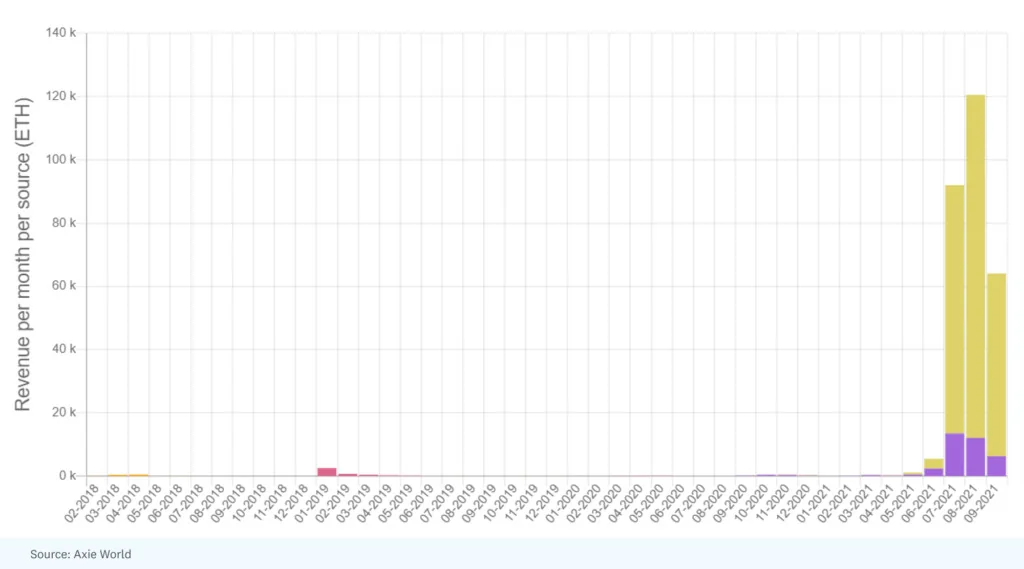
Source: Axie World
This rapid rise comes from the incentive alignment between Axie and its users, which Axie explains in the following way:
Axie runs a 100% player-owned economy with real money. Instead of selling game items or copies, the developers concentrate on expanding the player-to-player economy and charge small fees to earn revenue. Players create Axies using in-game resources (SLP & AXS) and sell them to new or other players. AXS token holders are the government that collects tax revenue. Game resources and items are tokenized, which means they can be sold to anyone, anywhere, on open peer-to-peer markets.
Axie has led the way for play-to-earn and, more importantly, has helped people understand the broader x-to-earn trend, demonstrating how people can earn income by contributing to a network.
Learn-to-earn: positive-sum interactionsLearn-to-earn
Learn-to-earn is a new education model in which, rather than paying to learn, a person is paid for proving they have learned something. This works when the skill, knowledge, or information someone gains adds value to a network, and that network is therefore willing to subsidize the learning.
On RabbitHole (where I work), crypto protocols fund Quests, which encourage users to finish specific on-chain actions. When users complete these actions, they receive rewards supplied by the protocol. While bounty hunters are usually helping build the protocol, these on-chain actions are generally about taking part in the protocol.
This new positive-sum interaction benefits all parties:
- Users learn a new skill or a new way to use crypto, and earn tokens for doing it Crypto protocols gain new, informed users RabbitHole receives a share of revenue for enabling the interactions
This new model is similar to Google sharing part of its ad revenue for learning about a new product, or a university paying you because you improve its alumni network. In both cases you were adding value to a network and not being compensated, but now, you can be.
RabbitHole has handed out more than $750k in rewards since launch, paid by some of the largest protocols in crypto (e.g., Uniswap, Aave, Compound, The Graph, Pool Together, and Polygon). Although this area is still early, the upside for learn-to-earn rewards is huge if you consider the revenue created by education and advertising that users do not currently capture.
Create-to-earn: gaining upside from value-addCreate-to-earn
Crypto has generated new wealth and digital scarcity, which has cleared the path for an NFT market boom over the last few months. This has created chances for artists around the world to earn a living, and in some cases even generational wealth.
But functionally, this is not much different from any artist being paid for their work when it succeeds. What is more interesting is creators being paid for the value they add to networks, beyond the individual profits they earn from their own work.
For instance, NFT marketplace SuperRare recently airdropped 15% of its tokens to early users, collectors, and artists on its platform, to recognize the role these value creators played in its early network success.
Audius, a decentralized protocol for music streaming, lets creators earn tokens for uploading music and curating playlists. Audius is giving creators an ownership stake in the network as a result of the value they contribute.
Invest-to-earn and tokens: democratized participationToken holders: Invest-to-earn
The chance to invest in high-growth opportunities will be opened up to anyone with an internet connection and a crypto wallet.
In a world where every network has a token, tokens are earned for taking part in networks, and buying tokens is permissionless, every single person becomes an investor.
Investments will become a major income source for a growing share of the population. Not every investment will go up, but people will have access to opportunities that were once reserved for a select few, and an entire class of income-earning opportunities will be unlocked.
Challenges for DAOs to go mainstreamWhat it will take to enable DAOs and the future of work
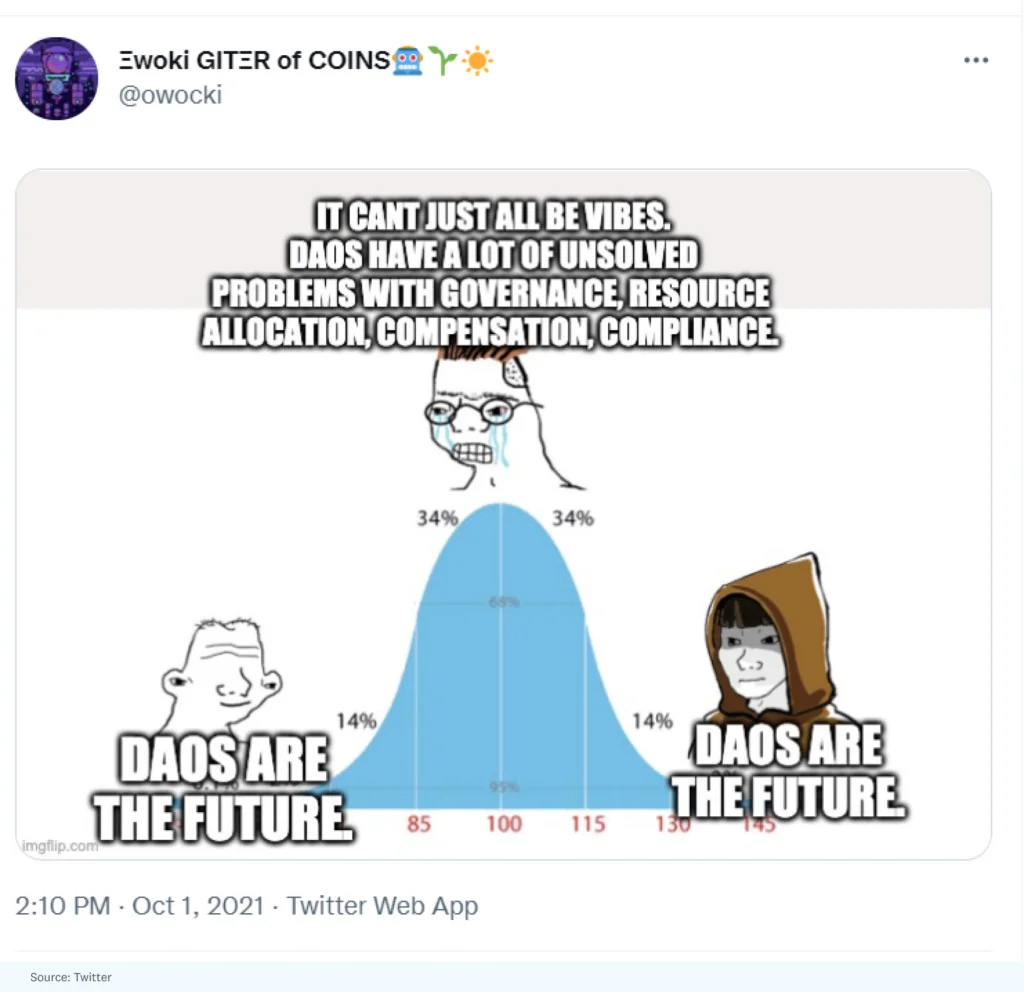
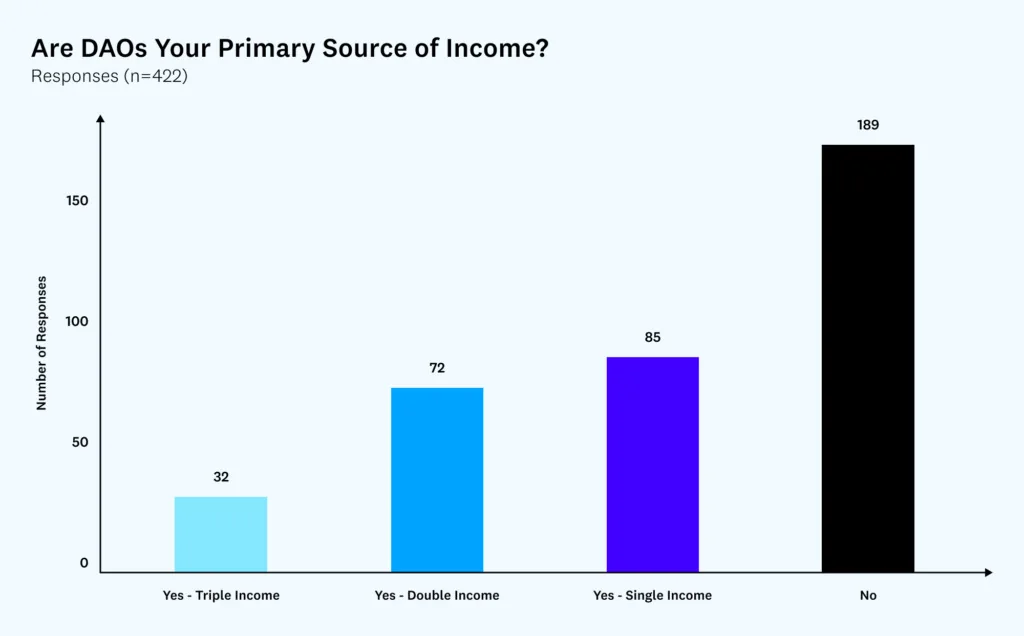
X-to-earn opportunities only go mainstream when DAOs do. DAOs are full of promise, but they are still young and have a long path ahead before the future of work is fully realized. In a recent survey of 422 DAO participants run by Gitcoin and Bankless, fewer than 45% of respondents said DAOs are their main source of income.
For DAOs to truly sit at the center of work, we need infrastructure, tools, and systems that can support DAOs and the people in them.
Coordination tools
At present, most DAOs depend on a blend of web2 software that was not built for DAOs and web3 software that is still extremely new. In either case, DAO needs are not being fully satisfied.
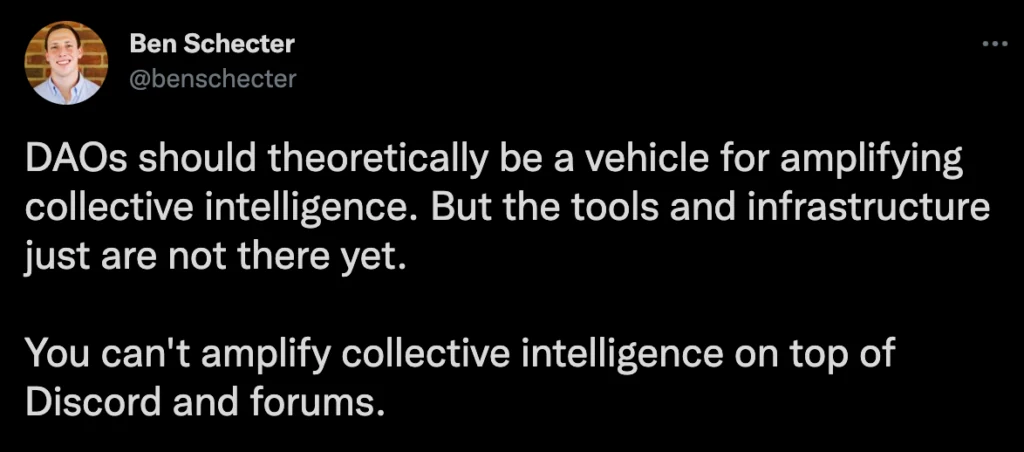
DAOs have enormous potential to tap the strength of decentralized networks and people’s collective intelligence, but they will need stronger software tools to coordinate. DAOs will need tools that handle governance (e.g., Snapshot, Orca), software collaboration (e.g., Radicle), treasury management (e.g., Parcel, Multis, Gnosis), discussion (e.g., Discourse), access (e.g., CollabLand), and more.
Especially relevant to this essay, one notable area where new solutions are required is contributor rewards. DAOs do not have a CEO or an HR department to decide who should be paid for what, so new decentralized methods are needed to judge how much value a person adds and what they should be paid for it. A few early but interesting solutions include having colleagues assess one another’s rewards (Coordinape) and using an algorithm to build a contribution graph and compute rewards (SourceCred).
Reputation systems
DAOs are open and permissionless, but they still need new ways to decide whom to trust, work with, and reward.
The traditional company answer is to run long interview processes, but that runs counter to the ethos of a DAO. Making matters more difficult is that many people in DAOs are pseudonymous. In this new environment, DAOs need a new way to determine where to direct scarce resources.
This points to the need for on-chain reputation systems. On-chain reputation systems will record the actions we take on blockchains: our contributions to DAOs, our governance voting history, our token holdings, and more. In the end, reputation systems will use these on-chain actions to predict how we will behave in the future in order to determine who is trustworthy, credible, and aligned. On-chain reputations will replace the way companies currently use credentials, resumes, and interview processes.
However, there are major privacy and security concerns around keeping a public ledger of actions linked to a person’s identity. At the moment, blockchain identity largely centers on addresses, but for these reputation systems to become workable, we will need much stronger decentralized identifier solutions (e.g., Ceramic / IDX) and identity management.
Caveats and possible drawbacksCaveats: On creating value, and possible pitfalls
It remains uncertain, in the long run, how much income can be generated through these channels. X-to-earn does not mean every single person will be able to make art and play video games for a living.
X-to-earn is about rewarding value where it is produced. DAOs make these nontraditional paths more sustainable and accessible to more people, but the market will not reward everyone. Market dynamics still matter, and to be rewarded, you will need to add value. Creators will need to find audiences, game players will need to achieve outcomes, and bounty-hunters and contributors will need to make an impact.
Still, the continuing debate over the sustainability and scale of certain earning opportunities does not weaken the thesis of this essay: value created within networks should be rewarded, and DAOs will coordinate the value reward within crypto networks, enabling new income-earning opportunities.
More broadly, the future of work will not be unambiguously positive. As with any major technological shift, there are often upsides and downsides. Crypto, and more specifically DAOs, will produce the same. Here are some areas to watch:
Competitiveness and disparities
Measuring and rewarding every contribution to a network will result in a more merit-based allocation of resources. The downside of meritocracy is a world in which DAOs actually intensify the power laws that web2 economies have already shown. On Spotify, for example, the top 1.4% of creators earn 90% of royalties. In addition, truly global workforces with lower switching costs only heighten these competitive dynamics. How will people reconcile greater differences in outcomes if DAOs amplify this trend?
Cognitive overload
There are limits to how much the human brain can handle. Dunbar’s number is the famous limit for how many social relationships the human brain can manage, but “DAObar’s number” is the DAO version of that: how many DAOs can a person be meaningfully involved in? Each additional DAO involvement raises the processing power needed to keep context and awareness of everything that is happening. DAO tooling for communication and collaboration (discussed above) will try to reduce this, but people may struggle with the added overload.
Disconnectedness
On one hand, DAOs let people choose how they work and join communities where they are value-aligned. On the other hand, by breaking much of work into atomic units and purely financial incentives for actions, we risk reducing people’s meaning to purely financial rewards. We risk turning work into separate, meaningless tasks, where labor is reduced to a commodity service.
***
There is a familiar saying that the future is already here, only unevenly shared. That is surely true for DAOs and the future of work. Every day, more people are joining DAOs and moving into web3 full time. DAOs are expanding fast and have a huge demand for talent to support their missions. Whether full time or part time, there are ways to work, learn, and participate. Use Station to discover web3 opportunities, enter the Mirror write race, curate on Yup, vote on a proposal on Snapshot. The future of work is taking shape, and it will head in unexpected and fascinating directions for all of us in time.
Thanks to Brian Flynn, Jesse Walden, and everyone else mentioned for their inspiration through conversations and from afar.