
Crypto still runs into a significant obstacle to mainstream use: the user path is messy and incomplete, and for people new to crypto it is far from simple or obvious to do even the most basic thing — keep full control of their own digital assets.
That said, users do not have to hold full control of their assets in order to invest in crypto. Centralized exchanges such as Coinbase have shown that the “custodial” approach to trading crypto works, with people leaving assets with a custodian that safeguards and records them. The main benefit is ease: it has become fairly straightforward for anyone to use the Coinbase app or other exchanges to purchase crypto without needing to write down a “seed phrase,” the set of words that make up the “private key” governing access to the assets. Using this model, people can buy and sell different cryptocurrencies, swap them for other cryptocurrencies, spend assets on purchases and payments, and eventually buy NFTs.
Going deeper into the wider web3 world of fully decentralized interoperable apps and networks — not only exchanges, but play-to-earn games, tokenized social networks, fan-engagement communities, and other richer user experiences — is, however, mostly out of reach through a custodian. That web3 experience depends on sending crypto to a non-custodial wallet, where only the user controls the private keys and there are no restrictions on the kinds of transactions that can be carried out.
In fact, this is the most compelling part of crypto, but also where we see so many first-time users fall away. Web3 products cannot assume people will instantly jump from familiar centralized experiences into the deepest end of decentralization all at once. The future of mass-market crypto experiences depends on apps that offer familiar, custodial experiences and the ability to move up to non-custodial ones.
This article will lay out several ways developers can approach a user journey that brings people into crypto while using familiar Web2 patterns, and helps them grasp what web3 can do before eventually giving them control of their assets — with the goal of driving greater adoption of their products.
Frameworks for helping users through the journey
Tokens and NFTs are still strange to many people, and there is a practical ceiling to how far the average person will go in trying something new. In a fully non-custodial setup, most people will glance at the screen asking them to write down a 24-word “seed phrase” (the randomly generated phrase that serves as their “private key,” or password) and conclude it is not worth the trouble.
If the objective is to bring in first-time crypto users, the experience has to be custodial — at least at first.
This chart maps a route toward broader adoption of the complete web3 experience — along with the streamlined user path it will require for people to comfortably shift from a custodial system to a non-custodial one.
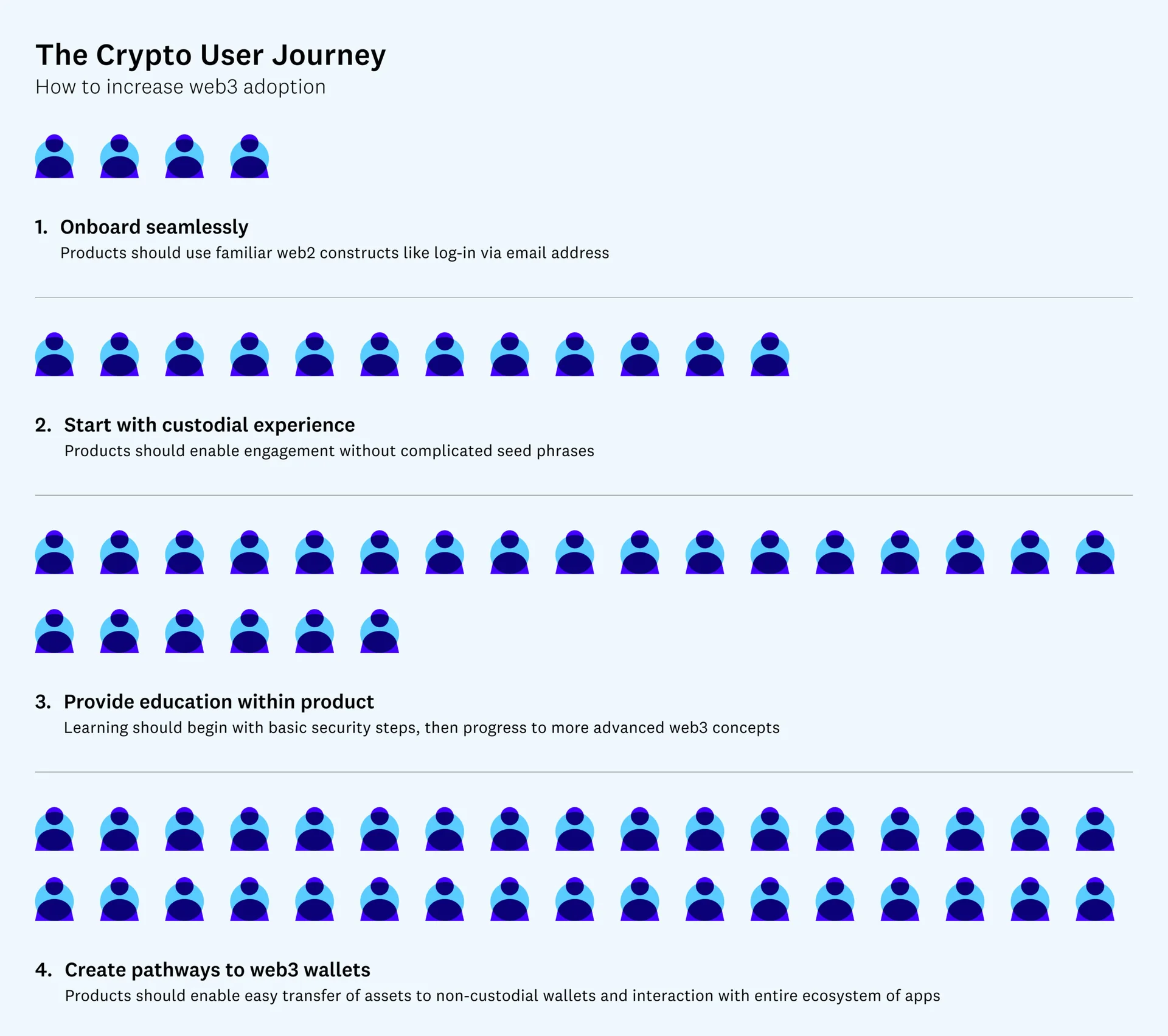
Below, we explain each of these steps in more depth, why they matter, and how they reinforce one another to build confidence and excitement around emerging web3 activities.
Step 1: Bring in first-time crypto users smoothly through familiar Web2 patterns (for example, logging in with your email address). Many web3 apps available today ask users to sign in by connecting their wallet.
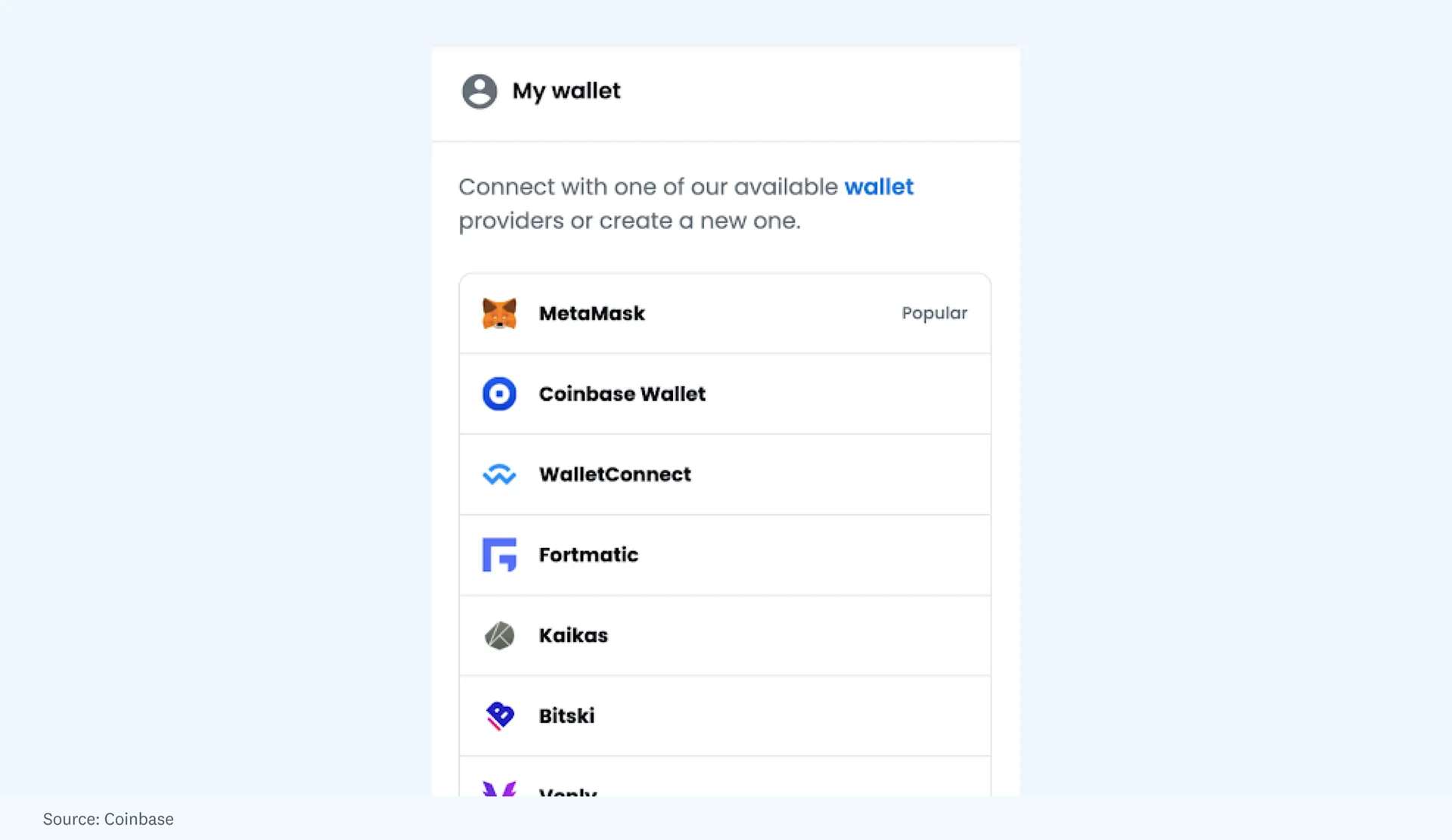
This will probably become the default choice for many apps in the future — wallet logins are very convenient and secure. But first-time crypto users may feel confused, overloaded, or even wary if they do not understand what they are seeing. For many first-time crypto users who do not have wallets, conventional login methods are the only ones they are comfortable using when trying out a new app.
This is an especially crucial stage of the user journey for creators who are increasingly turning to web3 technologies to build new kinds of fan engagement. Fans who back an artist early in their career may get benefits such as creator access, recognition, and perks. (The design space here is nearly endless, and waves of innovation and experimentation are only just starting.)
Most fans will not be crypto-native, though, and asking them to get hardware wallets and set up security systems is asking too much. A fan should be able to sign up, take out a credit card, buy their favorite creator’s token, and see it in their account — it needs to feel intuitive and mirror familiar web2 experiences in order to guide the user through the entire journey. No crypto wallet, key management, “gas” (transaction) fees, stuck transactions, or any other unfamiliar user experiences.
In this way, creators can form shared digital economies with fans that they can carry anywhere on the internet, but in a way that is not too intimidating or difficult for fans to enter.
Step 2: Allow users to begin with a simple, fully custodial experience. Handling private keys or seed phrases is part of daily life for seasoned crypto users, but most users who encounter crypto for the first time will immediately quit when they see a message like this: “These 12 words are the only way to restore your accounts. Save them somewhere safe and secret: exhaust turtle silly pretty fog midnight enact throw journey nephew animal reward. Write this down.”
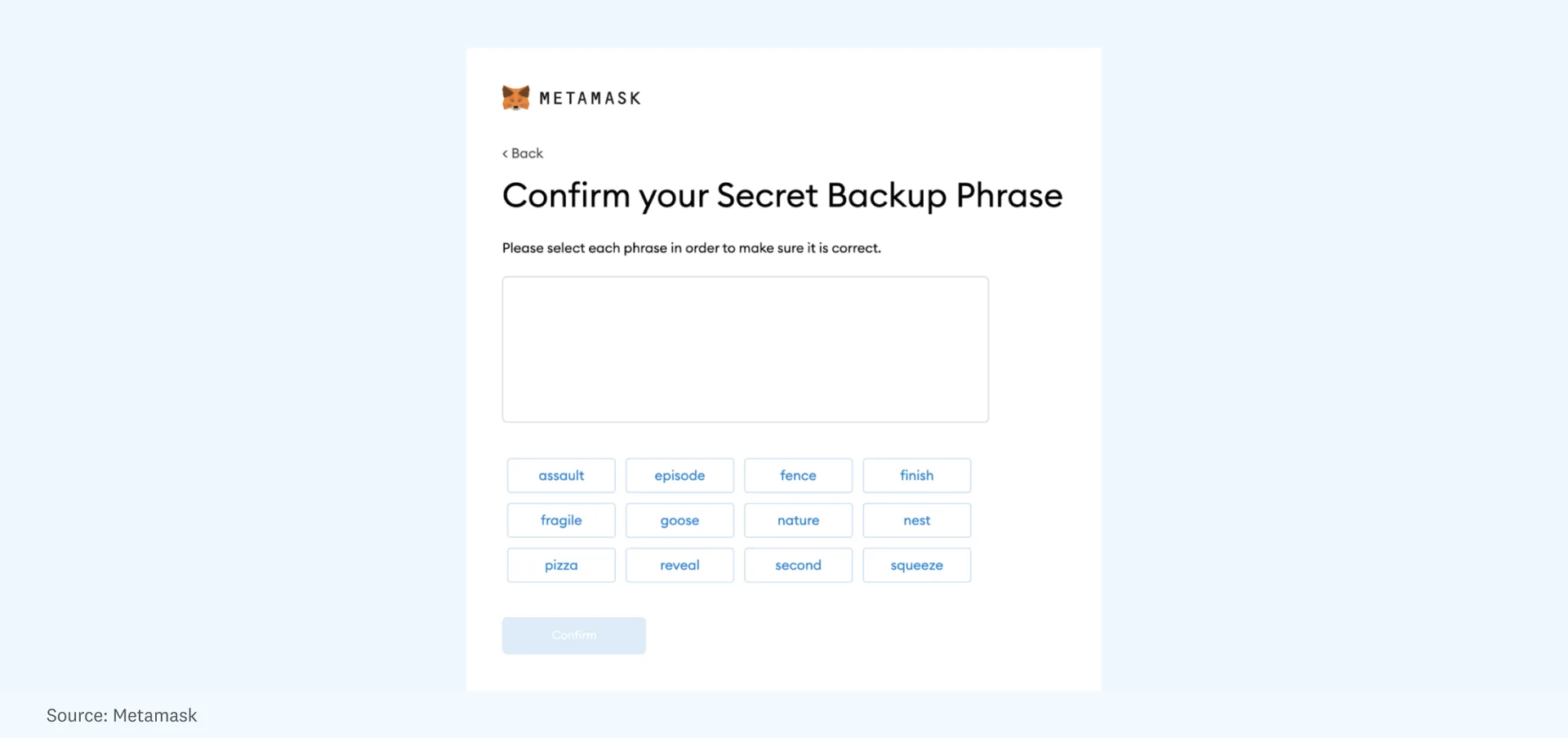
Rather than welcoming users with that experience, it is essential to give them a familiar starting point and then present the non-custodial option farther along the user journey. Their first signup flow should look more like: sign up, create username/password, agree to terms, start buying crypto. Then, once they are inside the app and making transactions, they should have the choice to self-custody and step into the broader web3 ecosystem.
Some projects have attempted other approaches, such as embeddable iFrames that store users’ seed phrases through their Google Drive. It is an appealing workaround – extremely simple for the user and no need to jot down the seed phrase. But the crypto community quickly noted that this encourages risky user behavior, does not properly teach users about the dangers they face, and turns their Google accounts into hacking targets. Instead of a partial fix, it is better to keep the experience straightforward for the user: begin with the custodial experience they know and then help them move to full self-custody when they are ready.
Step 3: Teach the user in the product and beyond the platform. This matters especially for security – most users do not even follow current best practices (for example, password managers, 2FA, etc) in Web2 apps and products. New experiences need more education. Metamask does a good job giving their users the content they need to stay safe.
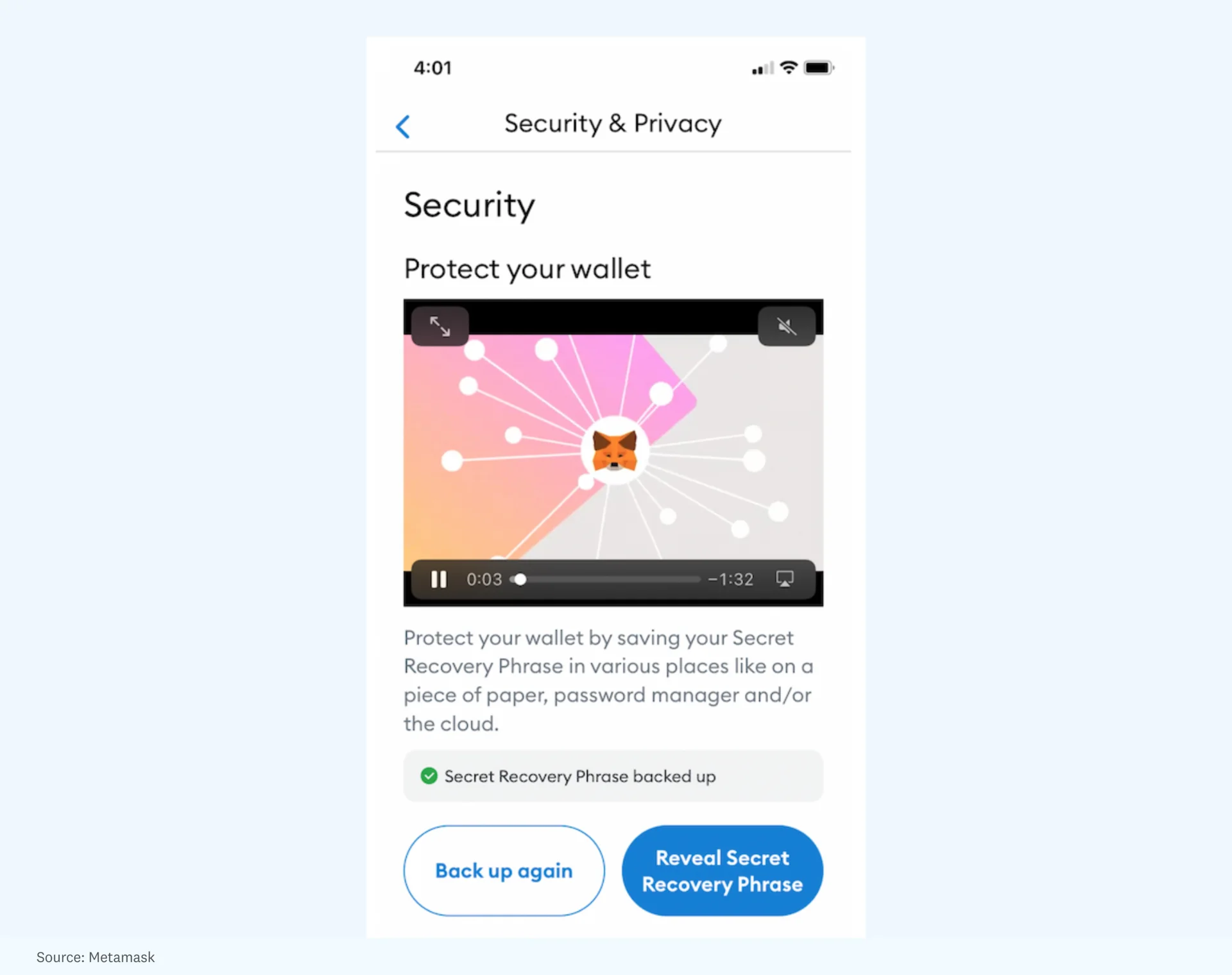
As wallets develop more “first-time crypto user” features, expect wallets to incorporate this kind of education and content directly into the product.
Step 4: Build routes to web3 wallets. After users who were previously unfamiliar with crypto have been onboarded, web3 products can work to move them along a path toward self-custody. An accessible web3 product must ensure that users can leave the system, such as by changing their assets into other currencies, or by moving them out of a particular ecosystem and into the broader web3 world.
As users grow more familiar, it should become simpler for them to take part in creator economies smoothly and not be tied to a single platform. Coinbase, for instance, makes it easy for users to transfer their assets to a non-custodial wallet. That means they can sign up, try buying crypto, and then move their assets to a web3 wallet and engage with a whole ecosystem of apps.
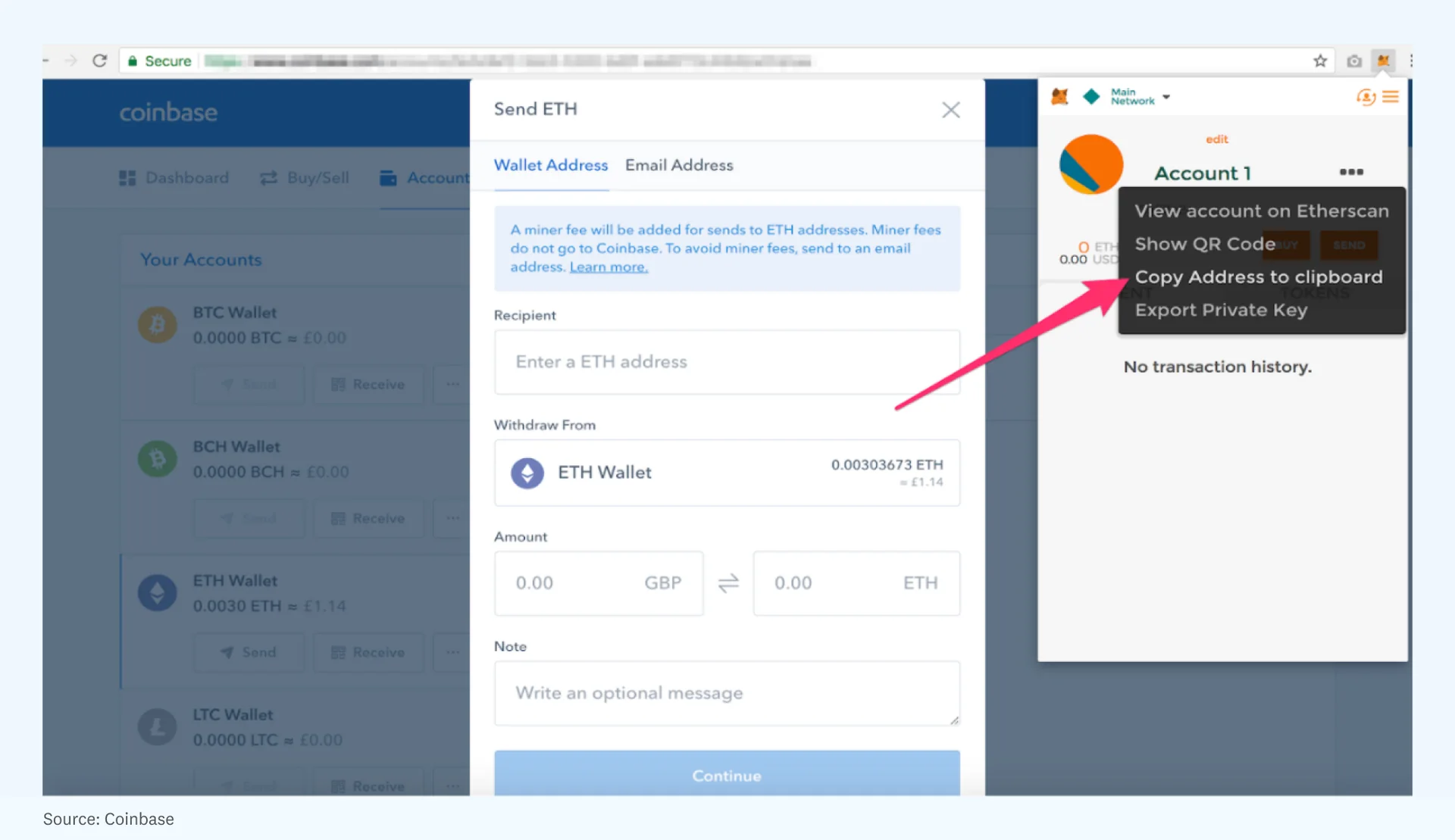
At Rally, a social token community that I co-founded, users can convert creator tokens to $RLY, the community’s native token, and then move that to an ERC-20 (Ethereum-compatible) wallet that lets them turn it into any cryptocurrency or interact with other communities (while creator social tokens themselves are fully custodial for now, the ability to bridge out the tokens is coming soon).
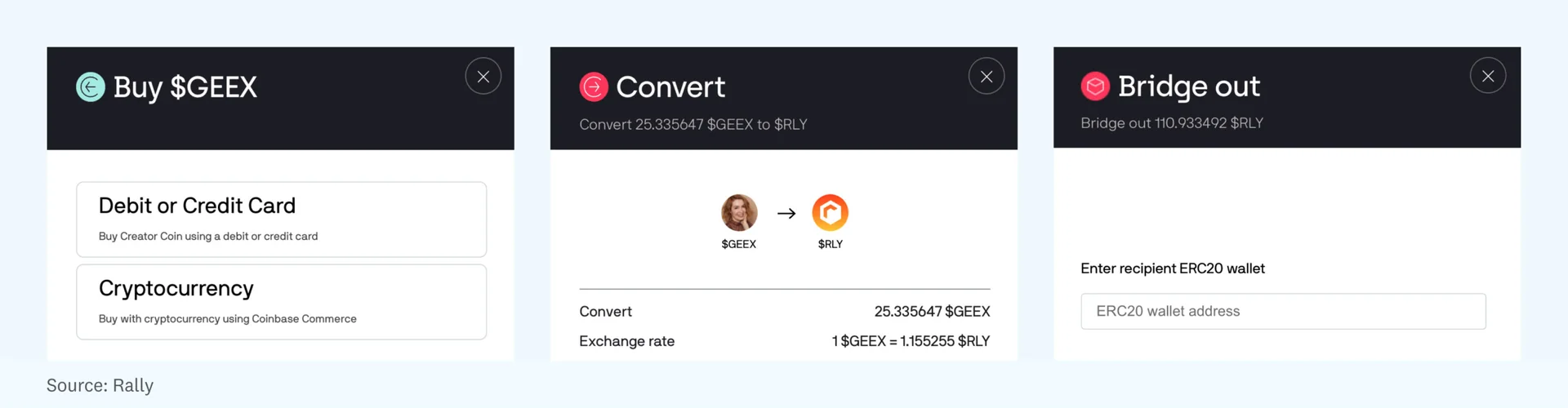
The essential point in educating non-crypto-native users is to build an experience where fans can join easily and use a highly functional product experience around social tokens, while still keeping the flexibility to trade assets, cash out, and withdraw value when necessary.
Different consumer products call for different approaches. For Rally, we were already building on a sidechain, so starting with a custodial model made sense. In the same way we imagined progressive decentralization for the RLY ecosystem, we thought Rally should begin with a familiar user experience and then add capabilities that would extend mainnet and self-custody support over time. Other products would make other choices; for instance, decentralized trading, daily fantasy sports, or hardcore games aimed at higher-spending users may be better served by a non-custodial experience from the outset. The sophistication of those user groups, along with the greater need for trustlessness, justifies a non-custodial journey from day one for both new and returning participants in markets that demand stronger assurances and safeguards.
Custodial experiences require infrastructure too
Of course, building apps that custody assets brings its own hurdles and challenges, namely compliance and security. Letting users move from custodial to non-custodial wallets means know-your-customer (KYC) and anti-money-laundering (AML) checks are unavoidable. In addition, by custodying assets, you also assume the risk of keeping them safe for your users against highly sophisticated attackers. That reality raises the bar for controls, review processes, and response planning across the entire product stack.
At the moment, crypto companies are largely on their own here. You either have to build and operate the infrastructure yourself or locate one of the few trustworthy partners available. That was no minor undertaking for Rally—it is possible, but not simple or inexpensive. The plain reality is that there is no truly prescriptive guidance for compliance, because so many variables shape a crypto project’s strategy: what stage of growth is the company in? Which jurisdictions does it serve? What level of risk tolerance does leadership accept? Those questions change the answer from case to case as well.
A strong illustration of two different approaches working is Coinbase and FTX. Coinbase has always been U.S.-based and chose a cautious path on regulation, with heavy investment in compliance. FTX, by contrast, reduced risk by launching outside of the U.S. first and expanding the company internationally. Both approaches have proven successful with users and each has built trust despite very different starting points.
We’re also seeing a new wave of crypto adoption from emerging markets that web2 companies had previously overlooked because they could not profitably run advertising models in these regions. Non-custodied experiences make emerging markets very easy to reach, since the app is not responsible for compliance. Custodial experiences, by contrast, require a careful approach to enabling these users through unique payment providers. For example, credit cards are often declined in these regions, while there are sometimes “non-traditional” rails such as buying crypto with cash at 7/11s. Even where and how you incorporate your company affects the kind of custodial experiences you can offer and can determine which partners and flows are feasible from day one.
As the big web2 social and financial platforms like Facebook, Twitter, Square, and PayPal push further into crypto and require more services, the ecosystem will expand quickly and finding dependable, affordable partners will become much easier for everyone involved.
Growing demand for web3 access
We’re closer to this move toward web3 than many realize. It’s fairly safe to say that within five years, more than half of large web2 platforms will launch initiatives to embrace web3 in some way, most likely while taking into account many of the UX principles outlined above.
There’s no question that pent-up demand is still growing. When Robinhood announced at Messari’s Mainnet conference in September that it would soon launch its crypto wallet, everyone expected a major reaction. After all, a standalone crypto wallet was one of the company’s most requested features. It would let Robinhood users send their coins off the firm’s platform to any address they wanted without staying trapped inside it.
But even the most bullish crypto believers may not have predicted how enthusiastic users were about a wallet from Robinhood. The firm’s co-founder Vlad Tenev told a CNBC conference that the waitlist has well over a million names—and that is for a feature set to launch sometime in the next quarter very soon.
The huge interest in a wallet from Robinhood suggests something else is happening in the crypto product mix. After all, users already had a polished, fun, and safe environment for trading coins inside the Robinhood app. Why were so many eager for a wallet so they could move coins out? It is clear that people want to move their crypto around, participate in other crypto protocols, and store their assets in different ways.
As more applications work to meet users where they are and guide them into new experiences, and as crypto infrastructure becomes less expensive and more accessible to projects, the path to the internet’s next iteration will become increasingly clear overall.