In 2021, Chris Dixon wrote about how creators can use NFTs to monetize their “1,000 true fans.” Since then, NFT use-cases have multiplied. A clear example is the growth of NFT memberships, which ask fans to hold a particular NFT in order to enter a private community and access its benefits. NFT memberships give creators a way to reinforce their brands, grow communities with real value, and allow fans to participate in the upside as the community expands.
From working on creator growth at Twitch and Facebook, and from writing about the creator economy, I think NFT memberships will emerge as a creator monetization channel that can compete with ads and subscriptions. Using real-world examples, I’ve laid out why creators may want to consider NFT memberships, how they work in practice, and how creator economy and web3 startups can take advantage of their rising appeal.
The case for NFT memberships
Although every NFT is a digital collectible kept on the blockchain, different kinds can serve different ends. People often purchase profile pic NFTs (PFPs), for example, to use as avatars. With NFT memberships, though, an NFT functions as a pass into a closed group. Think: Soho House or a country club, except the membership is internet-first and entry depends on owning a token rather than having the right connections.
More and more creators are entering web3 by creating NFT communities for their fans. For creators focused on business, NFT memberships can substitute for and work alongside traditional subscription- and ad-driven revenue models in a few ways:
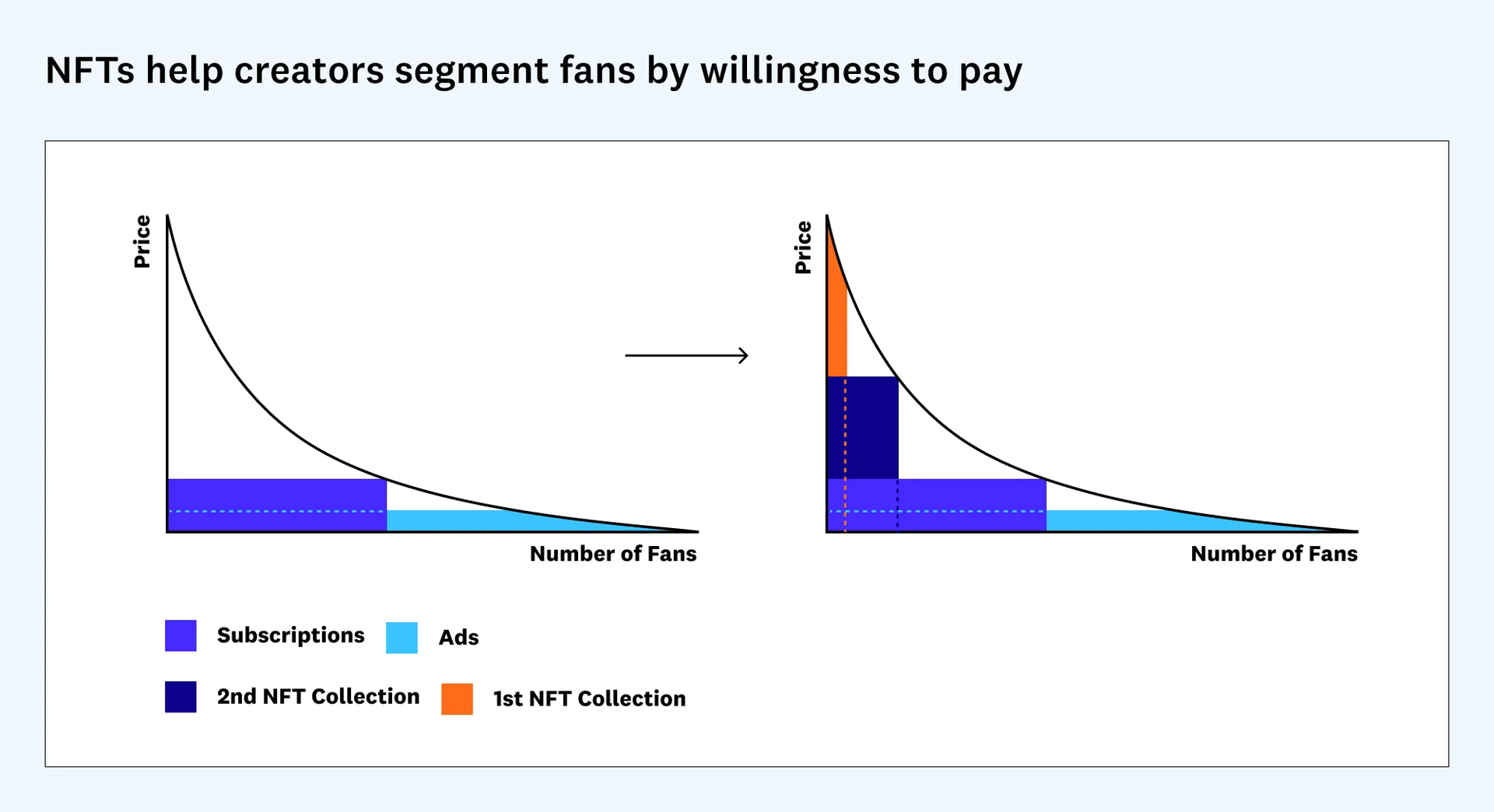
Creators can make more from NFTs by dividing fans by willingness to pay. On mainstream platforms like YouTube, creators rely on ads to reach casual fans who won’t pay for content and subscriptions to reach fans willing to pay a modest amount. That means they are leaving money on the table from true fans who would pay far more. NFTs allow creators to earn more by reaching fans across every level. A creator could release a limited-edition NFT collection aimed at their biggest supporters and then launch later collections for more casual followers.
Creators can make more from NFTs by cutting out middleman fees. Traditional platforms keep a big share of creator revenue from both subscriptions and ads, and they can alter policies whenever they want without asking creators. With NFTs, creators retain most of the money from the initial mint (see this NFT mint guide) and can also collect extra revenue through royalties.
Creators can meaningfully recognize early fans. On traditional platforms, a creator’s first supporters do not receive any benefit as the creator grows more popular. Of course, someone can claim they knew a YouTuber before fame — but that is difficult to verify and early-fan status is unlikely to bring real advantages. NFTs, by contrast, give fans a way to clearly prove early support for creators they believe in. Creators can reward those early fans with perks such as event access and special drops. In addition, early collectibles tied to creators (from musicians to athletes) often gain value as the creator succeeds. In that sense, NFTs directly encourage fans to help creators win.
Challenges of NFT memberships
There are also some potentially tricky parts of NFT memberships that creators should keep in mind.
Creators do not have direct control over NFT prices after mint. Even though creators can choose the initial NFT mint price and their cut of secondary royalties, they have less influence over prices later on. If, for instance, the broader NFT market collapses, creators may wind up earning less from NFTs than from traditional channels. Or speculators could purchase a creator’s NFTs and drive up the price without giving genuine fans a chance to join. To head off the second issue, creators could offer NFT “allow list” spots to fans early, before speculators hear about the project. They could also impose rules that stop any one person from buying too many NFTs at once.
Creators may turn fans off if the NFT’s value is not obvious. Creators need to clearly explain the value of their NFT membership to avoid leaving fans disappointed. Fans expect creators to stand behind their promises and to deliver long-term utility for the NFT membership. Launching an NFT membership without a clear plan for how to create value for members puts a creator’s reputation at risk.
Running an NFT membership community is a lot of work. Community management is a major obligation on top of a creator’s existing content-production schedule. To ease the load, a creator could bring on a team to keep the community active and encourage fans to help strengthen the value of membership. But it is unlikely that they will be able to fully hand off engagement tasks — after all, the creator is the center of their brand.
How creators use NFT memberships in practice
What minimum ingredients are needed to get an NFT membership started? Successful communities usually have three parts:
- The creator already has an engaged fan base to invite to buy their NFTs. Fans purchase NFTs to join the community and help increase the value of membership. The creator and the community supply utility for the membership in the form of real-world benefits.
Let’s examine three examples of NFT membership communities that show this model clearly.
VeeFriends, an NFT collection from Gary Vaynerchuk, who, among other things, co-founded both the reservations platform Resy and the digital agency VaynerMedia, where he is CEO.
- Creator: Using his entrepreneurial credibility, Gary built a massive audience across multiple platforms. Community: Gary brought his audience into the VeeFriends community through education about why NFTs matter and how to buy them for the first time. He drew and created backstories for every character in his NFT collection, giving the tokens a personal link. Utility: Every VeeFriends holder receives a free three-year pass to the VeeCon conference. The first VeeCon, held in May 2022, included major speakers such as Snoop Dogg and Beeple. VeeFriends holders played an important part in producing the event.
Moonbirds, the second NFT collection from Proof Collective, a private community from Kevin Rose.
- Creator: Kevin hosts the well-known crypto podcast Modern Finance. Community: Proof’s first NFT collection had 1,000 passes. Many leading NFT collectors who listen to Kevin’s podcast bought these passes, which seeded the community with talent and created latent demand for Moonbirds. Utility: Moonbirds holders are encouraged to keep their NFTs long-term in order to unlock exclusive rewards like merch and in-person events.
Developer DAO, a DAO launched by developer Nader Dabit after he left AWS to focus on web3.
- Creator: Nader Dabit built an audience through his YouTube channel, which centers on developer education. He then launched Developer DAO to speed up the education and impact of web3 builders. Community: Developers and other talent bought the Developer DAO NFT, boosting the appeal of membership. Utility: Access to the community itself has become the main benefit of the NFT. Members have helped one another host events, build projects, and find jobs.
Here are more examples showing how NFT membership projects can deliver long-term utility:
How companies can help creators manage NFT memberships
Creators and communities are trying out NFT memberships in new ways. As this trend gains momentum, creators moving from web2 to web3 will need support throughout the user journey. To back creators, startups can at each step.
Create the NFT membership
- Set the membership specifics (e.g., goal, audience, quantity, price, benefits). Bring in a team or choose a no-code option to produce the art, smart contract, and website too.
Present the membership to fans
- Build a community and show fans why NFT membership matters. Use allow lists to set aside NFTs for fans rather than speculators.
Collaborate with the community to build value for the NFT membership
- Learn which holders add the most to the community. Work with holders to deliver continuing utility for the NFT membership.
Managing the business
- Oversee and identify ways to finance the treasury, such as through partnerships. Handle taxes and legal agreements.
Many companies are already addressing the challenges above. I’m excited to see more creators and communities use NFTs as a tool to create value and share in the upside.