
Over the past two years, I’ve made and released eight small internet projects. Ranging from apps to websites, most have failed — yet taken together, my scrappy collection of projects may count as ramen profitable. My most recent project, Paper Website, lets you create a blog with pen and paper. It was an odd concept, but it has attracted a handful of loyal fans who pay to use it every month.
A side project is typically a hobby coding project a developer creates on the side of their job (my day job is co-founder and CTO of a fintech startup) — such as a Raspberry Pi robot, a to-do list app, or an iOS game that earns a little money. But I’ve noticed that rather than betting everything on one side project, developers are more often making many smaller projects, much like I am.
So what’s happening? Yes, no-code, Codecademy, and tools like Stripe have made it easier than ever to build and ship a project. Those explain the how and the why now. But even with all these improvements, why are developers making so many side projects? In this post, I’ll dig into some of the most compelling reasons.
Gambling at the side project casino🎰
Seated on a huge gold throne before an audience of enthusiastic writers, George R. R. Martin was talking about what it means to be an author:
“It’s a profession for gamblers. Each time you write a book, you roll the dice again, and you have no idea whether it will crash and burn or turn into a huge hit.”
Martin earned awards for his early novels, until his fourth book, The Armageddon Rag, flopped and nearly wrecked him. He wrote 28 books before he eventually produced A Game of Thrones.
In the same way, people who build internet projects are complete gamblers. The anticipation before you hit “launch” on your next idea is addictive; you simply can’t predict what will happen. A random game you made about guiding a tiny yellow bird through Super Mario pipes could blow up and turn into Flappy Bird, bringing in $50,000 a day. The word game you built for your girlfriend could spread everywhere and become Wordle.
In brief: The work poured into an internet project is often disconnected from the outcome. Accepting that randomness in practice just means launching more projects. For instance:
- Challenges like 12 startups in 12 months, pursued by Dutch programmer Pieter Levels, have led to the solo developer operating a portfolio of projects that bring in $3 million per year. Sites like ProductHunt let you have an idea on Monday and put it in front of thousands of people by Friday. As I’m writing this, a post called “Why I’m launching 25 products in 25 weeks” is a top post on the IndieHackers forum.
Builders are handling their side projects like a casino. By keeping projects small and launching frequently, they improve the chances of striking it rich.
Projects as content🤳
The creator economy is booming, and it’s not only Instagram models posting beach selfies in Ibiza. Developer-influencers — a weird new kind of creator, like the vloggers and streamers who came before them — are very much real. Projects function as both their content and their way to make money.
Ben Awad blurs the boundary between developer and conventional creator more than most, with 1.3 million followers watching his project videos across YouTube, TikTok, and Twitter. “Some people call it tech humor, some people call it dev logs,” he told me, trying to define his content. “I don’t even know what I’d call it.”
For example, one of Awad’s earlier projects was a VS Code plugin for Tinder, where users can swipe on other people’s code snippets to find their ideal date. “The Tinder plugin did really well,” he said, “and some people are even getting close to married on it.
“… The issue is, I know the projects were jokes — but I’m a serious software engineer, and I want to make them good. So, for the Tinder one, I literally built an Android app and a VS Code extension, because I was like, ‘If I were actually using this, I would want to get a push notification if I got a match. I’m not going to be on VS Code all day.’”
Since then, Awad has made videos about a run of startups he’s created. “If something good happens in the project I’m building — great. Something good happened, and I can make a YouTube video about it,” he said. “If something bad happens with the project I’m working on, that sucks, but at least I can make a YouTube video on it. And people absolutely love it when something bad happens.”
He added: “The only reason I made all these projects is because I have zero good ideas. So, I better just start making stuff until I figure out a good one. … I think my goal is to have one business that is really big. I’m planting lots of different seeds to help me find the one big project that I really like.”
His newest project, Voidpet, a Gen-Z Tamagotchi-like game, has 130,000 users.
If you can’t bring yourself to download a creator’s app or follow someone like Awad through their videos, just browse #buildinpublic Twitter, and you’ll find developers with dozens of links in their bios to the various tiny businesses they’ve built. Follow one, and you can go along with them on a rollercoaster ride of launching a product, getting a few users, and even selling their micro-SaaS for several thousand dollars.
Then, a few months later, they’ll do it all over again.
Mitigating project disaster📉
Has your side project ever been wiped out by a revolution in Kazakhstan?
It’s not fun.
Here’s what happened: One day, I discovered you could use emoji domains in email addresses, for example hi@👋.kz. When I realized there were many .kz emoji domains available, I thought it would be a brilliant idea to buy 300 of them and start an emoji email address service. About 1,500 customers later, my emoji empire collapsed when I got this tweet:
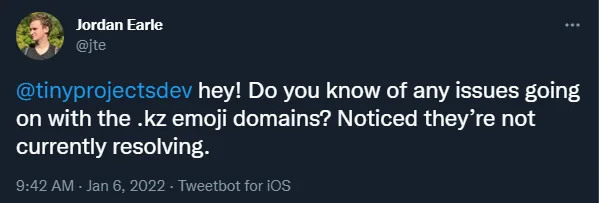
It turned out there was a total internet blackout in Kazakhstan, which took my project completely offline.
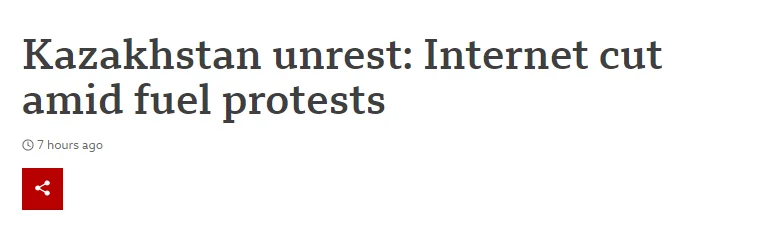
After 10 days of panicking, thankfully it came back.
Other people aren’t so lucky: API changes, search result tweaks, and many other factors can kill a project. So, just as you might buy stocks in the S&P 500 instead of going all in on Dogecoin, builders are using a portfolio of many projects to reduce this kind of failure across the board.
Daniel Vasallo runs an online community that teaches people how to create a portfolio of small bets, and it has grown to more than 800 paying students since October 2021. “Sometimes I joke on Twitter and say my only business plan is to avoid having to go back to a 9-to-5 job,” he told his latest cohort during a recent Zoom talk.
“… That’s why I like small bets. Usually, you know, you try something small and it fails, and it’s not that demotivating for people. If you try something big, it can easily sting and discourage many of us. It can be a ruinous event too.”
He summed up his mindset like this: “Success to me is staying in the game. Basically, never reaching a game-over state ever.”
Sébastien Dubois knows this state well. Last year, his article “Startup failure stories: 20 months in, 2K hours spent and 200K € lost” went viral on Hacker News, and told a sunk-cost fallacy story of how Dubois spent two years coding a startup that struggled to ever launch. However, Dubois is doing great building multiple small projects now.
“I now build projects with limited time and effort and with more upside than downside,” he told me by email. He has built a community, created two “infoproducts” that are selling enough, and has a book project in mind.
“I’ve created a strong flywheel between my portfolio of projects,” he said. “… Meanwhile, I didn’t ruin myself to get here at all. ;-)”
Fun, practice, and super creativity🌵
Developers are highly creative people. Just as a musician composes or an artist paints, a developer can begin a side project to release that creativity.
Ben Issen is a charismatic French developer who runs seven small projects. “I treat my projects like tending a garden,” he told me over Zoom from his Paris apartment. “It’s enjoyable. My favorite projects are like a tiny cactus; they’re easy to pot, quick to grow, and need very little water and maintenance to stay healthy, sometimes for months at a time without much fuss.”
He then rushes to his windowsill and grabs a huge fern: “Projects like this need a lot of attention, or they die quickly.”
If you have lots of ideas, building many tiny, self-sustaining projects is simply fun. You can build one and then move on to the next. Each time, it feels like a satisfying puzzle as you go from zero to a few users. And every project is more practice — another rep further that improves your building, launching, and marketing skills.
Often, new projects are inspired or blended using code from earlier ones, leading to better ideas and making them even easier to launch. I sent out a call for emails asking people why they’re building multiple projects instead of just focusing on one, and the creative process is a major reason for some respondents. “I’m a big fan of cross-pollination. Mixing things that don’t often go together lets you pursue something totally different,” wrote one person.
However, not everybody eschews large projects altogether. As another emailer explained, tiny projects can provide the creative insights that give large projects direction: “My small projects help inform how my big project is working, where my main project is the tree trunk and the tiny projects are its branches.”
Conclusions, and the future🔮
What excites me most about all these projects is we’re going to see some totally unique companies emerge that wouldn’t usually exist. MSCHF is an extremely modern example of a venture-backed company launching viral projects every two weeks, but the numbers suggest it will eventually have a lot of company.
So, why are developers building so many side projects? Whether it’s the desire to create, learn, or get rich, it all comes down to a fundamental change happening with how developers view their projects. You used to put side projects on a CV to land a career in tech. Now, side projects can be your career in tech.