
“There is broad consensus in the scientific community that wildfire behavior is changing across the American West in general, and in California in particular. … All indicators shown—wildfire occurrence, total area burned, and average fire size—display an upward trend in the last several decades across the state.” The Costs of Wildfire in California, California Council on Science and Technology, 2020
California has a yearly tendency to go up in flames, producing scenes fit for cyberpunk. The destruction lands with a gut-level force, with devastating images of lives and families split apart alongside the physical and financial loss.
Although this story is deeply embedded in our cultural moment, the reality of wildfires—their origins, the factors that amplify or lessen them, and the data itself—still leaves plenty of room for quick conclusions but no simple answers to essential questions. In general, there is a broad, systematic shortage of solid information about what is happening with wildfires, including the causes of many of them—an idea repeated throughout the report mentioned at the start of this article. In an ideal world, there would be one central site with easy-to-use datasets, forecasting models, incident logs, budgets, and the like, all properly sourced and kept current. Without that, I reviewed every accessible dataset, compared sources with one another, pursued the most trustworthy evidence, and built my own datasets when none were available.
In this article I’ll take a data-based look at the key questions: How severe are California wildfires compared with earlier decades and centuries? What starts them, and how much responsibility do humans bear? Where does climate change fit in? Is forest management a major factor? And what can be done to reduce the harm?
Let’s begin with what is actually going on. Although it may feel obvious that wildfires are worsening, it is useful to start by checking our basic assumptions, and that reveals a story that is more complex than it first seems.
Are we sure it’s worse?
Wildfire studies usually examine two separate but connected annual measures—total wildfire count and total acres burned. Paying attention to total acres burned is probably more helpful for understanding what can be done about the large, uncontrolled fires that cause the greatest harm.
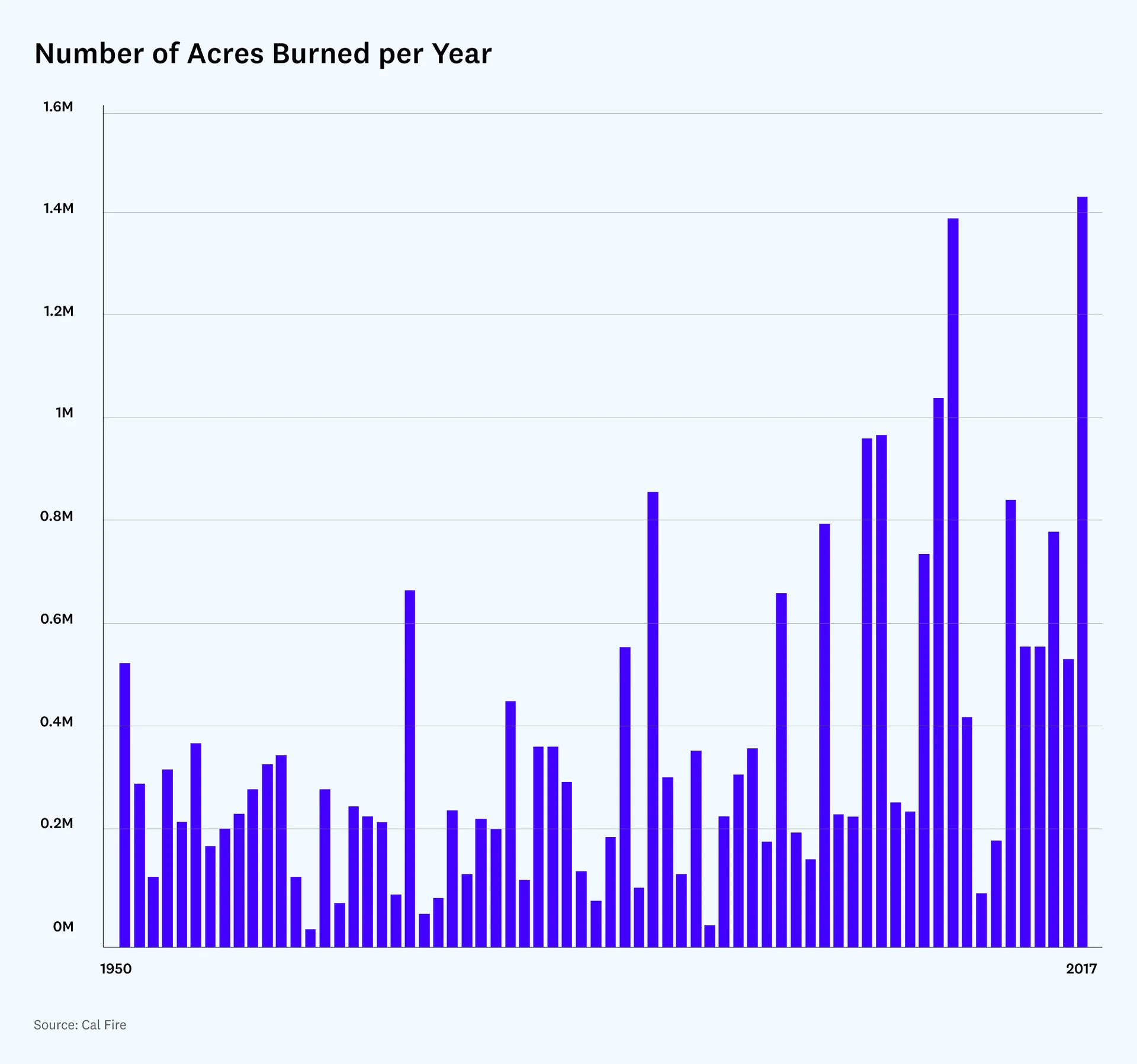
When we look at data from the California Department of Forestry and Fire Protection (Cal Fire) for 1950-2017, one oddity stands out—the acres burned vary greatly from year to year. In any given year, there is no guarantee that it will be especially severe.
Even with that year-to-year volatility, it does appear that, over the past seventy years, total acres burned per year have been trending upward. For instance, all five of the worst years in the period covered by this graph have come since 2002.
More recent data indicate that 2020 was the worst year of all.
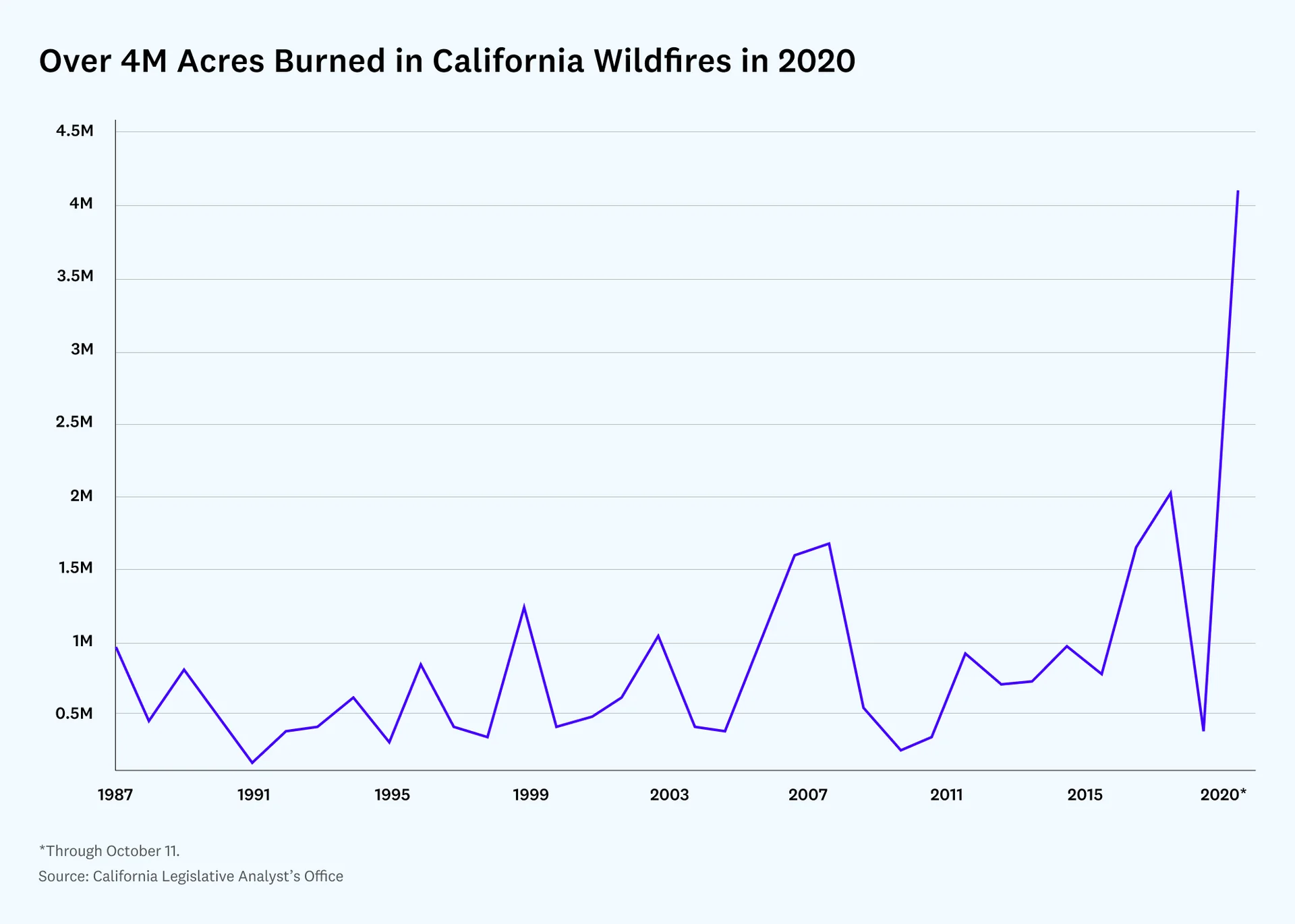
Taken together, this evidence — drawn from satellite images, aerial cameras, and written records — appears to show that wildfires grew steadily more destructive from 1950-2020.
But to judge the longer-term trend of what is really happening with the fires, we need to look much farther back. Data based on written records from Cal Fire and the U.S. Forest Service going back to 1919 show that wildfires, rather than rising, have in fact fallen over the past 100 years. And the National Interagency Fire Center website previously observed that fires were at their most extreme a century ago. (See data, research, and methodology for this article.)
The same pattern appears in a review of three distinct long-run wildfire data sources, which show wildfires declining from 1919 to around 1996 and edging higher since then, though not back to a century ago’s levels:
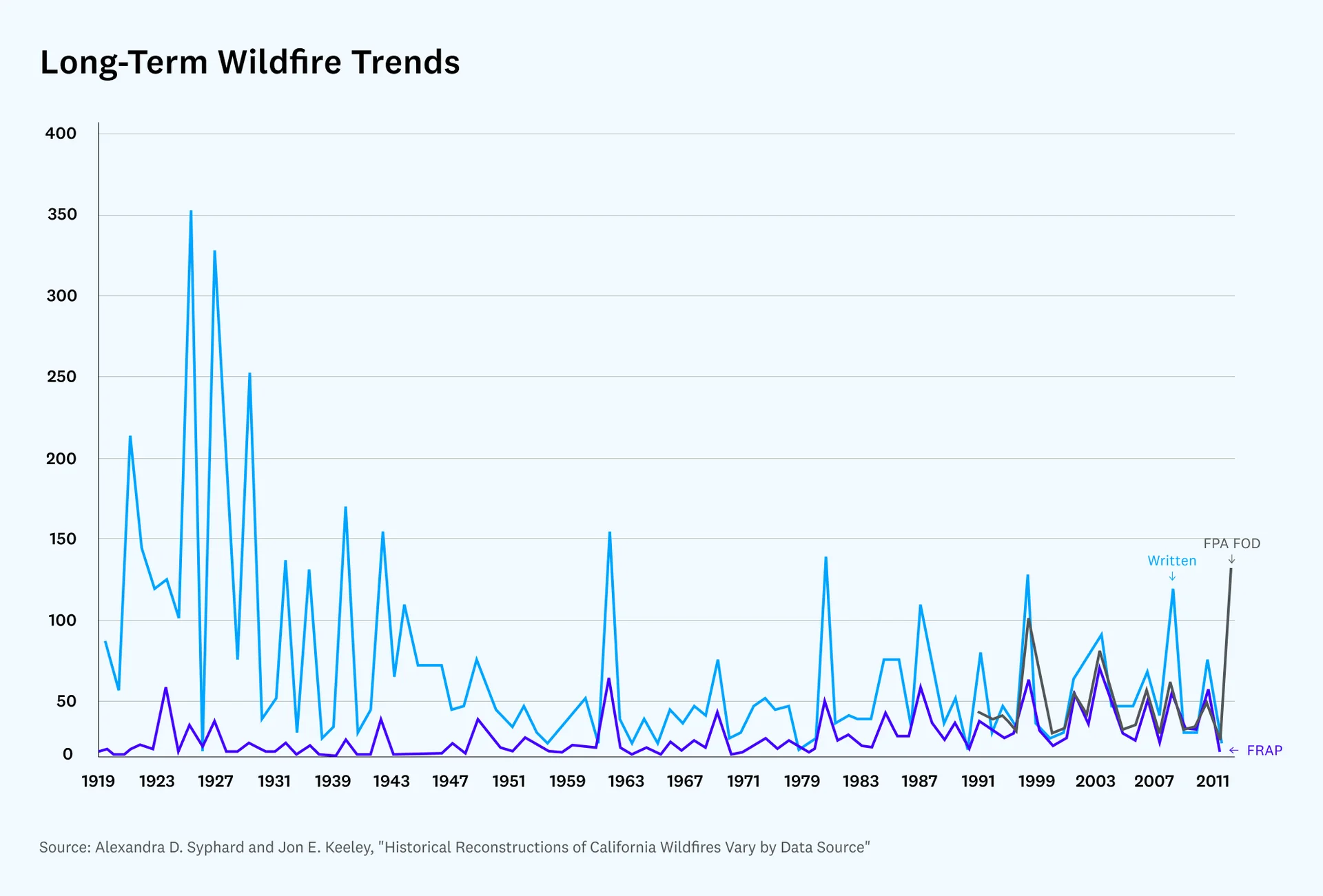
The data on the century-long overall trend indicate that much of the 20th century was an unusually fire-light period, and what we are seeing now is a return to the early 1900s’ “normal” fire levels.
It may also muddy the standard claim that the rise in wildfires over the past two decades is the result of climate change, since the data indicate that the damage caused by wildfires is now lower than it was a century ago.
Is it then possible that government mismanagement (another competing theory) is the main driver of wildfire damage, rather than climate change? We’ll look at both possibilities.
Neither climate change nor government mismanagement “cause” wildfires, however—they can only raise the odds that they will be destructive. First, something has to ignite a fire.
What causes wildfires?
Most fires are small and cause little harm; what matters is not always what starts the most fires, but what produces the most damage. Even so, beginning with causes can point us toward some possible ways to reduce damage.
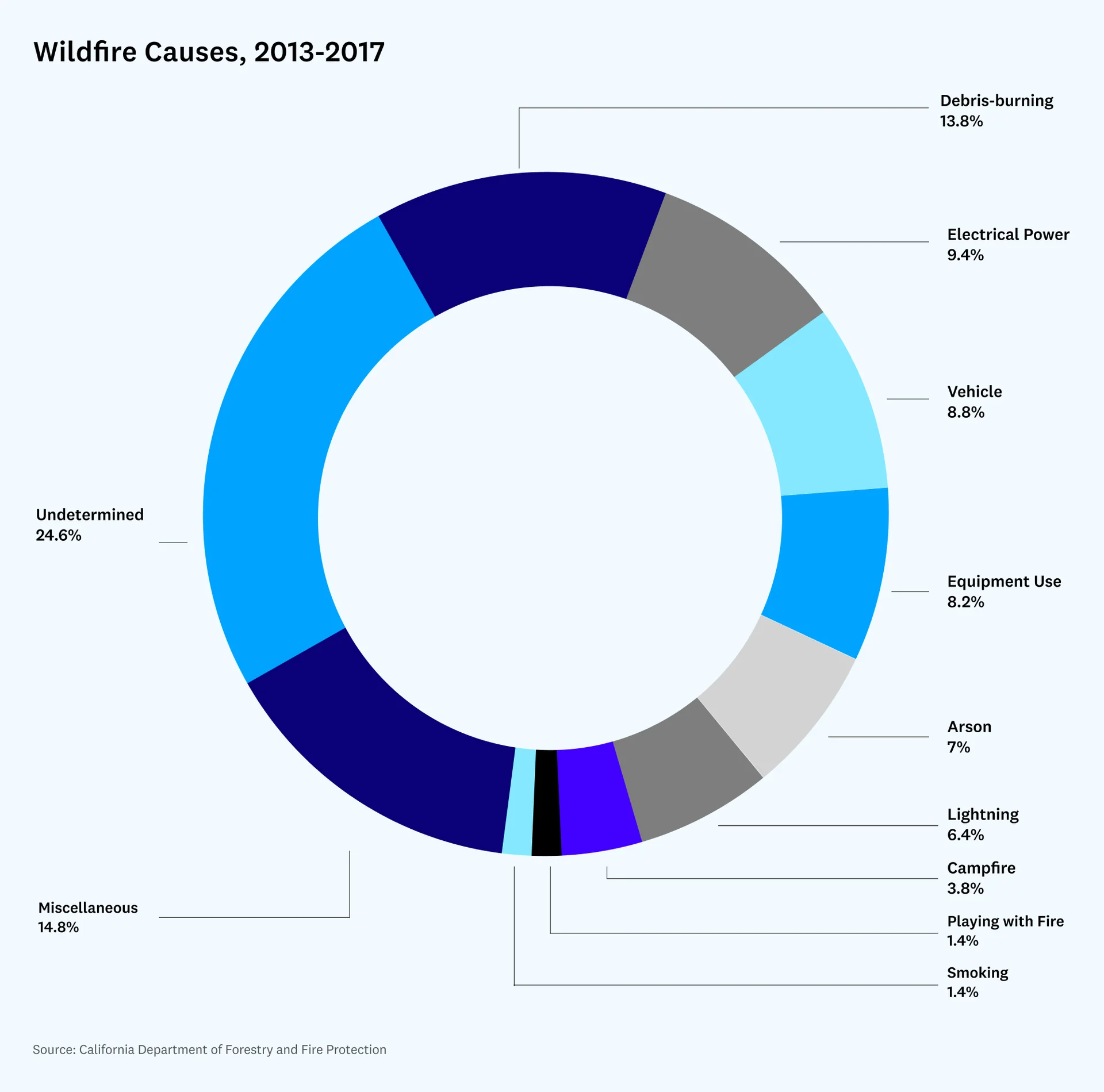
What matters are causes, weighted by severity. Debris-burning, which accounts for 13.8% of fires started, is not viewed as a major cause of major fires. Fires from miscellaneous causes, however, which comprise nearly 15% of fires, can be highly damaging—they are part of a long tail of potential fire causes that are difficult to control. In the Carr fire, for example, a flat tire caused a car’s wheel rim to grind against the asphalt, throwing sparks that ignited the fire. In the Valley fire, a wire in a poorly connected hot tub overheated, melted, and set fire to dry brush near a home. In the Mendocino fire, one of the fires that combined to form it, the Ranch Fire, began when a rancher unintentionally sparked dry grass while hammering a metal stake in an effort to locate a wasp nest.
When the focus is prevention, however, these random triggers are almost impossible to remove.
Power lines are the next most frequent cause of fires, and the fires they cause are destructive indeed. According to Cal Fire, 6 out of the top 20 most destructive fires since 1991 (by structures burned and deaths) were due to faulty power lines. However, power lines are still fairly low on the list when looking at overall acres burned since 2000. (I created this Github repository for supporting data.)
Lightning strikes, although they account for only 6.4% of fires, have caused the most fire damage in recent years:
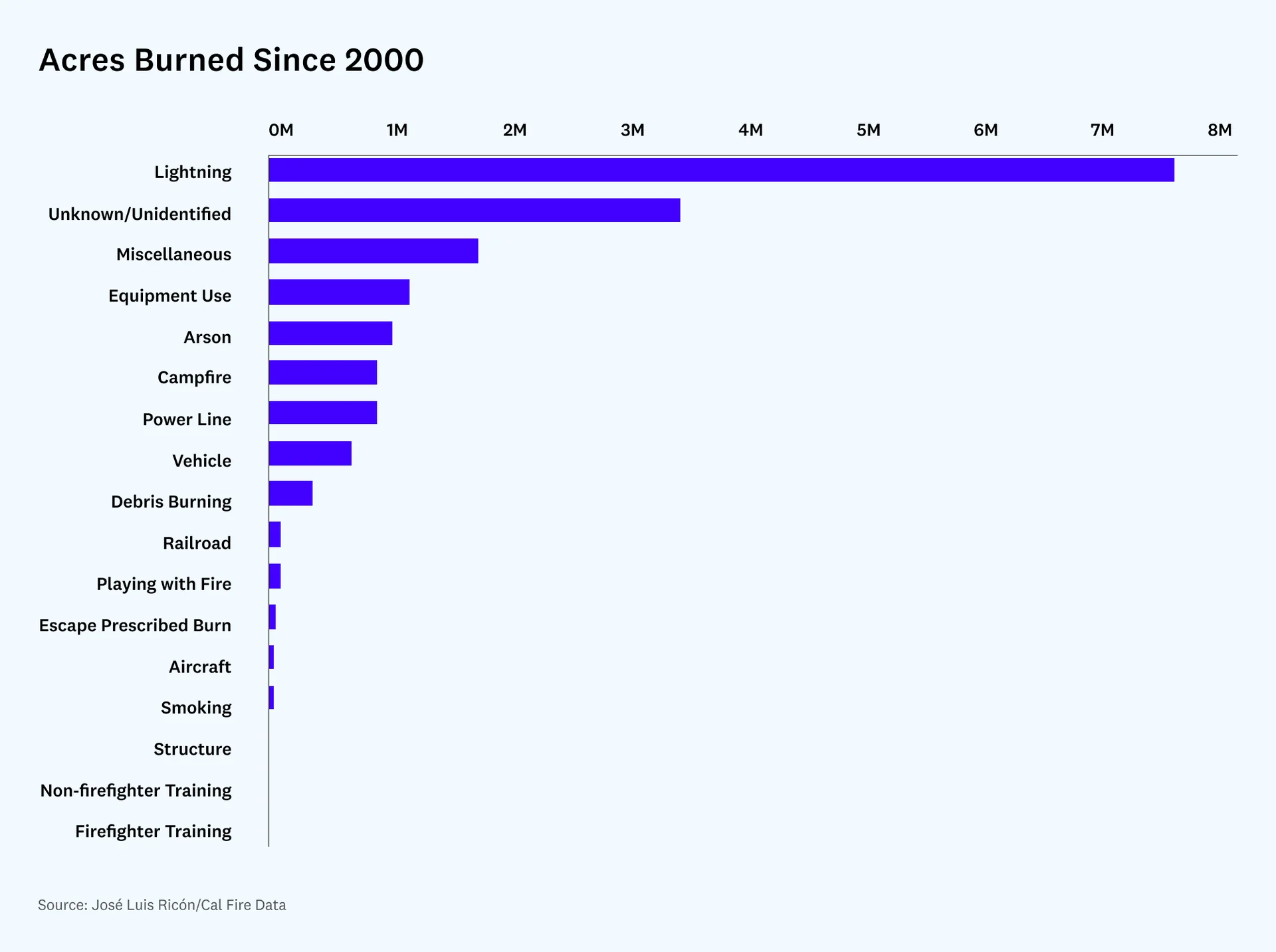
Lightning storms were responsible for the combined 38 fires that made up the August Fire Complex, which burned nearly one quarter of the total surface area burned in 2020, even though those 38 fires amounted to just 0.38% of the 9,917 fires reported that year. Lightning also started the rest of the mega fires of 2020—the SCU Lightning Complex, the LNU Lightning Complex, the North Complex, and the SQF Lightning Complex.
That leaves the question: are we observing more lightning, or is the same amount of lightning hitting drier forests and causing more fire?
It turns out that lightning levels in California were unchanged from 1986-2000, which implies that drier forests, not more lightning, may be behind the greater damage from lightning strikes. That does not exclude the possibility that lightning strikes have been rising in the 2000-2021 period, for which no data is freely available.
So, after looking at the evidence, it appears that sadly there is little that can be done about some fires, including some very large ones, that have random human or mechanical causes. And little can be done about lightning strikes. Faulty power lines, though, can be addressed, and we’ll return to them later. We’ll also look at the climate change data.
But before that, let’s examine humans’ role in fires more closely—and the ways people are affected.
How important are human causes and impacts?
Untangling human responsibility in wildfires is hard—lightning is a single event, while human factors cover fire management methods, urban building, roads, or power-line management. Mann et al. (2016) attempted to separate these relative roles and found that, even after removing the effect of climate change, human activity still accounts for more fire overall than non-human factors.
I used data from Cal Fire’s Fire Perimeters database and charted burned area, fire counts, and causes from 2000 to the present. (The notebook used to produce the data below is available in the Open Nintil repository.)
In these two maps (Southern California, Northern California), red marks human-caused fires. Blue marks fires with unknown causes. Green marks fires caused by natural sources, such as lightning:
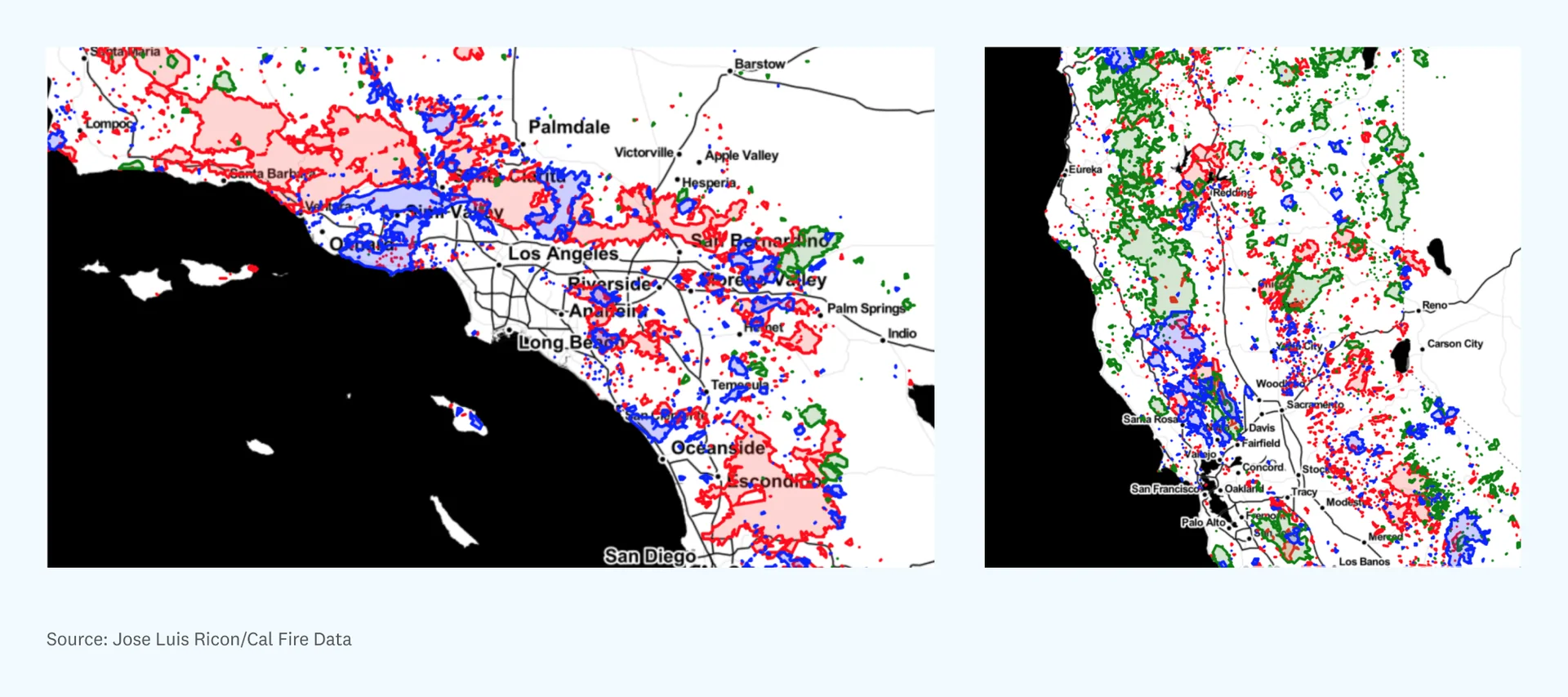
From analyzing this dataset, it’s clear there is a trend toward more area burned and more fires, as well as toward an increase in the largest fires. Whereas 30% of the fires were responsible for 90% of the area burned in a given year in the 1940-2020 period, now less than 10% of the fires (recently, less than 25 fires in a given year) account for most of the area burned.
Geographically, almost every fire in the Los Angeles area is due to human causes. In Northern California most of the fire tends to be due to lightning, and around the Bay Area there’s a combination of both. There’s also a surprisingly high percentage of fires whose causes are unknown, even for large fires like the 2020 Creek Fire.
The dataset also shows the natural aftermath of wildfires: what has burned does not burn again, at least not for about 10 years after the original fire. In some places, trees are not returning, and the land is being turned into chaparral. In turn, chaparral is being converted into grasslands and sage scrub.
Measuring the deeper health impacts
It’s worth noting that acreage should not be the sole metric when assessing wildfire damage (as suggested here); measuring acres burned, structures burned, or even lives lost still likely underestimates the true costs of wildfires. One would have to add the economic costs of individual wildfire mitigation, the quality-of-life costs associated with people being unable to enjoy the relevant natural areas, and the potentially massive health costs from millions of people breathing polluted air. There is work attempting to quantify the impact of wildfire-produced air pollution on health; Wang et al. (2021) estimate that the California wildfires of 2018 alone, via increases in mortality risk, caused the death of 3,652 people, which is 35 times more than the lives lost directly due to the fires.
This kind of indirect damage due to pollutants is not always considered in cost-benefit analyses of the wildfire equation. The National Fire Protection Association, which is often quoted as an authority for costs of wildfires, does not include health-related costs in its calculations. Neither does the Wikipedia cost calculation figure: the 2018 wildfires article cites a $26.35 billion loss, whereas the Wang et al. paper, adding in health and indirect (counterfactual loss of economic activity) losses, gives a total of $148.5 billion.
It’s easier to notice property damage compared to long-term health impacts, and assigning a value to rebuilding a building is easier than modeling the cost of particulate matter getting into people’s lungs. Fortunately, this is starting to be acknowledged. California’s Wildfire and Forest Resilience and Action plan has a section on reducing the health effects of smoke (p. 34). The Costs of Wildfire in California report considers health effects as well.
Conditions for more damaging fires
So far, all of our analysis has been about what starts individual wildfires. Now let’s look at the conditions that make wildfires more or less damaging. In simple terms: drier, denser vegetation offers more “fuel” and produces conditions for more damaging fires that are harder to control.
Broadly speaking, there are two ways vegetation can become drier and denser: climate change—either anthropogenic (human-made) or natural variation—or land management policies that increase risk of fire.
Those skeptical that anthropogenic climate change is the main cause of rising wildfire damage point to data emphasizing the high fire frequency of the distant past. Before 1800, the average annual acreage burned was 1.8 million hectares, or about 4.4 million acres (Stephens et al., 2007). That matches 2020, the worst year ever in recent history, supporting the claim that California is merely returning to normal in recent years, rather than experiencing a 21st-century pattern driven by anthropogenic climate change.
Some people hold this view (see some examples here, here, and especially here), and they point to other forces behind the recent rise in fires, such as the firefighting policy of not allowing any fire in the environment, which causes fuels to build up and produces larger fires years later. Under this argument, the recent increase in fires reflects a “fire deficit”—an unusually low level of burns before the current era, the result of a century of aggressive firefighting, which created overgrown forests, which created more fuel for fires to spread.
But the issue is a bit more complicated than that. Even leaving anthropogenic climate change aside, climate has natural oscillation; Keeley & Syphard (2019), find that in the short term at least, higher rainfall in one year leads to more fires the next due to more vegetation growth. Indeed the wettest year ever in California (2016-2017) was followed by intense fires (2018).
These stretches of higher or lower rainfall may be shaped by natural climate oscillations such as the Pacific Decadal Oscillation or the related Atlantic Multidecadal Oscillation (AMO). The same applies to temperature: Kitzberger et al. (2007) observed that a current warming trend in the AMO suggested that we may see more widespread, synchronized fires across the western U.S. in coming decades (more temperature, more fires), which is exactly what occurred in the years after the paper was published.
If one wants to see how much of the trend is attributable to climate change, one must model those oscillations and determine how much they affected the aridity of the fuels present in western U.S forests (while controlling away the impact of human activities like forest management). Most such analyses, such as Abatzoglou & Williams (2016), use data from 1950 onwards, a time period that covers a chunk of cold and warm Pacific Decadal Oscillations (though ideally we’d like to see a model that reconstructs the entire observed dataset of fires).
What the authors find is that half of the increase in aridity of the fuels present in western forests, including those in California, was due to anthropogenic climate change, with the rest being natural variation (possibly the oscillations described earlier).
Even this analysis, which adds nuance to the question of whether climate change is to blame, concentrates on the direct effects of human-caused climate change on fuel dryness and does not deal with several other routes through which it may have influenced wildfire activity, either positively or negatively, the authors say.
Still, it makes sense that a drier California would generally burn more. And checking whether California is in fact drying out is simpler: records extend back more than 100 years, which ought to smooth out recurring oscillations. Those records indicate that a dryness trend still persists.
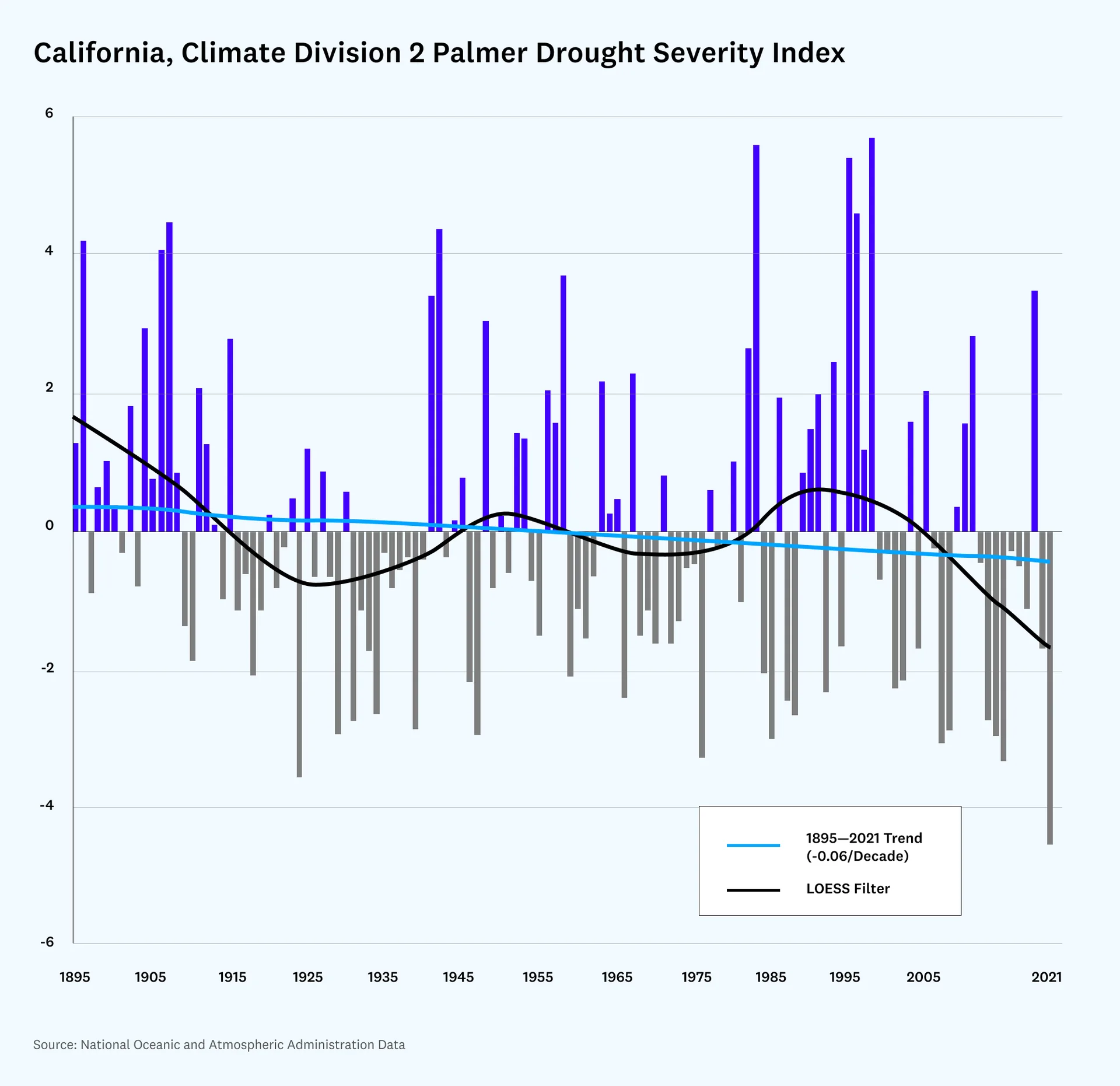
Taken together, this suggests climate change is pushing in the expected direction: California is becoming hotter and drier—and those two conditions, because of the thermodynamics of combustion, will mean more fire later on, all else equal, even if land management were best-in-class.
Land management policies
If left alone, wildfires would continue burning until no fuel remained. Naturally, that is far from ideal—uncontrolled fires would cause severe pollution, fatalities, and property damage. So the instinct to suppress every fire is understandable. Fire is frightening and difficult to manage.
For most of the past century in California, two rival fire-management approaches have coexisted uneasily. Fire suppression refers to the set of actions aimed at putting fires out—this is conventional, old-school firefighting. Extinguish fires as they arise (though not always, for instance when letting them burn out is judged sensible, efficient, and safe), and occasionally use prescribed burns to reduce vegetation and lower the odds of future fires.
Fire exclusion, on the other hand, means a zero-tolerance policy toward fires, including not allowing fires to burn (wildfire management) or starting new fires (prescribed burns).
But this is one of those Talebian situations in which systems need a certain amount of volatility to remain more stable than they otherwise would—better to permit smaller, regular jolts than eventual blowups. It is now widely accepted that fire exclusion lets too much fuel build up, which leads to larger and more destructive fires. Counterintuitively, too much firefighting creates more fire.
It took awhile for the state of California to come around to this way of thinking. After a series of large fires in 1910 the U.S. decided it had gotten enough of that and aimed to prevent any and all fires from ever happening. In 1935 a policy was instituted such that every fire should be suppressed by 10 a.m. the day following its initial report.
The state was not oblivious to the fact that fire exclusion inevitably raises risk by encouraging undergrowth. Before adopting a fire exclusion policy, the early Forest Service commissioned studies on whether to use prescribed burns—controlled fires that remove growth and make landscapes less welcoming to runaway wildfires. After years of discussion, the state rejected prescribed burns. Any fire was considered too risky.
In 1970 a reversal of these policies started, and now the consensus position is that prescribed burns can be a valuable tool.
Even so, California still struggles to carry out a steady fire suppression policy, and it falls short of its own targets (Miller et al, 2020). See the figure below, where the dashed line is planned burn and the solid line is actual:
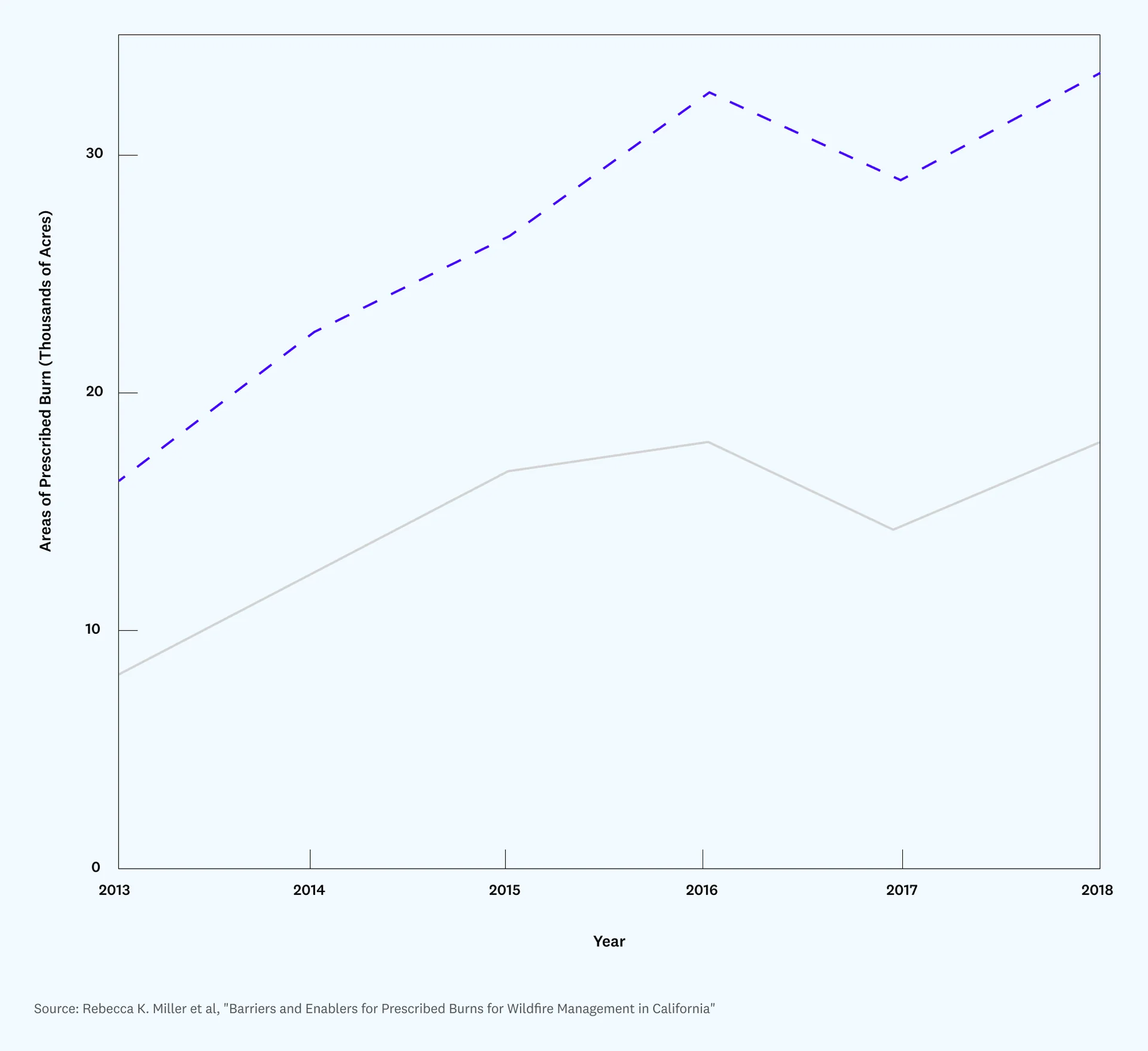
Even the prescribed burn goals (just over 30,000 acres for 2018, in the above chart) are far short of what would be required to reduce future wildfire damage: The California Department of Forestry and Fire Protection estimated in 2010 that 20 million acres would require treatment in order to reduce the likelihood of catastrophic fires. Even if the state were to increase the yearly burn to 100,000 acres, it would take 200 years to get all the burning done that state fire officials believe is necessary. The number Miller et al. actually call for is 1.01 million acres a year, which is substantial, around 20% of the total surface that burned in the 2020 wildfires.
So what’s preventing California from reaching that target? Miller et al. asked a range of stakeholders, and many of them pointed to political and bureaucratic constraints. In areas managed by Cal Fire, for example, it is illegal to let fires burn—the agency is required to extinguish all unplanned fires. (On federal lands, it is legal to let wildfires burn if deemed necessary. In the Sierra Nevada, the U.S. National Park Service has been leveraging wildfires for treatment to great effect, to the point where the area treated by managed wildfire is similar to the area undergoing prescribed burn in the years 1968-2017.)
Although heralded as the future of fuel treatments by most interviewees, it remains unlikely that managed wildfire will be used on state and private land in the near future due to legal responsibilities and the need for cross-jurisdictional agreement. Interviewees therefore underscored the importance of expanding prescribed burns, particularly on non-federal lands, to achieve the ecological benefits of fire. Even this presents political and legal challenges, though: If a prescribed burn escapes (which happens about 2% of the time), there are substantial legal and financial penalties imposed on the burner. This was addressed by SB 1260, which exempts agencies from liability if the burn meets certain safety criteria. In federal lands, meanwhile, managers that use prescribed burns don’t receive any reward or praise, but are personally liable if their fires escape. This disincentivizes them from using this tool as much as they could.
Beyond policy, the interviewees said there are procedural and coordination problems that interfere with effective fire prevention. The “burn windows” allowed by the California Air Resources Board (CARB), for example, may be too limited. While CARB says its burn days go unused, landowners argue that CARB is overly restrictive. There may be a mismatch between when crews are available to conduct the burns and when CARB permits them. In addition, rules such as NEPA and CEQA place a heavy burden on explaining and justifying burns, which reduces their use. If the approved burn window is missed, landowners, whether private or public, must apply again for approval.
These misaligned incentives and regulatory problems contribute heavily to what is called the firefighting trap—the condition in which putting out fires in the short term, while neglecting prevention and preparation for later fires, results in ever more fire.
In any given year, a firefighting agency must divide resources between suppressing fires and preventing them. In an ideal world, the agency would model the expected outcome of each management approach, estimate how it changes fire risk over time, and assign resources accordingly.
That is not how agencies work in practice. Cal Fire has no option but to put out every fire within its jurisdiction, whatever the other considerations, with crew availability as the only real limit. Crews assigned to prevention also handle suppression, and as fire season gets longer, crews that would otherwise be getting ready for the next season are busy fighting the current one. Breaking this self-defeating cycle would require actions that could be politically risky.
So far, I’ve laid out a range of evidence examining different factors one by one. Ideally, we could look at a single study that explicitly models fire exclusion and climate change. There are only a few papers that attempt to assess those effects together. Hanan et al. (2021) look at two separate sites, Johnson Creek and Trail Creek, in Idaho using the most detailed coupled hydrology-fire-ecology-climate model I’ve seen so far, RHESSys-WMFire.
So which is it, fire exclusion or climate change? The answer is ... it’s complicated. For any particular area, fire exclusion can both make the wildfire situation worse and, surprisingly, improve it. The same can be true of climate change—while greater aridity makes fuels more flammable, beyond a certain level of aridity (and for a given vegetation type), the growth of new vegetation is slowed, leading to fewer fires.
Could it then be that the “fire deficit” that the state experienced for much of the last century is actually caused by climate change, rather than fire exclusion? This is very unlikely: If California as a whole were at the point where the vegetation-reducing effect of aridity overwhelmed the fire-inducing effect, we would see an inverse correlation between aridity and fire in the last few decades; but the Abatzoglou et al. papers cited above show otherwise: Right now, more aridity means more fire.
Although it is hard to isolate the precise effects of climate change and fire management practices, and wildfire damage likely results from some combination of these factors, the warmer temperatures in California, which are driven in the long run by anthropogenic climate change, are unquestionably contributing to more wildfires.
Another factor often cited in wildfire trends is a large rise in housing construction in the “wildland-urban interface” (WUI). More people living near wild areas means more roads, more power lines, more campfires (since it is easier to go camping when nature is close to home), and more accidents overall that can spark fires.
The WUI, which many homeowners favor for its calm, picturesque surroundings, appears again and again in discussions of California wildfires. For one thing, building new homes in the WUI has helped drive a sharp rise in the harm done to people and property (it’s hard to have wildfires in treeless San Francisco), as city residents are increasingly being priced out of urban areas by climbing housing costs. This also raises the odds that human behavior will spark fires. For another, as a proposed remedy flowing from that diagnosis, people are urged to leave the WUI. A few of the fires I referred to earlier began there: the faulty hot tub that ignited the Valley Fire is one example of fire coming out of the WUI. I am, however, doubtful about efforts to cut back the human footprint in the WUI before trying other fixes. WUIs are excellent places to live, and denying people the chance to build homes in attractive, more affordable places in order to lower wildfire risk should be regarded as a false tradeoff: progress ought to mean not needing to choose between these things. We can both fight fires well and keep people living in the WUI.
***
California wildfires are a complicated problem because so many linked factors feed into them, and we still do not know how to assign each of them its proper weight, which makes finding solutions harder.
But there is plenty we do know. Burned acres per year in California are increasing, relative to 1950. Despite this trend, and the physical, economic, and emotional damage that we witness annually, the quantity of fire is not unseen in the history of California: In both the early 20th century and pre-1800 there were more acres burned. Still, the current level of fire is predicted to continue to increase, though some years will see very little fire and others will see 2020-scale mega fires.
When it comes to prevention, there are no solutions that are both simple and clear. Most fires are caused immediately by humans, but in many instances the triggering events are random and difficult to eliminate entirely, and in any case humans are not responsible for most large fires. Lightning strikes still matter a great deal in starting fires and should not be overlooked.
Looking beyond immediate causes, it is difficult to focus on the conditions under which fires are most likely to start and cause serious harm. It is obvious that zero-tolerance fire management, or fire exclusion, produced a buildup of fuel across California. A very wet stretch that boosted plant growth, along with higher temperatures and increased dryness from climate change, made this worse.
Even without climate change, we would still expect more fire than in the 1950-1980 period; in other words, the charts often used to argue for climate change effects usually exaggerate their size and minimize natural swings and human firefighting practices. That said, even if California adopted a more aggressive prescribed-burn policy, rising temperatures would still cause more and more fire over time, beyond what the state may want.
In the end, the right question is not simply whether climate change or fire exclusion policies are the main driver. The better question is what to do from here, especially while taking different political and social limits into account. Even without climate change, fire exclusion, or weather cycles, a large share of California will naturally burn. The question then is: how much of California should burn, and when, given what Californians value?
Potential paths to progress
So what should come next? There is no single silver bullet for wildfires. A better relationship with fire will need a multi-pronged approach. Rather than aiming for zero wildfires, we should aim to manage fires and lessen their effect on human activity.
Cutting carbon emissions is an essential part of reducing future wildfires. The influence of climate change on wildfires may at times be overstated, but there is no serious doubt that it is a major contributor to the state’s growing heat and dryness. But since that is somewhat beyond the scope of this essay, below are other important and more concrete actions that should make up most of our response, and ways technologists and others can direct their efforts:
Loosen air quality rules, including for prescribed fires. Short-term worsening on a set schedule, so people can get ready, is better than terrible air for months on end.
Repair power lines or bury them underground. Electrical power is behind many of the most destructive human-caused fires. The current response is to shut off power to the lines, which causes blackouts in the affected regions. But this does not always succeed, because it depends on making the call to cut power, and that is not always the choice made. A better fix, one that lowers fire risk and guarantees continuous service, is to underground the lines. It is already standard in many countries and, although costly, it may cost less than the fires caused by overhead lines. That is easier said than done: California has given some money to the state utility PG&E to do this, and yet the company is spending the money on something else. Undergrounding may be expensive and may require a fight (this is a real thing — there is a woodpole lobby.)
Allow Cal Fire to use wildfires for treatment. Most land that needs treatment is federally owned, so state action may have only limited effects. But it is important to remember that California is far behind its own, probably insufficient, fire-treatment goals. Breaking the self-defeating firefighting cycle would require steps such as changing Cal Fire’s charter so the agency is allowed not to respond to wildfires, or even not to respond by default unless a fire is expected to exceed a certain threshold of expected damage. The savings from this approach would make prevention work possible more often. More realistically, Cal Fire should have one ring-fenced budget for fire suppression and another for fire prevention, but even then, is it politically acceptable for some crews to work undisturbed on prevention projects while other crews are desperate for backup miles away, trying to save lives? The pressure to move resources into suppression is always present.
Improve coordination among firefighting agencies. There is a gap between the various action plans and roadmaps describing the measures being carried out, and what is actually happening on the ground. The ideas are in the right documents, but they are not being turned into action. It is not enough to say that certain actions will be taken; the institutional machinery needed to actually carry them out has to exist.
Use market-based tools in the WUI. California is blocking market forces from fully working to reduce building in highly fire-prone areas. For instance, higher insurance premiums would discourage people from moving there, and, in a more extreme scenario worth examining, could shift the burden of paying for the damage from the state to insurers and, through them, to the likely culprits, the same way it is done for nuclear reactors or cars. Required third-party insurance, perhaps built into location-based property taxes for wildfires, could be one answer. This whole discussion could of course be extended to examine what draws people to the WUI in the first place: it is not only natural beauty, but also the search for affordable places to live. Fixing housing policy in the state, and lowering rents in urban areas, could lessen the appeal of the WUI as a place to live.
Require “defensible space” around houses in the WUI. Current building codes already require house builders to construct houses in a sensible way—such as clearing vegetation around the building, or using fire-resistant materials. But if you look at any WUI area, many people simply do not do that. This reflects a wider pattern in California: there is a gap between passing laws and action plans and actually getting them carried out. In any case, even when rules are followed, one could always call for even tighter standards here.
Push toward early detection. We know satellites can be used to estimate how large a fire is after it has started. Could satellites also be used to spot fires as they occur and put them out before it is too late? This is a difficult problem: doing so would require very high spatiotemporal resolution—high spatial resolution to locate very small fires and high time resolution (sampling every few seconds) to react quickly enough. The satellites commonly used for data relevant here are useless for early detection. With the possible exception of the newer Huanjing satellites and those launched by Planet Labs, no satellite even comes close to sub-100m accuracy (Barmpoutis et al. 2000). In general, satellites with higher spatial resolution fly in non-geostationary orbits, so they pass over one spot only every few minutes. Geostationary satellites watch one area continuously, so they could provide real-time data, but their orbit is high. Yet there is a type of satellite custom-built for exactly this use case (detecting very small infrared signatures every few seconds): military satellites created to give early warnings of launches of Intercontinental Ballistic Missiles (DSP, SBIRS, and OPIR). This is not the first time someone has urged that these satellites be used for wildfire detection; such calls can be found from 10 years ago. Giving non-military entities access to currently classified information is no small matter, which complicates the prospects for a solution here.
Consider drones and airships as firefighting tools. Using drones that drop balls into fires to extinguish them may work for some fires under certain weather conditions, for example when there is little wind, the fire is within the drone’s range, and the fire can be detected before it grows beyond a very small size. I am not especially hopeful about drones as a general fire-fighting tool, though they may be a stepping stone toward better options like airships. Airships could potentially carry more water than the largest aerial firefighting vehicle in the world, the 747 Supertanker. As impressive as they may sound, one of the companies developing these airships does not seem to have succeeded and its patent has now expired. But the advantage of airships is that they do not need energy to remain aloft (they could be tethered and released when needed), and they can haul more water than ordinary drones. Fighting fire quickly depends on both early detection and timely action, which can in turn be achieved through a mix of pre-positioning resources and rapid delivery.
Consider the possibility of taking over utilities. The argument has already been made elsewhere that the utility serving most of California, including the area most at risk of fire, is not being managed as well as it ought to be. Taking over PG&E is among the proposals in a wildfire report from the current state administration. One way to view this is as a kind of self-defense on the part of the state’s residents: investor-owned utilities can be acceptable so long as they do not pull monopolistic rents, but if it is in fact true that the utility provider is subjecting the state to unacceptably high risk because of poor management, then there is a case for forcibly putting better management in place. This could be done in several ways, ranging from leaving the company in place but compelling a reorganization to nationalization or municipalization. Whether a change in ownership would really cure the company’s problems is, of course, uncertain, and choices like this should be made only after careful consideration.
***
There is no single cause of the repeated California wildfires, and no single remedy. But it is obvious that we are making them worse, and that we do not need to. Better forest management in the short term, and lower carbon emissions in the long term, ought to help ease the problem. Even so, with perfect forest management and a full reversal of climate change, California’s ecosystems will still be fire-prone. Fire season can certainly be shorter and less severe, but it cannot be done away with.
See data, research, and methodology for this article.
An earlier version of this article appeared on Nintil.com.