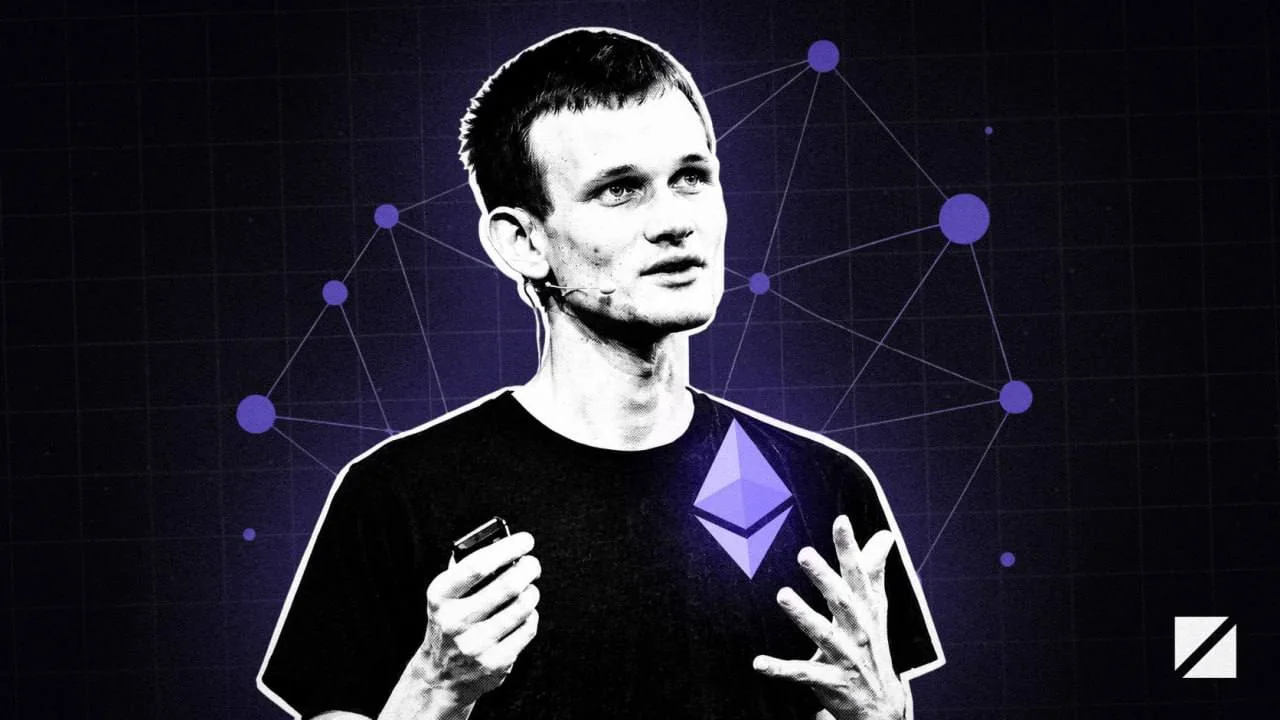
Vitalik Buterin argues that mechanisms governing high-stakes outcomes must be credibly neutral, then sets out practical rules for making them fair, legible, and effective.
Binance co-founder Changpeng Zhao explains why bitcoin corrections are normal, what institutional adoption could mean for 2027, and how exchanges scale through record volumes.
Nansen CEO Alex Svanevik on building through the bear market, moving AI to the front of the product, exchange transparency after FTX, and why Asia matters for the next stage of crypto.
Info Diet offers a peek into the personally curated feeds and media habits of the people shaping the future. In each installment, a different builder spends two days chronicling all the content they consume in order…
There has been a lot of buzz about “the metaverse” since its coinage in the ‘90s, but especially during the pandemic (given the surge in online activity), and even more so after Facebook changed its name to Meta. Is…
The promise of decentralization has been heavily discussed and debated, from why it matters to the bigger question of who will control the software that powers the internet. These questions are critical, because as…
Crypto faces a major barrier when it comes to mainstream adoption: The user journey is complicated and not yet built-out, and it’s not at all easy or intuitive for people new to crypto to even do the simplest…
A growing number of scientists and entrepreneurs are leveraging blockchain tools, including smart contracts and tokens, in an attempt to improve modern science. Collectively, their work has become known as the…
Every company faces some version of the “cold start problem”: How do you get started from nothing? How do you acquire customers? How do you create network effects — where your product or service becomes more valuable…
The Fourth Amendment protects our privacy rights in material that we keep private. The government can’t search our homes or computers, for instance, unless it has a warrant based on specific probable cause to believe…
In the future, it’s likely that the average person will not work for a company. Instead, people will earn income in non-traditional ways by taking actions such as playing games, learning new skills, creating art, or…
The killer app of the internet is networks. The web and email are networks. Social apps like Instagram and Twitter are networks. Marketplaces like Uber and Airbnb are networks. Networks get more valuable with more…
What is (and isn’t) a DAO? Why do DAOs matter? How do DAOs fit into web3, crypto, the creator economy, future of work, and many other areas? Inspired by our NFT Canon earlier this year (and original Crypto Canon)…
This is the second installment of a two-part series on reputation systems in web3. Read part one here. Web3 is based on the premise that each internet user will have a unique internet identifier, like an email…
As blockchain technology rapidly gains the attention of a mass audience, the conversation is still centered solely around technical topics related to the scalability of a network — transactions per second, latency…
As DeFi and NFT communities grow enormously in size, how to govern decentralized protocols takes on added importance. Now and over the next few years, one of the most immediate challenges facing these communities is…
Major computing waves generally have two eras: the skeuomorphic era and the native era. In the skeuomorphic era, the design thinking is largely adapted from older domains. For example, the early web was mostly…
Web1 (roughly 1990-2005) was about open protocols that were decentralized and community-governed. Most of the value accrued to the edges of the network — users and builders. Web2 (roughly 2005-2020) was about siloed…
Reputation systems present an opportunity for platforms to recognize—and thus incentivize—participants’ high-quality contributions, including content creation, moderation, community building, and gameplay. This is…
The promise of providing financial services to underserved communities around the globe is a key motivation for our work, and we’ve been concerned by a counterintuitive trend that’s taken root in Western economies…
When people talk about the recent past and envision the distant future of crypto, conversation always comes back to the cycle of wealth creation and redistribution. Consciously or unconsciously, there’s an…
One of the big, frequently discussed ideas of crypto is that it enables creators and communities to build their own internet-native economies. A key component of these economies is tokens, which got a bad rap during…
Over the past year, social tokens — those issued by creators and communities to access exclusive perks and invest in works — have taken off in the world of crypto and beyond. Celebrity artists and athletes like…
Every day we consume popular entertainment centered on characters. A collection of successful characters can become the foundation for a franchise — e.g. Star Wars, Marvel, Harry Potter — that can span decades, and…
While many in tech and beyond have heard of bitcoin, cryptocurrency, and the concept of a blockchain, less well-known are smart contracts, the major innovation of Ethereum. They’re programs that anyone can write and…
There’s been a lot of hype, buzz, skepticism, confusion, and excitement around decentralized finance aka “DeFi,” the ecosystem of blockchain-enabled products and services that replace traditional financial…
The NFT Canon is a go-to resource for artists and creators, developers, corporations and institutions, communities and other organizations seeking to understand or do more with non-fungible tokens. It’s a curated…
In his classic 2008 essay “1000 True Fans,” Kevin Kelly predicted that the internet would transform the economics of creative activities: To be a successful creator you don’t need millions. You don’t need millions of…
As the internet has evolved over its 35-year lifespan, control over its most important services has gradually shifted from open source protocols maintained by non-profit communities to proprietary services operated…
Crypto has gone through an eventful year. Decentralized exchanges and platforms that allow users to trade, loan, or borrow cryptocurrency have soared in volume. Developers are taking advantage of the flexible…
Many entrepreneurs and investors think that crypto projects can’t capture value because they are based on open source code. The thinking goes that if you develop open source code, someone will come along and copy it…