

More and more, launching a strong startup means not just creating a product people can’t seem to get enough of, but also shaping an active, loyal community around that product. These days, most founders clearly recognize how valuable community is. In CMX’s 2021 Community Industry Report, 86% of respondents (community managers from 508 different companies) said community was essential to their company’s mission, and more than two-thirds said their company planned to raise its community investment in the next year.
Yet although many founders are keen to put money into community, they often aren’t sure what they need to know to build one properly. Having started and run Zyper, a platform that linked brands with super-fans, and now leading community growth strategy at Discord, I’ve built hundreds of strong communities for businesses, brands, and creators. Before jumping in and hiring a dedicated community team, I’ve learned, founders need a solid understanding of two core concepts: 1) the community quadrant (to understand how community differs from other groups of people who engage with a product), and 2) the community funnel (to understand what makes a community appealing to prospective members).
With that in mind, I’ve assembled a guide that explains both concepts. It doesn’t attempt to cover everything required to build a successful community. Rather, it’s meant to teach early-stage founders just enough to start allocating resources.
What a community is (and isn’t)
One frequent misunderstanding, I’ve found, is the belief that “community” and “customers” mean the same thing. They do not. Knowing how they’re different is essential, so let’s begin there.
The people who engage with your product usually fit into one of four buckets:
- Customers/users purchase and/or use your product. Evangelists urge everyone they know to buy or use your product because they truly adore it. Community is the group of people who have discovered belonging and usefulness through your product. Ambassadors are motivated, through payments or rewards, to promote your product.
What sets community members apart from the other groups is the gathering aspect: Beyond using, enjoying, or leaving glowing reviews of your product, they spend time building relationships with other people around a shared attachment to it.
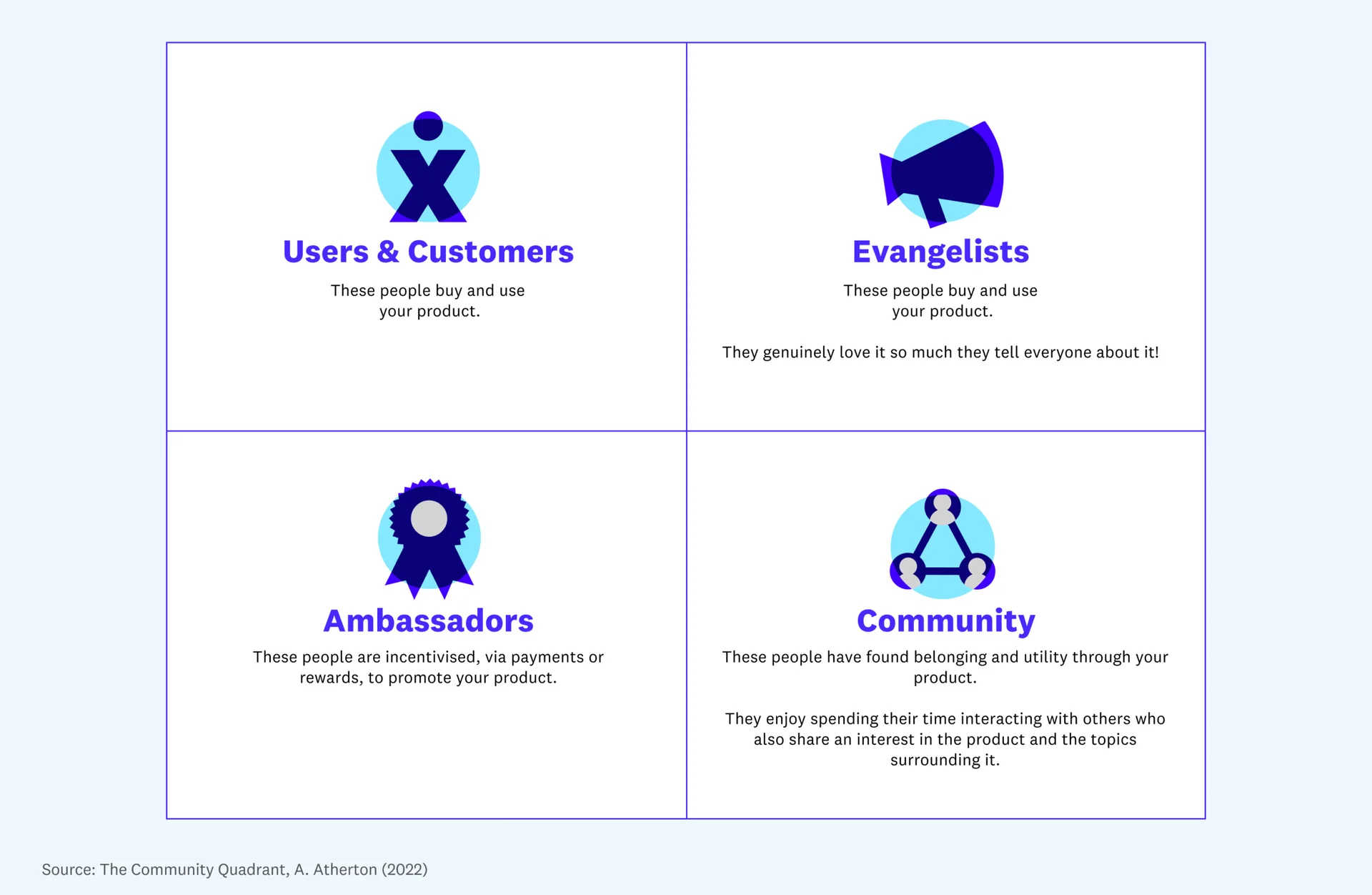
The quadrant, sequenced
Three of these groups consistently appear in a set order: Users/customers come first, then evangelists, and then community.
Ambassadors don’t fit neatly into this order, so you’ll need to decide how they relate to the other three groups. Even though ambassador endorsements aren’t organic, they still help spread awareness of your product into new segments and markets. Ambassadors span nano-influencers and affiliates to well-known celebrities, and together they can become a community of their own, with gamified rankings and events. In general, my advice is to build an ambassador program that operates separately from the other three groups. This article covers the basics.
The best time to launch a community differs, but you should wait until you’ve confirmed evangelists. People who love your product are your proof point. If self-described evangelists haven’t surfaced yet, email a group of your earliest customers (50 is enough) to learn whether they love your product. Those who reply enthusiastically are your first evangelists; invite them to join your community. Evangelists don’t automatically turn into community members, but they’re the clearest cohort to begin with because you know they like your product and want to discuss it.
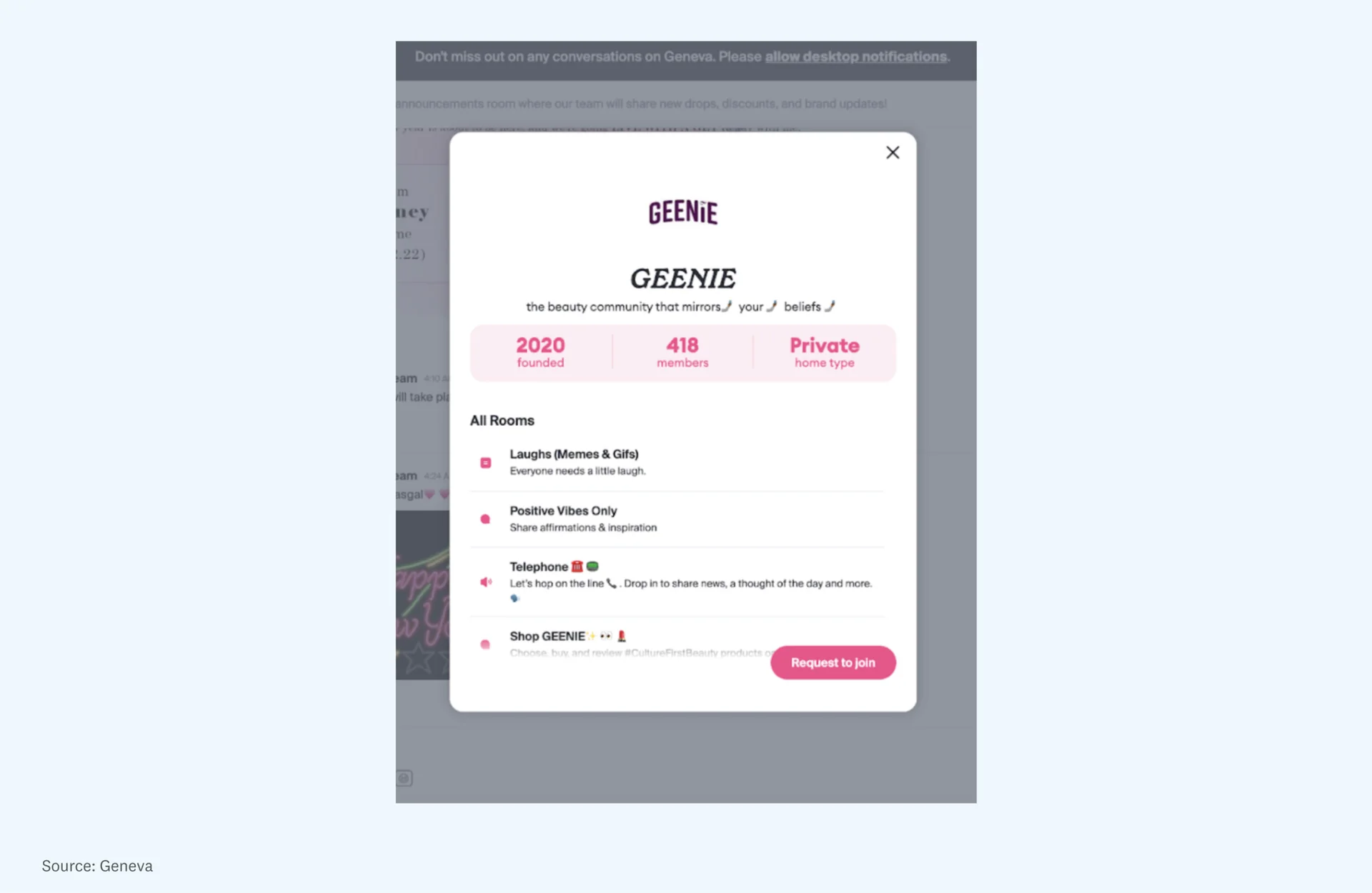
Next, open a discussion with this founding group in a private space built for that purpose, such as a Discord server, a Slack channel, a Telegram chat, or even a group DM on Instagram. Some community platforms are meant to be flexible while others are aimed at particular populations. Geneva, for instance, is a private group-chat app gaining traction among businesses with female customer bases.
One thing you should not do is spend engineering resources building your own community infrastructure. At this point, third-party community platforms will satisfy all your technical needs. Also, your target community members may already be using them. Meeting people where they are never hurts.
The early stage of community-building should resemble user research. You’re not trying to build an audience or maintain engagement. Instead, you’re testing different offerings to learn what your evangelists want. Audio? AMAs? IRL meet-ups? Ask them directly. Not only will you find out what they value, you’ll also give them a feeling of belonging.
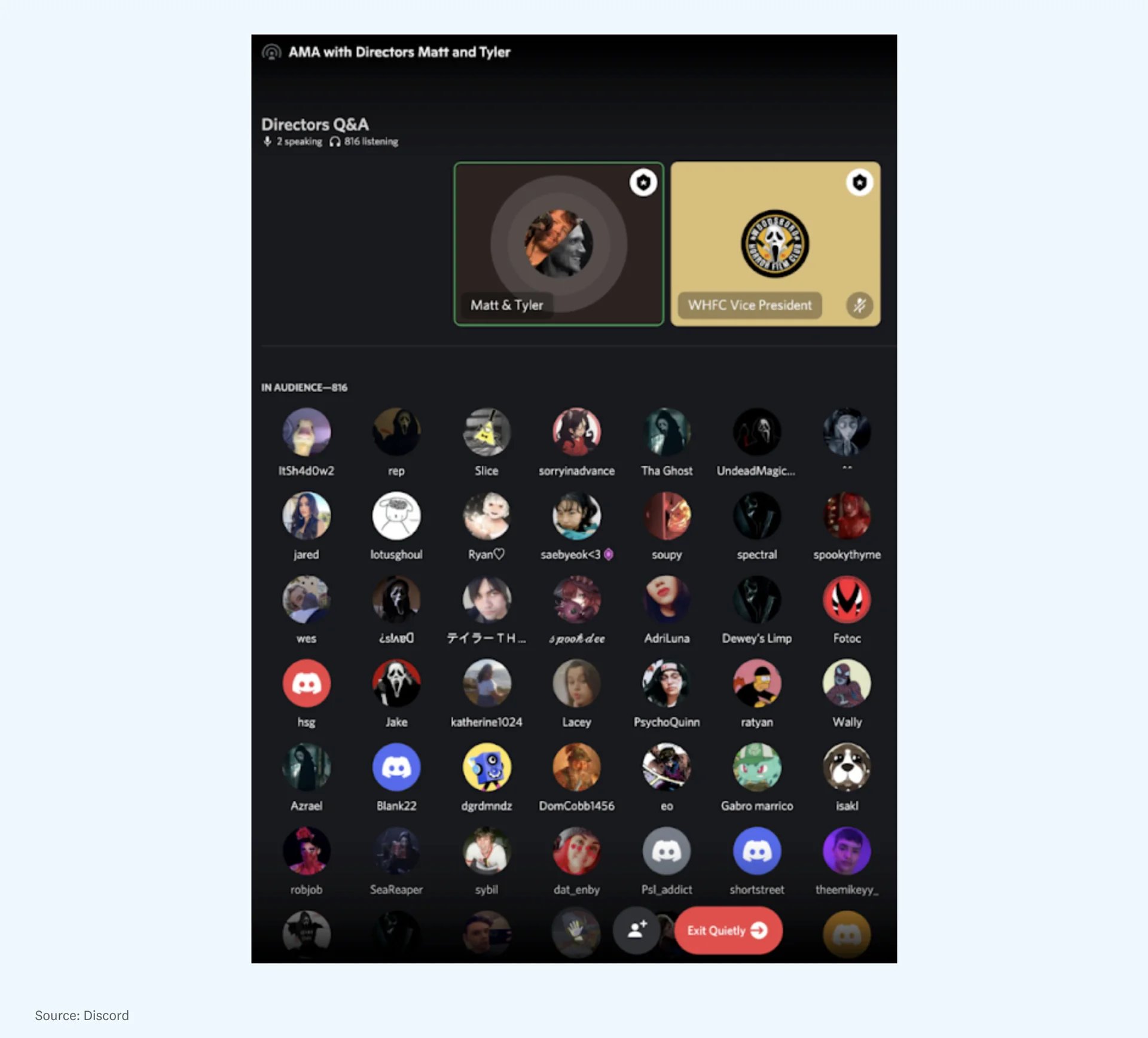
The specific offerings that attract evangelists differ by community. For instance, members of Scream Movies on Discord — a community for super-fans of the franchise — get exclusive access to events like director AMAs. That’s a big deal if you’re a Ghostface diehard.
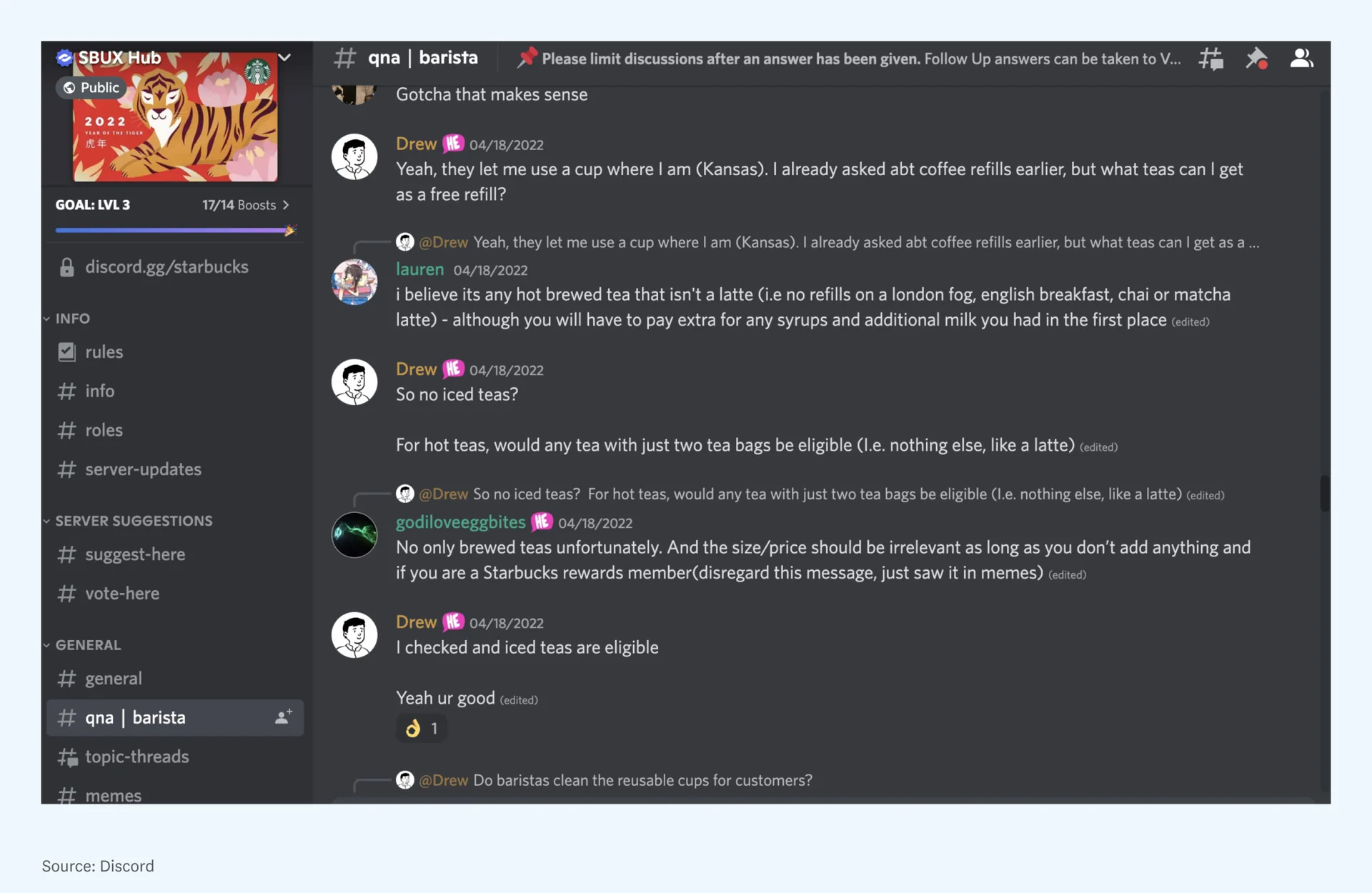
But AMAs may not be such an effective way to spark interest in every community. Consider the SBUX Hub on Discord, an unofficial Starbucks community for baristas and fans alike. Membership perks include behind-the-counter secrets and access to off-menu recipes. Here, learning about seasonal Frappuccino flavors months before they’re announced might create more excitement than, say, joining an AMA with Howard Schultz.
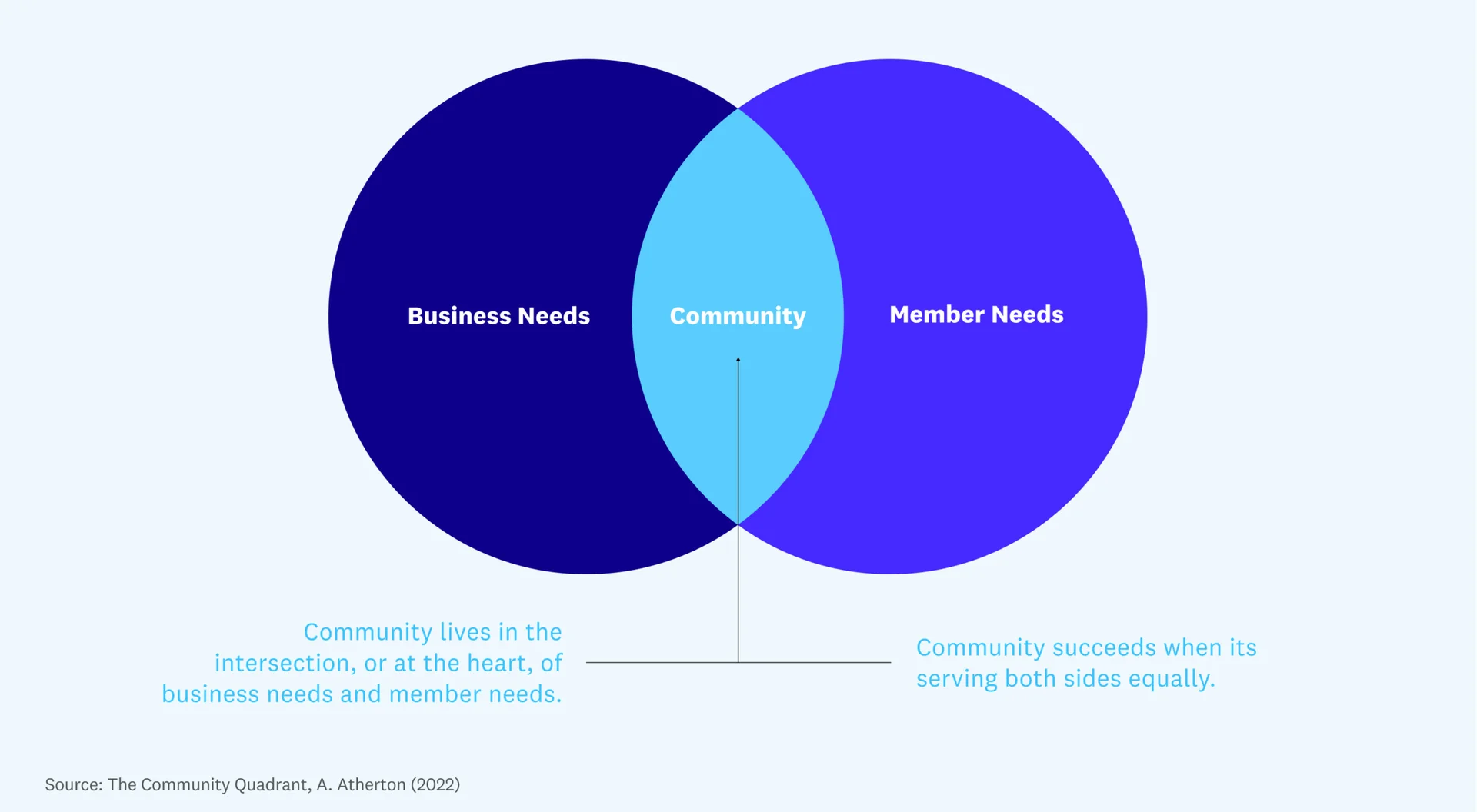
Once you understand the quadrant, the second concept to learn is the community funnel.
The community funnel: invited —> invested
Communities are mainly valuable to businesses for two reasons:
- They provide a built-in source of real-time user feedback, which is vital for building a product people truly want. They encourage friendships based on an affinity for your product, which increases lifetime value and new customer referrals.
When it comes to community-building, it’s your job to start the fire. But you can’t keep it burning by yourself. The key to a healthy community is members who care enough to take initiative — they ask thoughtful questions of the group, bring up new topics to explore, and sometimes even organize events, online or offline, to help people connect. And they’re invested enough in the community to take on some of the responsibility for moving it forward. Early on, think about identifying people you’d like to see take on more responsibility.
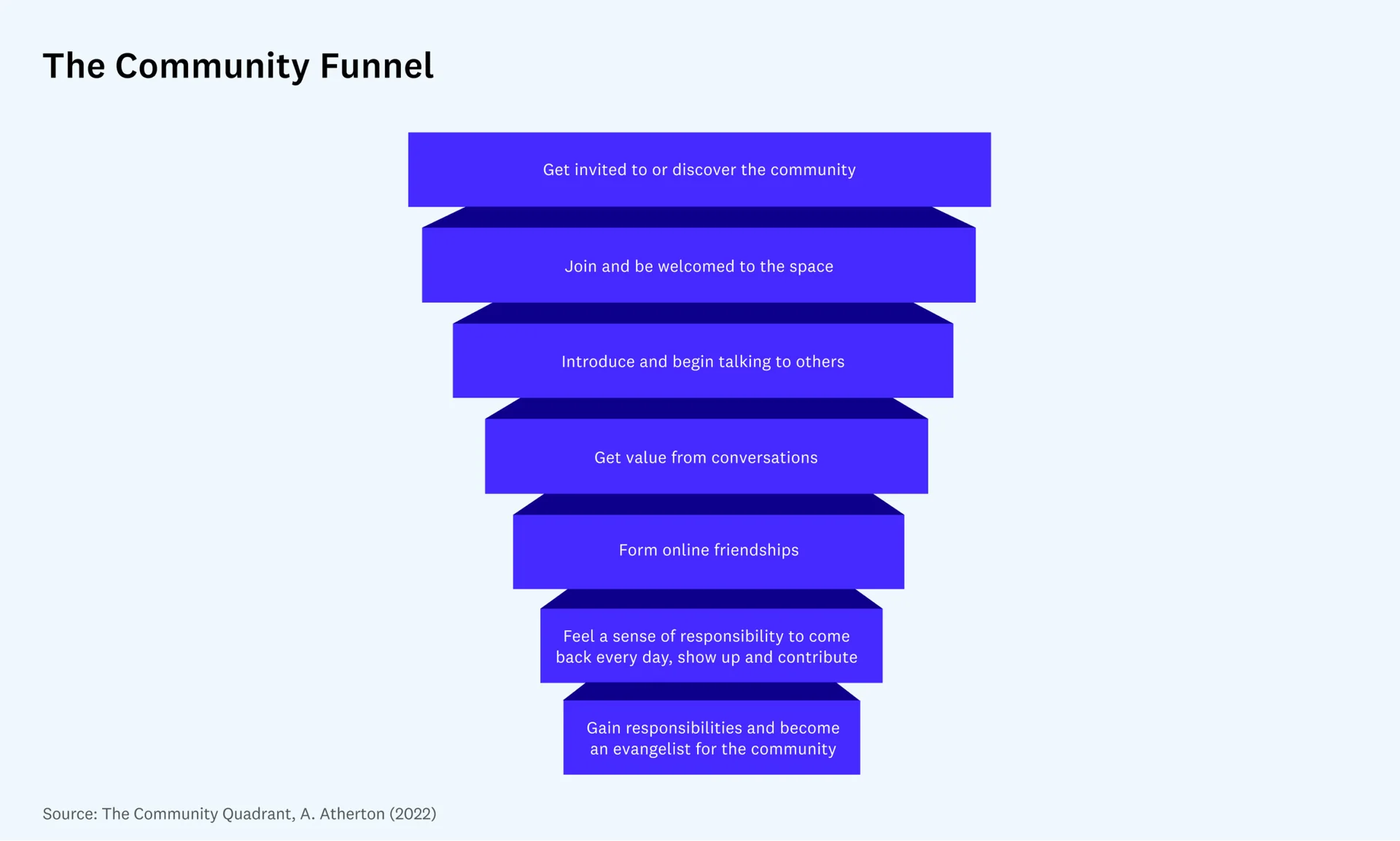
But new community members don’t automatically become devotees. You need to create the conditions for that to happen — both by allowing early members to help shape and grow the community, and by building an environment compelling enough to draw in anyone who arrives. The community funnel maps a prospective member’s path from getting an invitation to becoming an invested, active member. It’s important to think about your role in helping members move through the funnel.
One priority should be improving introductions: A member’s first few interactions with the community can have an outsized effect on whether they stay. Look at those early experiences through the eyes of a new member:
Is the first invitation compelling? Does it trigger excitement or curiosity, or make would-be members feel valued? On Geneva, invitations are often difficult to come by, which makes finding them enjoyable. That also gives new members an immediate shared point to connect over.
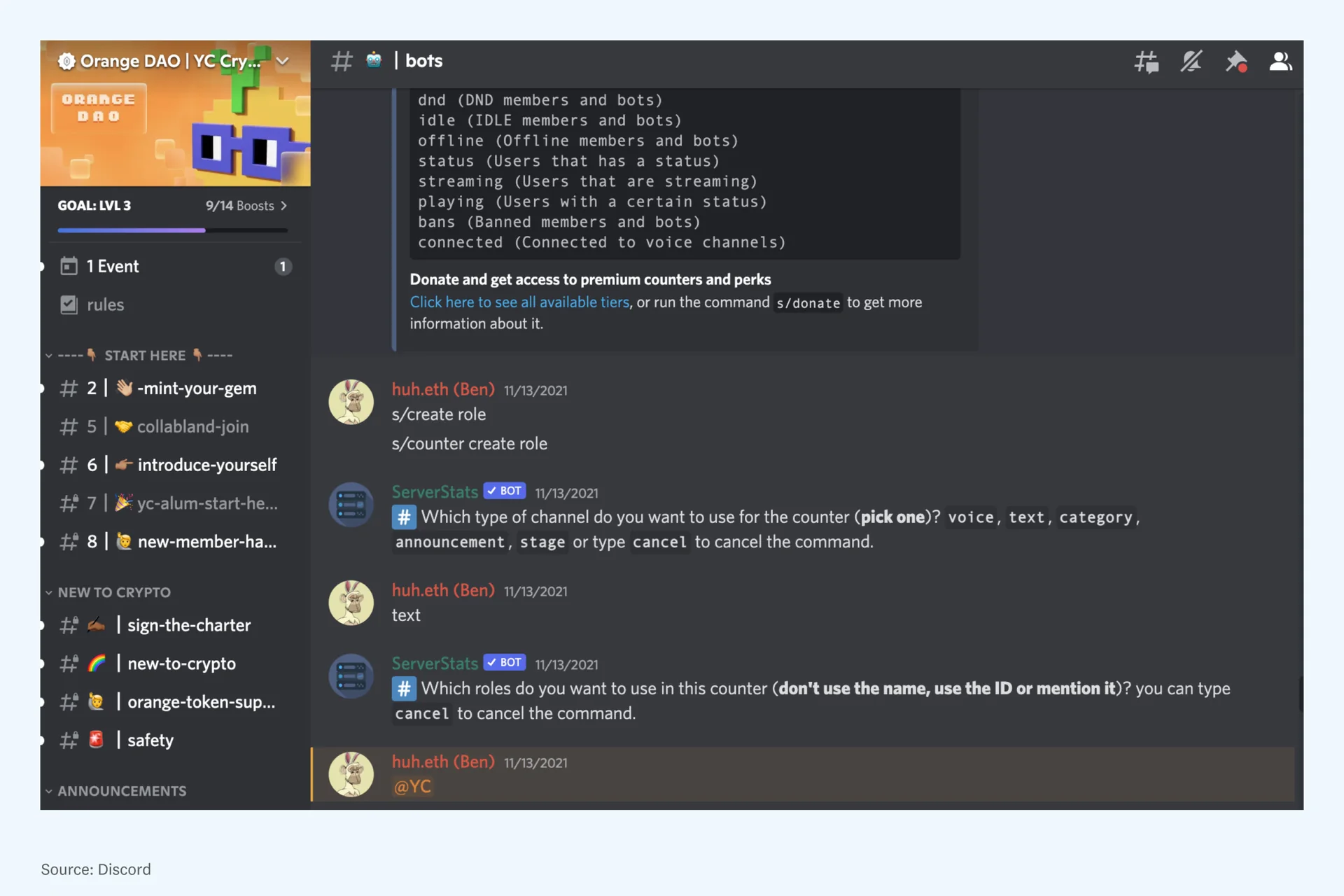
Do members arrive in a space that is simple to grasp and move through, and also pleasant to spend time in? Just numbering channels and clearly mapping out the first steps a new member should take is an easy way to guide people through the on-boarding experience. Extra points if the space is beautifully designed. User-friendly design makes the Discord server for crypto collective Orange DAO welcoming to first-timers:
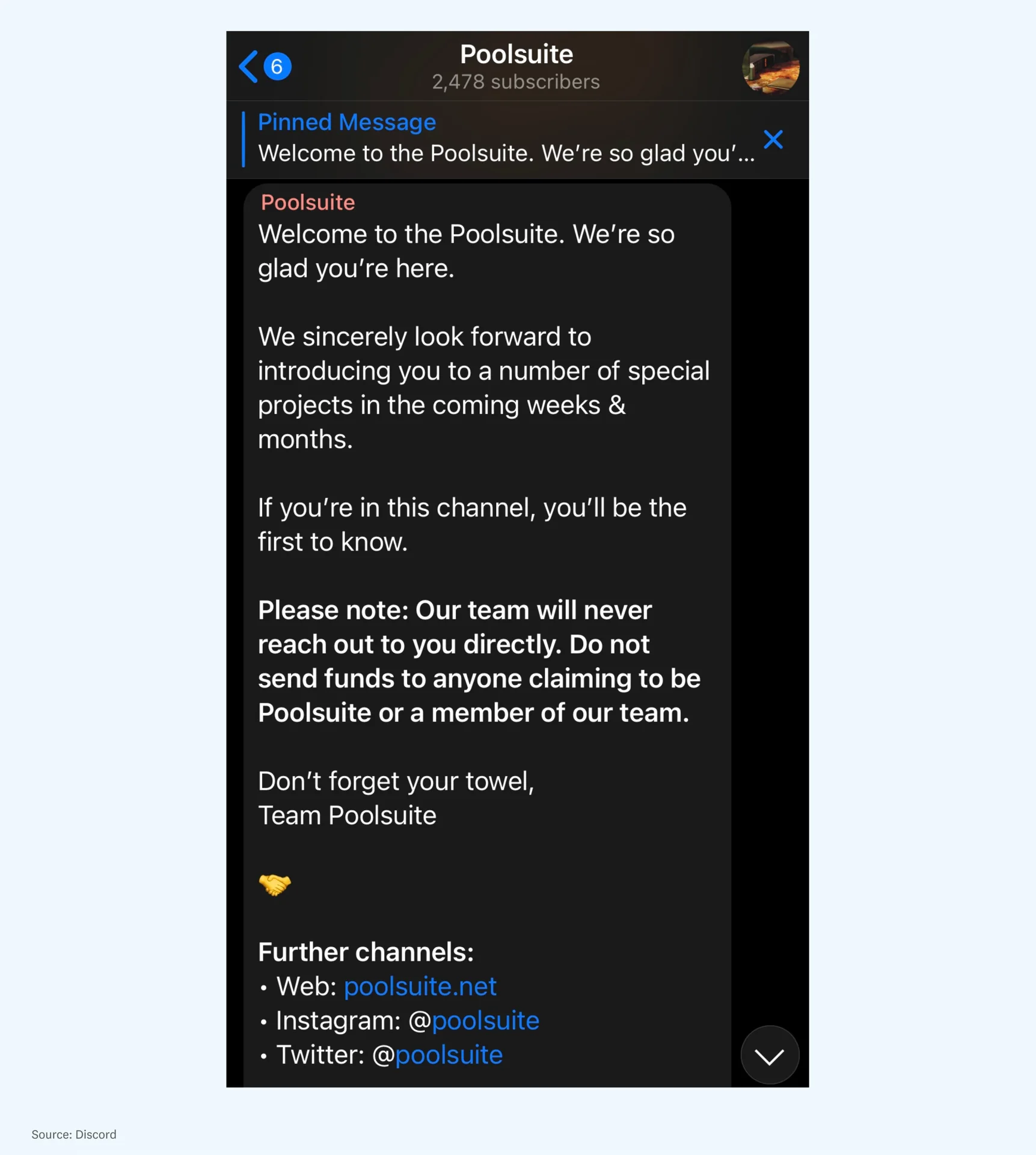
The very simple structure of Telegram channels, which have only one central chat, makes the platform a low-friction way to start a community. Here’s what new members see when they join Poolsuite’s chat:
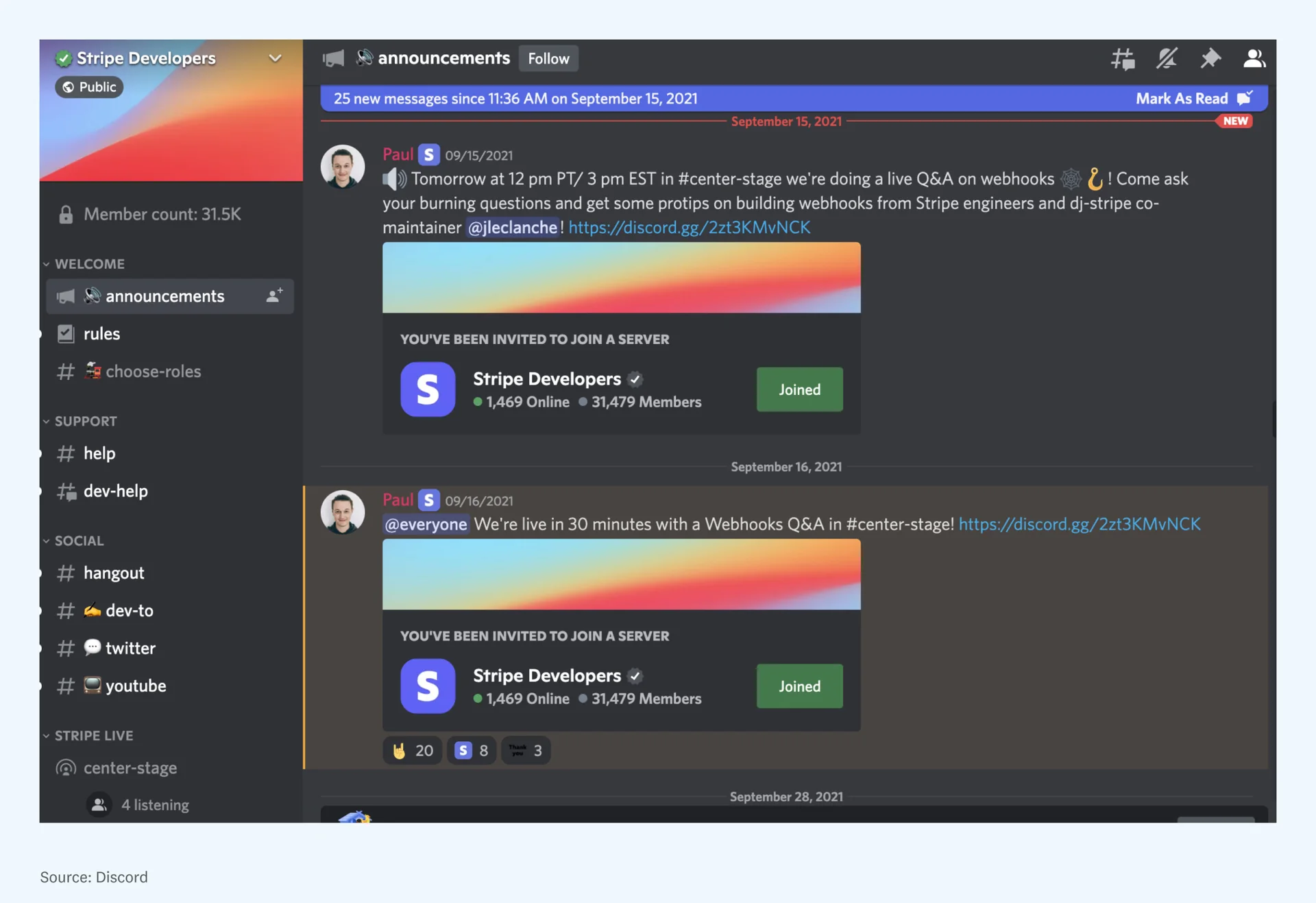
Are members personally welcomed into the space by a human, not a bot, and brought into the conversation? Stripe’s developer community on Discord shows digital hospitality with an active developer relations team greeting new members:
After they’re introduced, do community members feel drawn to join the conversation? Participation helps members become friends, which makes them feel more closely connected to the community and more motivated to keep contributing. Most people who join your community will be evangelists for your product. By the time they get to the end of the funnel, they’ll also be evangelists for your community.
Now that you understand these two foundational community-building concepts, it’s time to start designing your community strategy. Begin by clearly stating why you’re building the community and what the value exchange will be. Put differently, what will community members receive from joining and participating, and how does it help your business now and later to dedicate resources to community that could be used elsewhere?
The value of community is not always easy to measure financially, but there are benefits beyond the bottom line. If you master the basics and approach community-building with care, your company will become a catalyst for strong relationships that develop alongside it.